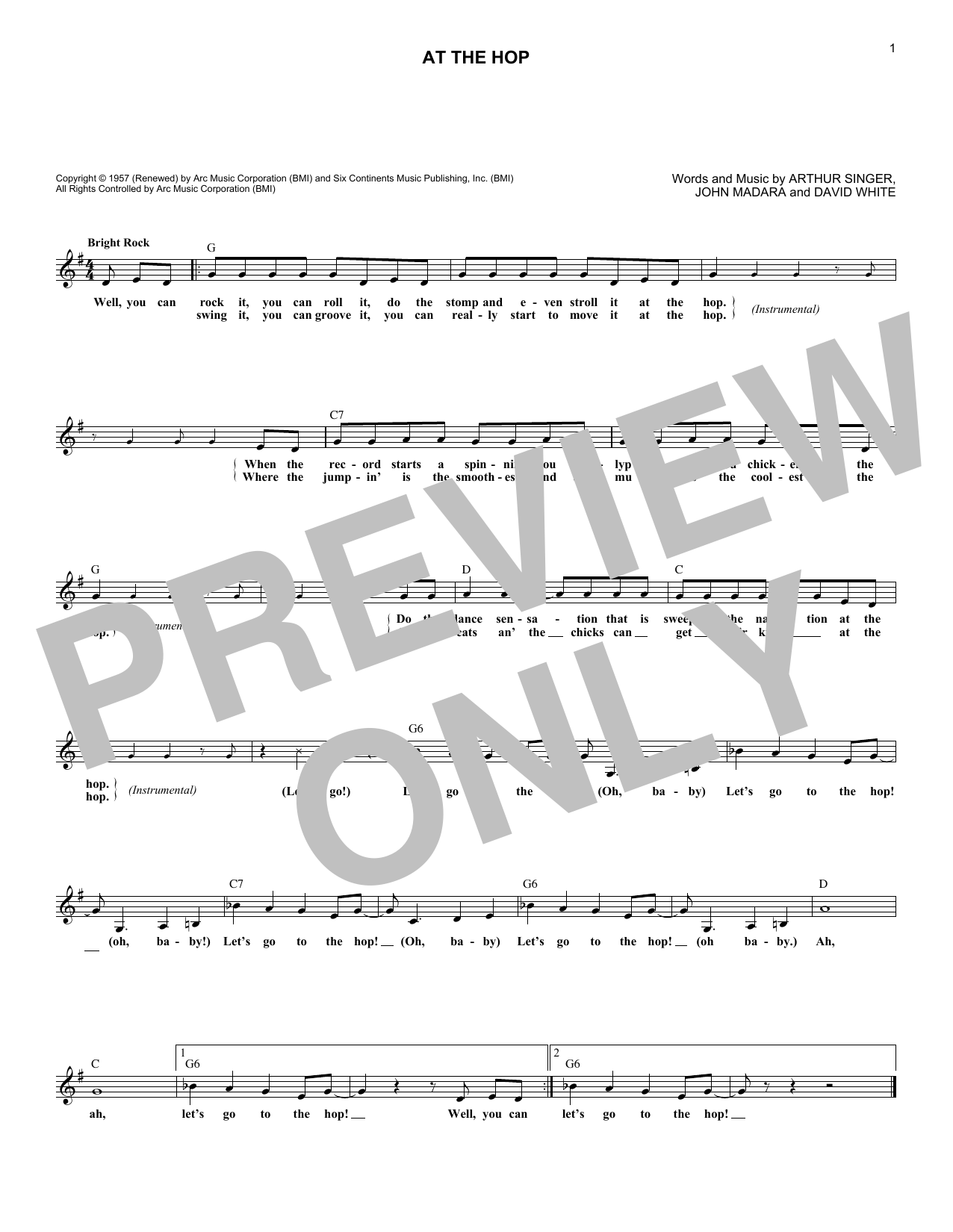
You know that feeling when a song starts with a countdown and a frantic piano riff, and suddenly you're in a black-and-white 1950s gym? That's the power of At the Hop Danny & the Juniors. It’s the definitive sound of the soda shop era. Honestly, though, most people just think of it as a catchy oldie. They don’t realize it was actually the result of a last-minute crisis, a name change, and some "bittersweet" business dealings with the biggest name in television history.
Rock and roll was still a baby in 1957. It was loud, it was messy, and parents hated it. Into this chaos stepped four kids from Philadelphia who called themselves the Juvenairs. They weren't polish-and-shine stars yet. They were just high schoolers—Danny Rapp, Dave White, Frank Maffei, and Joe Terranova—practicing their harmonies in the back of cars and in school hallways.
From "Do the Bop" to a Global Phenomenon
The song wasn't even supposed to be called "At the Hop." Originally, group member Dave White wrote a tune called "Do the Bop." At the time, "The Bop" was a specific dance craze. But when they brought the song to Artie Singer, a local vocal coach and label owner, he had a hunch. He took the demo to his friend Dick Clark.
Clark had just started a little show called American Bandstand. He listened to the track and basically told them that the Bop was on its way out. He suggested a pivot: change "Do the Bop" to "At the Hop." It was a genius move. By shifting the focus from a specific dance to the "record hop" in general, the song became a universal anthem for every teen in America.
The Emergency Appearance
Fortune favors the prepared, right? Well, it also favors the guys who are available when someone else flakes. On December 2, 1957, Little Anthony & the Imperials were supposed to appear on American Bandstand. They canceled at the last minute. Dick Clark was in a panic and called Artie Singer for a fill-in.
Danny & the Juniors showed up, lip-synced their hearts out, and the switchboard lit up like a Christmas tree. People didn't just like the song; they were obsessed. Within a week, the track hit the Billboard charts. By January 1958, it was the number-one song in the country. It didn't just sit there for a minute, either. It stayed at the top for seven weeks. That’s a massive run even by today’s standards.
The Payola Scandal and the "Bittersweet" Truth
Success in the 50s usually came with a price tag. Years later, Artie Singer admitted something that sheds a different light on the success of At the Hop Danny & the Juniors. He claimed that Dick Clark wouldn’t play the record unless he got half of the publishing rights.
- Dick Clark’s influence: He was arguably more powerful than the President for American teenagers.
- The Trade-off: Singer gave up the money to get the airtime.
- The Result: A gold record and a permanent spot in music history, but with a side of corporate maneuvering that would eventually lead to the 1960 payola hearings.
Payola wasn't illegal at the time, but it was definitely the "Wild West" of the music industry. Clark eventually sold his interest in the song before the government started knocking on doors, but the boost he gave the Juniors was undeniable.
Why the Song Never Actually Died
Most 50s hits faded when the Beatles showed up in '64. Not this one. The legacy of At the Hop Danny & the Juniors is weirdly resilient. It’s like a cockroach that wears a leather jacket.
In 1969, a group called Sha Na Na performed it at Woodstock. Think about that for a second. In the middle of the hippies, the mud, and the psychedelic rock, here come these guys doing 50s doo-wop. The crowd loved it. Then, in 1973, George Lucas used it in American Graffiti. Suddenly, a whole new generation of kids who weren't even born in 1958 were singing along about "the chicken and the hop."
Life After the Charts
The members of the group had to grow up eventually. Dave White, the guy who wrote the song, left the group early on. He didn't want to just be a face; he wanted to be a creator. He ended up writing "You Don't Own Me" for Lesley Gore and "1-2-3" for Len Barry. He was a powerhouse behind the scenes.
Danny Rapp, the lead singer with the iconic voice, had a tougher road. The transition from teen idol to "oldies circuit" regular is brutal. He sadly took his own life in 1983 in an Arizona hotel. It’s a tragic footnote to a song that sounds so incredibly happy.
The Technical Brilliance of the Track
If you listen closely to the original Singular Records release, you'll hear a countdown before the piano starts. It sounds raw. ABC-Paramount eventually bought the rights and cleaned it up, but that energy—the 12-bar blues structure mixed with boogie-woogie piano—is what makes it work. It’s a perfect bridge between the R&B of the early 50s and the pop-rock that would dominate the 60s.
They weren't just singers; they were dancers. Danny Rapp choreographed their routines. They brought a visual energy to their live shows that most vocal groups of the era lacked. They were basically the original boy band.
Actionable Insights for Music Historians and Collectors
- Hunt for the Original Label: If you’re a vinyl collector, look for the "Singular 711" pressing. It’s the version that existed before ABC-Paramount bought the rights. It’s rare and captures the group in their most authentic, unpolished state.
- Analyze the Lyrics for Social History: The song mentions the "Chicken," "the Bop," and "the Stroll." These weren't just words; they were specific social rituals that defined teen life before the internet.
- Study the Songwriting Transition: Compare "At the Hop" with Dave White’s later work like "You Don't Own Me." You can see the evolution from simple teen tropes to the sophisticated, feminist-leaning pop of the early 60s.
The story of Danny & the Juniors is more than just a one-hit wonder narrative. It’s a story about the birth of the teenager as a consumer, the power of early television, and how a few kids from Philly changed the tempo of the world for one glorious summer in 1958.