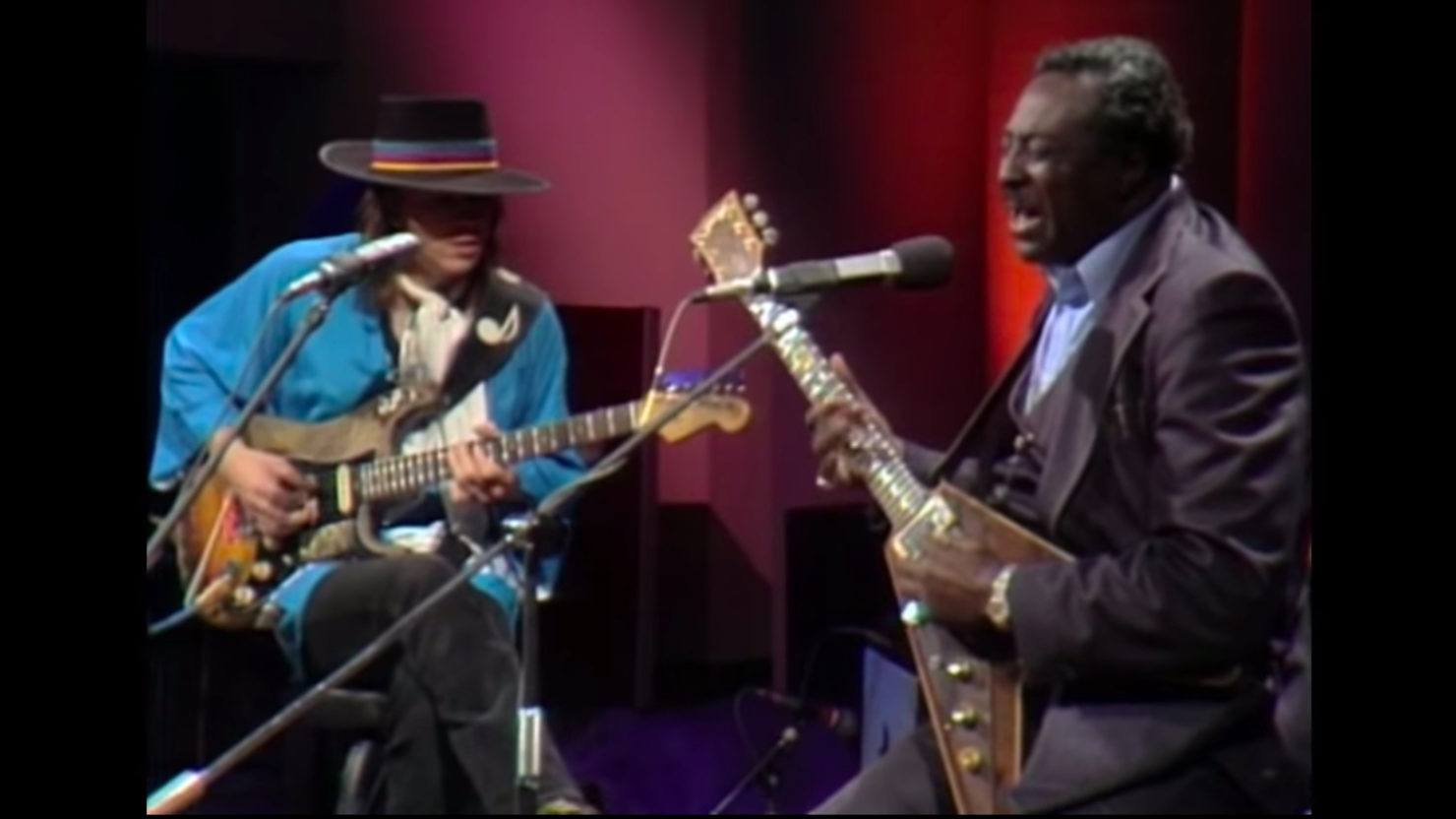
Most people think of the blues as a passing of the torch. A relay race where one legend hands the baton to the next before fading into the background. But when you look at the relationship between BB King and Stevie Ray Vaughan, it wasn't a hand-off. It was a collision.
If you were around in the mid-80s, the blues was supposedly "dead" or at least sleeping off a heavy hangover from the 70s rock era. Then came this skinny kid from Dallas with a hat too big for his head and a Stratocaster that sounded like it was being played by a thunderstorm.
BB King, the reigning King of the Blues, didn't feel threatened. Honestly, he was relieved.
The Father-Son Bond Nobody Expected
BB King was famous for being the most gracious man in show business. He’d meet everyone. But with Stevie, it was different. BB often described their connection as a "father-son relationship." This wasn't just PR talk for a tour poster.
Stevie Ray Vaughan was notorious for his intensity, but he was also incredibly vulnerable. He struggled with substance abuse for years before getting clean in 1986. During the dark times, and even after, he’d call BB. They’d talk. Not about chord progressions or string gauges, but about life. BB once mentioned in an interview for the 1996 tribute special that Stevie would come to him with his problems. Imagine that—the fire-breathing guitar god of the 80s calling up the "Beale Street Blues Boy" just to find his footing.
The two first met through Stevie’s older brother, Jimmie Vaughan. While Stevie was often associated with Albert King (who was a bit more of a "tough love" mentor), BB was the emotional anchor.
That One Night in New Orleans
If you want to see the peak of this relationship, you have to look at April 22, 1988. They were in New Orleans at the Jazz & Heritage Festival. They were performing on the S.S. President.
It was BB, Stevie, and the "Ice Man" Albert Collins.
The footage is grainy now, but the energy is terrifying. Stevie is playing "Texas Flood." He's doing things to that guitar that shouldn't be legal. BB is standing right there, beaming. He isn't trying to outplay the kid. He’s just watching with this look of pure, unadulterated pride. It’s one of those rare moments where the ego of a superstar completely vanishes.
BB’s style was about the "one note." He’d hit a high G, shake it with that iconic butterfly vibrato, and let it hang there for an hour. Stevie was the opposite. He was a hurricane of notes. 13-gauge strings. Brutal force. Yet, they fit.
Why the "Two Kings" Comparison is Actually Wrong
Critics love to pit them against each other. Who was better? Who had more soul?
It’s a dumb game.
BB King and Stevie Ray Vaughan represented two different philosophies of the same religion. BB was the singer who used a guitar to finish his sentences. Lucille (his Gibson ES-355) was his backup vocalist. Stevie was a force of nature who used the blues as a vehicle for a modern, high-voltage revival.
The Gear Myth
People obsess over Stevie’s gear. The heavy strings—sometimes .013s or even .014s—and the battered "Number One" Strat. They think the "tone" was in the wood.
BB knew better. He famously said that playing the blues is like "having to be black twice," and while he joked that Stevie "missed on both counts," he followed it up by saying he never noticed because the feeling was so authentic. To BB, Stevie wasn't a white kid playing "black music." He was just a great bluesman. Period.
- BB King's Approach: Clean, melodic, vocal-like, focused on the spaces between notes.
- Stevie Ray's Approach: Aggressive, distorted, rhythmic, focused on the sheer physical weight of the sound.
When they played together, like on "The Sky Is Crying," you could hear the dialogue. BB would make a polite point. Stevie would scream a response. It worked because they actually listened to each other.
What Happened After the Crash?
The morning of August 27, 1990, changed everything. Stevie’s helicopter went down in the fog after a show at Alpine Valley.
BB King was devastated. He’d lost a lot of friends over the years—he’d been on the road since the late 40s—but this hit differently. He later admitted that Stevie was the only person he ever cried for, besides his own family, when they passed away.
That’s a heavy statement from a man who lived through the deaths of almost every peer he ever had.
BB spent the rest of his life making sure Stevie’s legacy wasn't forgotten. He participated in the 1995 A Tribute to Stevie Ray Vaughan at Austin City Limits. He played "SRV Shuffle" with Jimmie Vaughan and Eric Clapton. He won a Grammy for it in 1996. He kept talking about Stevie in every interview, often grouping him with Jimi Hendrix as the players who truly changed the instrument.
The Real Legacy
The real connection between BB King and Stevie Ray Vaughan wasn't just about music. It was about validation. BB gave Stevie the "seal of approval" when the traditional blues community was skeptical of this loud Texan. In return, Stevie gave BB (and the blues) a brand new audience of millions of kids who suddenly wanted to know who T-Bone Walker and Muddy Waters were.
How to Hear the Influence Today
If you’re a guitar player or just a fan, don't just listen to the hits. Look for the small things.
Listen to Stevie's version of "The Sky Is Crying." You'll hear him use a specific kind of vibrato on the high notes that is a direct lift from BB. He isn't "stealing" it; he's quoting a teacher.
Then, go back and listen to BB King’s live albums from the late 80s and 90s. You can hear a bit more "fire" in his solos during that era. Playing with Stevie woke something up in the old man, too. It kept him young.
Practical Steps to Explore Their Connection:
- Watch the New Orleans 1988 footage. Search for "BB King Stevie Ray Vaughan S.S. President." It is the single best example of their chemistry.
- Listen to the "In Step" album. It was Stevie’s first sober album. If you listen closely to the phrasing on the slower tracks, you can hear the "Father-Son" advice BB gave him about restraint and soul.
- Compare "Lucille" to "Number One." Listen to BB's album Live at the Regal and then Stevie’s Live at El Mocambo. It’s the best way to understand the two poles of the blues.
The blues didn't die with Stevie, and it didn't end when BB passed in 2015. It just changed shape. But for a few years in the 1980s, these two men—one from the Mississippi Delta and one from the Texas suburbs—showed the world that the blues was the most inclusive, powerful language on earth.
To truly understand the "Kings," your next step should be to listen to the track "Texas Flood" from the 1988 New Orleans Jazz Fest. Pay attention to how BB King steps back to let Stevie shine, and how Stevie looks back at BB for approval after every major run. It’s the most honest documentation of their respect.