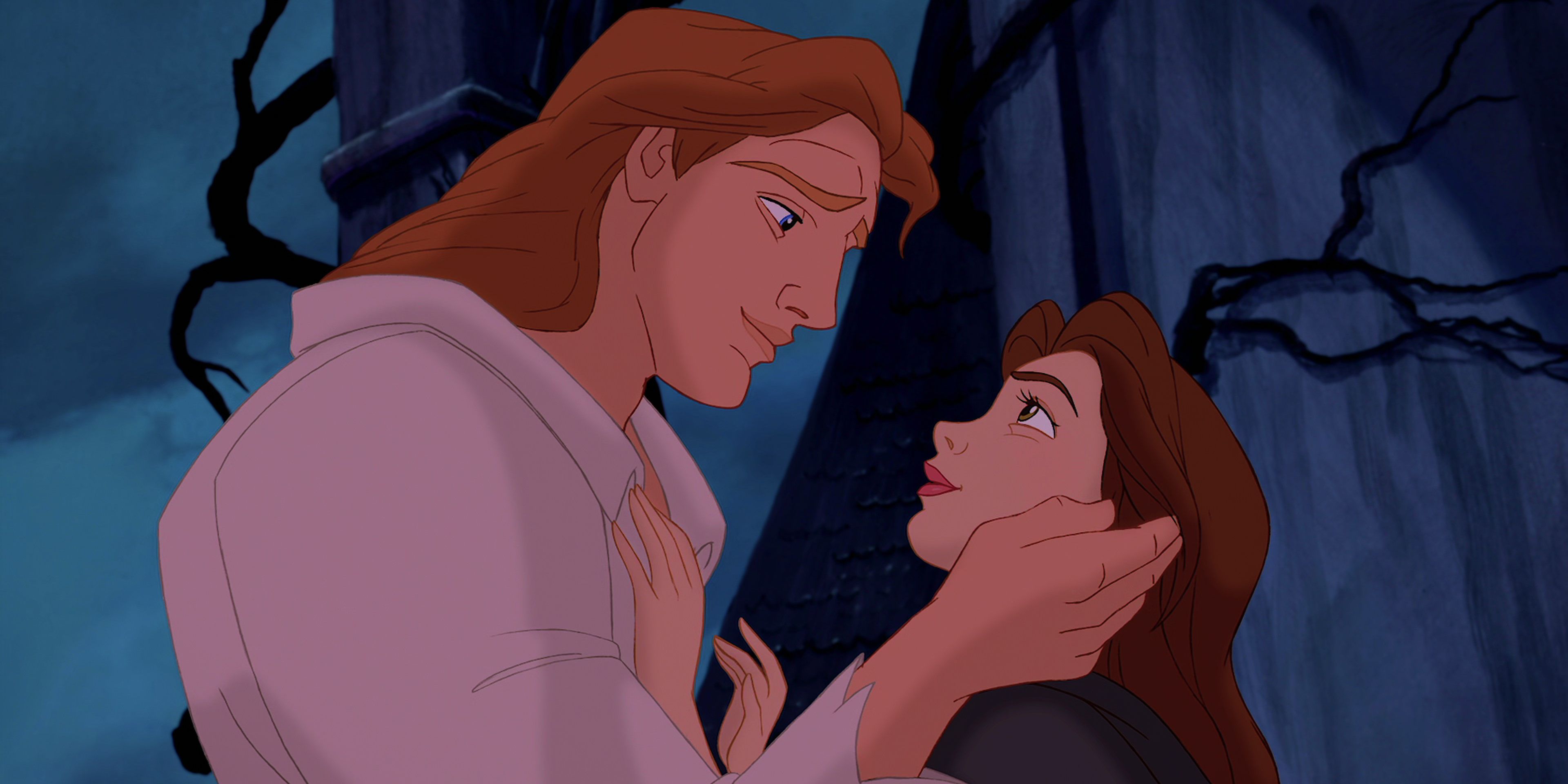
He’s finally human again. The fur is gone. The claws have retracted into hands. The roaring voice is now just a regular guy’s baritone. For many, this is the ultimate "happily ever after," but honestly, for a huge chunk of the audience, the beauty and the beast human form has always felt like a bit of a letdown. It’s the moment the magic ends, and depending on which version you’re watching—the 1991 Disney classic, the 2017 remake, or Jean Cocteau’s 1946 masterpiece—the reaction varies from "He’s gorgeous" to "Wait, can we go back to the buffalo guy?"
It’s a weird psychological phenomenon. We spend ninety minutes rooting for a girl to see past a monster's exterior, only to have the movie reward her by turning him into a generic prince. This transition is the climax of one of the world's oldest stories, La Belle et la Bête, originally published by Gabrielle-Suzanne Barbot de Villeneuve in 1740. While the story was intended as a lesson for young women in arranged marriages, the visual execution of the Prince has become a flashpoint for animation nerds and film critics alike.
The 1991 Animation: Why Prince Adam Feels Like a Stranger
Most people know the beauty and the beast human form through the lens of Glen Keane’s animation. Keane, a legendary Disney animator, famously took a trip to the zoo to study lions and bears to create the Beast. He spent months perfecting the creature's soulful eyes. But when it came time to draw the human Prince (often nicknamed "Adam" by fans, though never actually named in the film), the result was… divisive.
There is a specific reason he looks the way he does. The animators wanted him to look refined but soft. He has those flowing 90s romance novel locks and a jawline that could cut glass. Yet, many kids in the 90s felt a strange sense of loss when the Beast transformed. You’ve spent the whole movie getting to know the expressive, heavy-browed creature who loves birds and gets frustrated with spoons. Then, suddenly, this blonde stranger is standing there.
The "human" version has significantly less screen time—roughly five minutes across the entire film. This creates a disconnect. We haven't built an emotional rapport with the guy in the blue coat; we built it with the monster in the tattered cape. It’s a bold narrative choice that relies entirely on the eyes. Keane purposefully kept the Beast’s blue eyes for the Prince to signal to Belle—and us—that it’s the same soul inside.
The Jean Cocteau Influence
Before Disney, there was Jean Cocteau. His 1946 film is basically the blueprint for every visual iteration that followed. In that version, the Prince is played by Jean Marais. Legend has it that when the film premiered, Greta Garbo stood up in the theater and shouted, "Give me back my beast!"
This sentiment hasn't changed in eighty years. It highlights a core tension in the story: the beauty and the beast human form is technically a "curse lifted," but visually, it often feels like a personality downgrade. Cocteau knew this. He deliberately made the Prince look somewhat foppish and less interesting than the tragic, fur-covered creature we’d spent the last hour mourning.
The 2017 Live-Action Adaptation and the "Dan Stevens" Problem
When Disney announced a live-action remake starring Emma Watson, everyone wondered how they would handle the beauty and the beast human form. They cast Dan Stevens, known for Downton Abbey. Stevens spent the majority of the shoot on stilts in a grey mo-cap suit, which is about as un-magical as it gets.
In this version, the transformation is a bit more ethereal. There’s a lot of CGI light and floating petals. But the problem remained. Because the Beast was created using facial capture technology, his "human" expressions were already present in his monster form. When he finally turns back into Dan Stevens, it feels less like a miracle and more like the actor just took off a very heavy mask.
One detail the 2017 film added was the Prince’s backstory. We see him as a vain, powdered aristocrat before the curse. This actually helps the ending. By showing his original human form as cold and cruel, his return to the beauty and the beast human form at the end feels earned because he’s no longer that same man. He’s human again, but he’s "human" in a way he never was before the curse hit.
The Symbolism of the Shedded Skin
Why do we care so much about what he looks like at the end? It’s not just about aesthetics. The beauty and the beast human form represents the reintegration of a man back into society.
The Beast is an outcast. He’s messy. He’s "othered."
The Prince is a citizen.
When he transforms, he regains his status, his wealth, and his place in the world. For some critics, this is the weakest part of the fairy tale. It suggests that being "different" is a problem that needs to be "fixed" to achieve a happy ending. However, if you look at the original 18th-century text, the transformation isn't just about looks—it's about the restoration of his mind and his ability to communicate without fear.
Reality Check: The Design Specs
If you look closely at the animation cells from the 1991 movie, the Prince’s design is a blend of several influences:
- The hair of a lion.
- The brow of a gorilla.
- The tusks of a wild boar.
- The big heart of a human.
When he shifts back, he loses the animal traits but keeps the "weight" of his experiences. He isn't the same spoiled brat who turned away the enchantress. He's a man who knows what it’s like to be loathed. That’s the real "human" form—not the face, but the humility.
Why Fans Often Prefer the Beast
Let’s be real. The Beast is just more interesting to look at. Character designers put 90% of their effort into the creature and 10% into the guy at the end. The beauty and the beast human form often feels like a "default" character preset.
- Visual Depth: The Beast has textures, shadows, and a silhouette that commands the frame.
- Vulnerability: There is something inherently moving about a giant creature trying to be gentle. When he becomes a prince, that contrast disappears.
- The "Gaston" Contrast: The Prince has to look different enough from Gaston to be the hero, but "princely" enough to fit the trope. This leaves a very narrow margin for creative design.
In the 1991 version, Gaston is the hyper-masculine ideal, while the Beast is the misunderstood monster. When the Beast becomes a Prince, he occupies a middle ground that can sometimes feel a bit bland. He’s not the rugged "man's man," and he's no longer the powerful creature. He’s just a guy in a fancy shirt.
The Psychology of the Transformation
There is a psychological element to why the beauty and the beast human form triggers such a strong reaction. It’s called the "Uncanny Valley" in some cases, but more often, it’s about the loss of the "protective" element of the Beast. Belle was safe with the Beast because he was hers alone. A Prince belongs to the kingdom.
The transformation is a literal "unmasking." For the audience, the mystery is gone. We’ve seen the soul, and now we’re forced to look at the shell. If the shell doesn't match the soul we fell in love with, the ending feels hollow. This is why the 1980s TV show starring Ron Perlman actually worked so well—he stayed the Beast. They leaned into the idea that the "human form" wasn't the goal; the connection was.
What We Can Learn From the Design Evolution
If you're looking at how to interpret the beauty and the beast human form in modern media or your own creative work, there are some specific takeaways that actually matter for storytelling.
First, the eyes are the most important asset. Whether it’s 2D animation or a $200 million live-action budget, if the eyes don't transition perfectly, the audience will reject the human character. You see this in the 1991 film when Belle looks at the Prince and hesitates. She doesn't recognize him until she looks into his eyes. That is the "key" that unlocks the transformation for the viewer.
Second, the "human" version needs to carry some physical weight from the "beast" version. In some modern retellings, like the 2014 French film La Belle et la Bête starring Vincent Cassel, the Prince retains a certain ruggedness. He doesn't look like a porcelain doll. He looks like a man who has lived a hard life.
Actionable Insights for Fans and Creators
If you are a writer, artist, or just a die-hard fan analyzing these versions, keep these specific points in mind to better understand the craft behind the character:
- Study the Silhouette: Compare the "Beast" silhouette with the "Prince" silhouette. A successful transformation usually maintains a similar posture or height to help the transition feel less jarring.
- The Eye Test: Look for the specific moment of "recognition." In the best versions, the heroine recognizes the hero through a non-physical trait first—usually a look or a specific word.
- Cultural Context: Remember that the "Prince" design usually reflects the beauty standards of the decade the movie was made. The 1991 Prince looks like a 90s heartthrob; the 1946 Prince looks like a classic Hollywood star.
- Narrative Weight: Ask if the human form is a reward for the Prince or a reward for Belle. The most satisfying endings treat the transformation as a secondary bonus to their emotional connection, rather than the "prize" for Belle's kindness.
The beauty and the beast human form will probably always be a point of contention. It’s the moment the fairy tale ends and the "real" world begins. Whether you love the flowing hair of the animated Prince or you're firmly in the "he was better as a beast" camp, the transformation remains one of the most technically challenging and emotionally charged sequences in cinema history. It’s the ultimate test of whether a story has truly convinced us that beauty is found within.