It’s the image that defines every 80s teen movie. You know the one. The "nerd" gets hoisted up by the collar of his polo shirt and physically jammed into a narrow metal box while the "jock" laughs and walks away. Being shoved in a locker has become a sort of cultural shorthand. It represents the ultimate humiliation. It’s the visual peak of the high school hierarchy.
But here’s the thing. Does it actually happen?
If you ask people who went to high school in the 1970s or 80s, you’ll get a mix of "Oh, absolutely" and "That’s just movie stuff." The reality is a bit more nuanced. While the trope is exaggerated for the screen, the physical act of stuffing a human being into a storage compartment is a very real, very dangerous form of bullying that has transitioned from a physical reality to a powerful digital metaphor.
The Physical Reality of the Locker
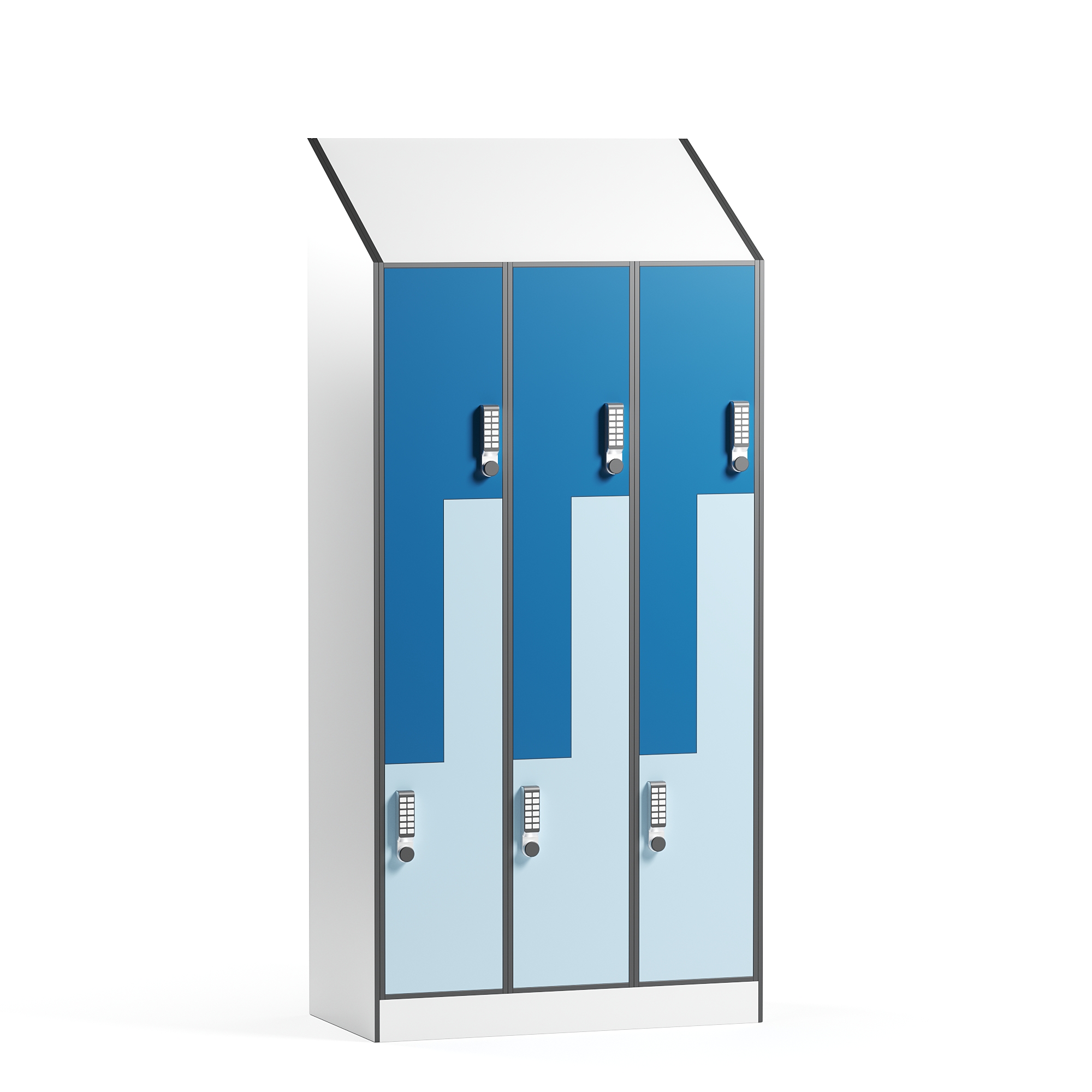
Let's look at the mechanics. Most standard school lockers are about 12 inches wide and 12 to 15 inches deep. For an average-sized teenager, getting shoved in a locker isn't just a matter of being pushed; it’s a feat of forced gymnastics. It requires the victim to be folded. It’s claustrophobic. It’s terrifying.
I’ve seen reports from school districts where this isn't treated as a prank. It’s treated as assault or false imprisonment. Why? Because lockers are airtight-adjacent. They are dark. If a student is stuck in there after school hours, the situation shifts from "mean joke" to "life-threatening emergency" pretty fast.
There was a notable case in the early 2000s in a Midwestern school where a student was left in a locker for several periods because the perpetrator forgot where they’d put him. That’s not a plot point from The Breakfast Club. That’s a police report.
Why the trope stuck
The 1980s gave us the "John Hughes" era of filmmaking. Movies like Sixteen Candles or Revenge of the Nerds needed a visual way to show who had power and who didn't. You can’t always film a subtle psychological manipulation. You can, however, film a guy being shoved into a locker. It's high-impact. It’s instantly recognizable.
The media didn't just reflect reality; it shaped it. Once the trope became a staple of cinema, real-life bullies started using it as a blueprint. It’s a classic case of life imitating art. But as schools started implementing "Zero Tolerance" policies in the 90s and 2000s, the physical act became rarer. Cameras appeared in hallways. Lockers became smaller or, in some modern schools, were removed entirely to prevent students from hiding contraband—or each other.
The Digital Evolution of Getting Shoved in a Locker
If you spend any time on X (formerly Twitter) or Reddit, you’ll see the phrase used constantly. It doesn't mean someone was physically assaulted. It means they were "ratioed" or intellectually humiliated.
"Someone please shove this guy in a locker."
You’ll see this directed at tech CEOs, pundits, or anyone perceived as being "too online" or pedantic. It’s a fascinatng linguistic shift. We’ve taken a physical act of bullying and turned it into a rhetorical tool to bring someone down a peg. It’s used to signal that someone is acting like a "dork" who doesn't understand social cues.
Honestly, it’s a bit ironic. The very people who might have been the targets of physical bullying decades ago are now using the terminology of their oppressors to police social boundaries online.
The Psychology of the "Nerd" Label
Bullying experts like Dan Olweus, who pioneered much of the modern research into schoolyard aggression, argue that these types of physical tropes are about dominance, not just dislike. When someone is shoved in a locker, the goal isn't necessarily to hurt them physically—though that happens. The goal is to make them small. To literally box them in.
In a digital context, the "locker" is the comment section. It’s the quote-retweet. It’s the collective decision by a group of people to make one individual feel isolated and ridiculed.
Is it still happening in schools today?
Not as much. At least, not physically.
The design of modern schools has changed. Hallways are wider. "Active supervision" is a standard practice for teachers during passing periods. Plus, kids are different now. The traditional "jock vs. nerd" dichotomy has largely collapsed. The captain of the football team is now just as likely to be the captain of the e-sports team.
However, we shouldn't be naive. Physical bullying still exists. A 2023 report from the National Center for Education Statistics (NCES) showed that about 15% of students aged 12–18 reported being bullied physically at some point during the school year. While "locker stuffing" specifically has declined, the power dynamics that fueled it remain.
The danger of "harmless" nostalgia
We tend to look back at 80s movies with a lot of warmth. We laugh when the nerd gets shoved in a locker because we know he’ll eventually win the science fair and get the girl.
In real life, there is no soundtrack.
For many people, these experiences resulted in long-term PTSD. Clinical psychologists have noted that the feeling of being trapped—literally—can trigger claustrophobia and anxiety disorders that last well into adulthood. When we treat it as a "classic" part of the American school experience, we sort of minimize the trauma of the people who actually lived through it.
How to Handle the "Locker" Dynamic in 2026
Whether you're dealing with a physical bully or a digital one, the core issue is the same: an attempt to strip away your agency.
- Document everything. If it’s physical, tell the administration immediately. In 2026, most schools have strict legal obligations to investigate. If it’s digital, screenshots are your best friend.
- Refuse the label. The "locker" trope only works if you accept the hierarchy. The reason "nerd culture" took over the world is that people stopped being ashamed of being smart.
- Check your own behavior. It’s easy to join in on a digital dogpile. It feels good to "shove someone in a locker" when they’re being annoying online. But it’s worth asking if you’re contributing to a culture of humiliation.
Beyond the Metal Door
The era of the physical locker might be fading as tablets replace textbooks and schools move toward open-concept designs. But the impulse to exclude and diminish stays.
If you're a parent or an educator, keep an eye on the "quiet" kids. Physical bullying is loud, but the emotional equivalent is often silent. We don't need lockers to make someone feel trapped.
The next time you see a movie character get shoved in a locker, remember that the metal door is just a symbol. The real story is about how we treat people who are different from us. It's about whether we choose to be the person holding the door open or the one slamming it shut.
Actionable Insights for Victims and Parents
- Evaluate School Layout: If you are a parent, check if your child's school has "blind spots" in the locker bays. Many modern schools have moved lockers to central, high-visibility areas for a reason.
- Digital Boundaries: If you find yourself being "shoved in a locker" metaphorically online, the "Block" and "Mute" functions are not signs of weakness; they are tools for reclaiming your mental space.
- Legal Recourse: Understand that in many jurisdictions, "locker stuffing" qualifies as "Battery" or "False Imprisonment." It is not just a school disciplinary issue; it can be a legal one.
- Mental Health Check: If you experienced this in the past and still feel a physiological response (tight chest, sweating) when thinking about it, consider talking to a therapist who specializes in "Adverse Childhood Experiences" (ACEs). It's a real trauma, and it deserves real attention.