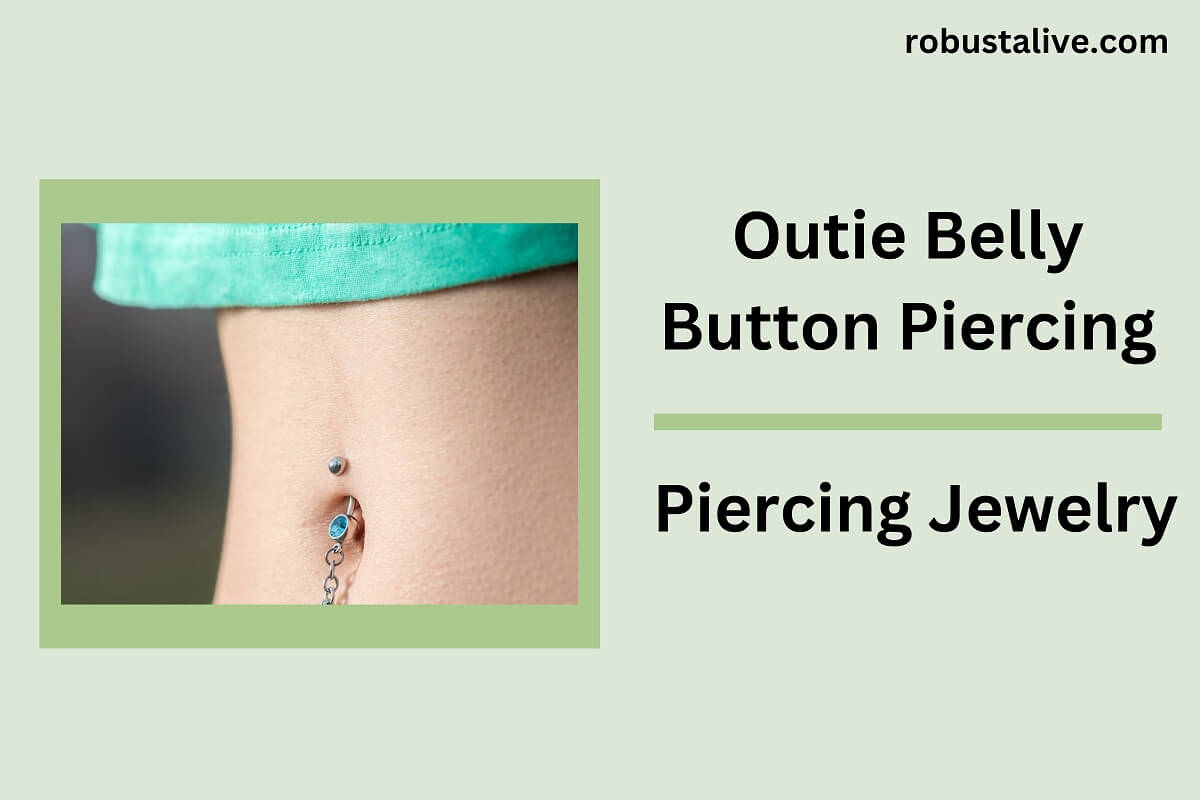
You've probably seen the photos. Glittering navel rings catching the light on flat stomachs, usually nestled deep inside a classic "innie" belly button. But what if your anatomy doesn't look like a catalog photo? If you’ve got a bit of an "outie," you might have been told that a belly button outie piercing is a bad idea—or maybe you've heard it's outright impossible.
The truth is way more nuanced.
Let's get real for a second: most people don't actually have a "true" outie. Usually, what we call an outie is just a shallow navel where the umbilical scar tissue sits a bit higher. A genuine outie, or a "true umbilical hernia," is a whole different ball game. If you try to shove a needle through a hernia, you aren't just getting a cool piercing; you're risking a trip to the emergency room because you might be puncturing actual intestinal tissue or a vital membrane. That’s not a vibe.
So, when we talk about a belly button outie piercing, we’re usually talking about navigating the unique landscape of your skin and scar tissue. It’s tricky. It’s finicky. But for the right person, it’s also totally doable.
The Anatomy Reality Check
Your navel is literally just a scar. It’s where your life support system was cut off when you entered the world. Because it's scar tissue, the blood flow there is... well, it’s not great. Scar tissue is notoriously stubborn and slow to heal.
If your navel protrudes, a piercer has to look for a "lip" of skin. Most standard navel piercings go through the top rim of the navel. If you have an outie, that top rim might be flat, or the protrusion might be so constant that a piece of jewelry would just get pushed out by your own body. This is called rejection. Your body sees the titanium bar as a splinter it needs to evict. It’ll literally move the metal toward the surface until it falls out, leaving you with a nasty vertical scar that looks like a zipper.
Elayne Angel, author of The Piercing Bible and a legend in the industry, has pointed out for years that anatomy is the single biggest factor in piercing success. You can't just wish your way into a piercing that your body physically won't hold. If a professional piercer tells you "no," they aren't being mean. They’re saving you from a year of puss, pain, and a permanent scar.
The Hernia Factor
I cannot stress this enough: check for a hernia. A true umbilical hernia happens when the abdominal wall doesn't close properly, and internal bits (like fat or even bowel) push through. If you press on your outie and it feels "squishy" or you can push the protrusion back into your stomach, do not pierce it. You need a doctor, not a piercer. A reputable shop will turn you away immediately if they suspect a hernia. It’s a massive liability and a major health risk.
Why a Belly Button Outie Piercing Fails So Often
Most people think the piercing is the hard part. Nope. The hard part is the six to twelve months after.
Because an outie sits higher and flatter, it’s constantly being rubbed. Think about it. High-waisted jeans? Rubbing. Your seatbelt? Rubbing. Even the waistband of your pajamas or the way your stomach folds when you sit down and scroll through TikTok. For a navel piercing to heal, it needs to be left alone.
Movement is the enemy of healing.
When you have a belly button outie piercing, the jewelry is often more exposed than it would be in a deep innie. This creates a "lever effect." Every time your clothes snag that top bead, the bottom of the bar is being shoved into the healing tissue. This creates irritation bumps—those annoying, red, fleshy mounds that people often mistake for infections. They’re usually just "granulomas" or "irritation fibromas" caused by the constant see-sawing of the jewelry.
Migration vs. Rejection
You’ll hear these terms thrown around a lot.
- Migration is when the piercing moves slightly but settles.
- Rejection is when it just keeps going.
With outies, rejection is way more common because the skin is often under more tension. If the skin feels tight or thin over the bar, it's game over.
Alternative Placements for "Outie" Anatomy
If you’ve been told a traditional top-down navel piercing won't work, don't lose hope. There are "floating" navel techniques and "bottom" piercings that might suit your shape better.
A floating navel is honestly a godsend for people with shallow navels or those whose belly buttons "collapse" (close up) when they sit. Instead of a big, heavy sparkly ball on the bottom that gets pushed around by your skin, the piercer uses a flat disc or a tiny bead on the bottom of the bar. It stays hidden inside the fold, while the decorative part sits on top. It reduces the pressure significantly.
Then there’s the bottom navel piercing. This goes through the lower rim. Sometimes the skin on the bottom of an outie is more stable and has a better "flap" to pierce through than the top.
But honestly? Sometimes the best answer is a dermal anchor.
Dermals don't go "through" a flap of skin; they sit under the surface. You could place a couple of these around the navel to get that sparkly aesthetic without the complications of piercing through the umbilical scar itself. It's a more advanced procedure, but for the right anatomy, it's a sleek workaround.
The Maintenance Grind (It’s Not Fun)
If you manage to get a belly button outie piercing, your life for the next six months is basically saline solution and loose clothing.
Forget the old-school advice about "rotating" the jewelry or using harsh soaps like Dial. That’s outdated and honestly destructive. Modern aftercare (backed by the Association of Professional Piercers) focuses on a "Leave It The Hell Alone" (LITHA) approach.
- Saline only: Use a sterile saline spray (like NeilMed) twice a day. That’s it.
- Dry it off: Moisture is a breeding ground for bacteria. Use a clean paper towel or even a hair dryer on a cool setting to dry the area after a shower.
- Low-rise is your friend: I know, the early 2000s called, but for real—high-waisted leggings are the #1 killer of navel piercings. The pressure will suffocate the wound.
Expect crusties. This is just "lymph," a clear or yellowish fluid that dries into a crust. It’s your body’s way of healing. Don't pick at it with dirty fingernails. If you do, you’re just introducing bacteria into a fresh wound.
Real Talk on Jewelry Quality
This isn't the place to save five bucks on a mystery metal bar from a mall kiosk.
For an outie, you need Implant Grade Titanium (ASTM F-136). It’s lightweight and nickel-free. Why does weight matter? Because if your piercing is already prone to rejection, a heavy "dangle" piece made of surgical steel (which often contains nickel) is going to pull on that tissue and irritate it further.
Stick to a simple, internally threaded or threadless curved barbell until you are fully healed. "Fully" means a year. Yes, a whole year. Navel piercings heal from the outside in, so it might look fine at month three, but the internal "fistula" (the tube of skin the piercing creates) is still fragile.
Is It Worth It?
Honestly? It depends on your patience.
A belly button outie piercing is high-maintenance. It’s the "high-performance sports car" of piercings—looks great, but requires constant attention and can break down if you treat it poorly. If you have the right anatomy (no hernia!) and a piercer who knows how to perform a floating navel or deep-set piercing, go for it.
But if three different shops tell you that your skin is too tight or your navel is too prominent, listen to them. A scar in the middle of your stomach is much harder to get rid of than a piercing is to get.
Actionable Next Steps
- Self-Assess: Lie down flat. Does your navel go in, or does it stay poked out? If it stays out and feels firm, it’s likely scar tissue. If it’s squishy, see a doctor to rule out a hernia before visiting a studio.
- Find a Pro: Go to the Association of Professional Piercers (APP) website and find a member near you. These folks have higher standards for sterilization and jewelry quality.
- Consult First: Don't just book a "navel piercing." Book a consultation. Let the piercer feel the tissue and see how your stomach moves when you sit and stand.
- Audit Your Closet: If you don't have any low-rise pants or loose dresses, buy some before the appointment. You cannot wear restrictive clothing over a fresh outie piercing.
- Prep Your Kit: Buy a pressurized can of sterile 0.9% sodium chloride saline. No additives, no "healing oils," just saline.
Healing a navel piercing is a marathon. If you’ve got an outie, you’re just running that marathon on a slightly steeper incline. It’s totally possible to finish, you just have to be smarter about your stride.