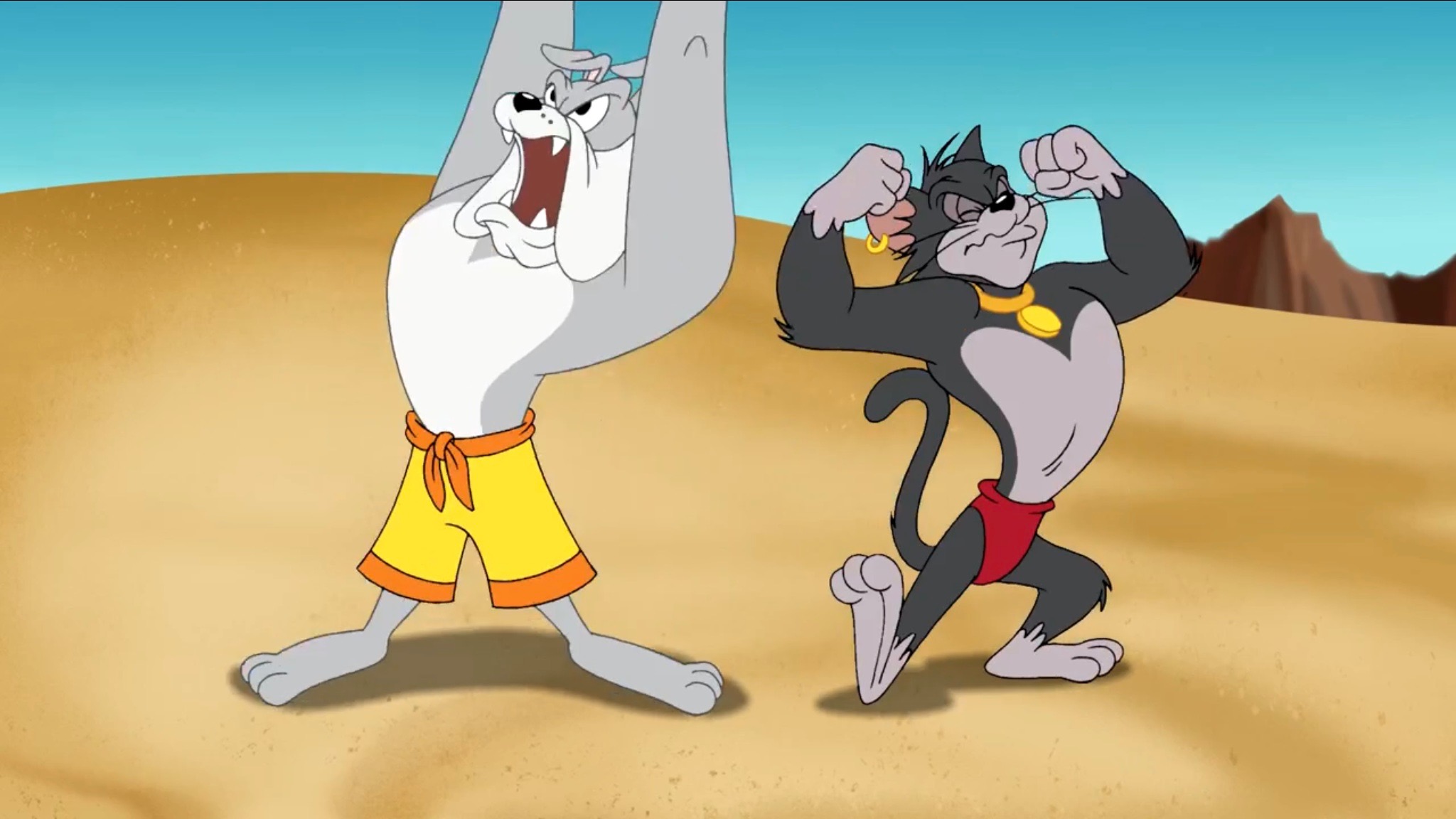
You know that feeling when you're watching a classic cartoon and a character pops up who just oozes "trouble"? That’s Butch. In the chaotic, slapstick universe of Butch Tom and Jerry, he wasn't just another background cat. He was the guy. The heavy. The street-smart alley cat who made Tom look like a pampered, indoor softy.
Honestly, Butch is one of the most fascinating recurring figures in animation history because he shifted roles constantly. Sometimes he was Tom’s best friend, sometimes he was his deadliest rival for a female cat’s affection, and occasionally, he was just a hungry stray trying to swipe a steak. He first appeared in the 1943 short Baby Puss, though back then, he was basically just a rough-around-the-edges leader of a gang. He didn't even have his iconic name yet.
Why Butch Changed Everything for Tom
Before Butch became a staple, Tom’s primary antagonist was usually Jerry or the occasional Bulldog (Spike). But Butch added a layer of social commentary that most kids probably missed. He represented the "alley cat" archetype—tough, resourceful, and frequently homeless. While Tom lived in a comfortable house with a fridge full of food, Butch was out there living by his wits.
This dynamic created some of the best episodes in the series. Take Springtime for Thomas (1946). Tom is head-over-heels for Toodles Galore, but then Butch shows up. He doesn't have Tom's polished manners, but he has swagger. He has that black fur, that scrappy attitude, and a cigar that seems surgically attached to his mouth. It wasn't just a fight over a mouse anymore; it was a battle of status.
Interestingly, Butch was voiced by several legends over the years. Harry E. Lang gave him that early, gravelly voice, but Billy Bletcher and the iconic Paul Frees also stepped into the booth. If you listen closely to the 1940s shorts, you can hear the subtle shifts in his personality based on who was behind the mic. Sometimes he was a fast-talking city slicker; other times, he was a slow, menacing brute.
The Evolution of the Alley Cat Gang
One thing people often forget is that Butch wasn't always a solo act. He was the undisputed leader of the "Alley Cat Gang." You might remember Lightning (the orange one who could move at light speed), Topsy (the smaller, brownish-gray kitten who was surprisingly cute but devious), and Meathead (the gray, somewhat dim-witted one).
Butch was the brains.
In episodes like Saturday Evening Puss, the gang basically turns Tom’s house into a jazz club. It's loud. It's chaotic. It’s exactly what Tom’s owners would hate. But it shows that Butch had a social circle. He had influence. Tom, by comparison, was often a loner, trapped between his duty to catch Jerry and his desire to just take a nap. Butch lived a life of freedom that Tom secretly envied, even if it meant sleeping in a trash can.
The Competition for Toodles Galore
The rivalry between Butch Tom and Jerry usually hit its peak when a female cat entered the frame. Toodles Galore was the primary object of their affection. In these episodes, the humor shifted from slapstick violence to "trying to out-rich" each other.
There’s a specific episode—The Million Dollar Cat—where Tom actually gets an inheritance. But usually, the tables are turned. Butch is the one who somehow finds a way to look wealthy, even if it’s all a facade. He’d show up in a top hat and a tuxedo that was probably stolen, smelling like expensive perfume and fish. It made the conflict relatable. We’ve all felt like the "Tom" in a situation where a "Butch" walks in and steals the spotlight with pure confidence.
Not Just a Villain: The Complex Morality of Butch
Is Butch a villain? Kinda. But not really.
In the later years, specifically in the Tom and Jerry Tales or the various direct-to-video movies, Butch and Tom are often portrayed as "frenemies." They’ll beat each other senseless in one scene and then sit down to share a milk carton in the next. It’s a very specific type of brotherhood found in old-school comedy.
Think about the episode Smarty Cat. Butch and the gang are watching home movies of Tom being humiliated. It’s mean-spirited, sure, but it’s also exactly what friends do to each other. They rib each other. They find the weak spots. Butch knew exactly how to get under Tom's skin, usually by pointing out that for all his "house cat" perks, Tom still couldn't catch a tiny mouse.
Behind the Scenes: The Animators' Vision
William Hanna and Joseph Barbera knew they needed a foil for Tom that wasn't a dog. Spike the Bulldog was great for physical comedy, but he couldn't play a romantic rival or a peer. Butch was designed to be Tom’s mirror image.
- Color Palette: His black fur contrasted perfectly with Tom’s bluish-gray. It made them easy to track during high-speed chases.
- Body Language: While Tom was often frantic and elastic, Butch moved with a certain heaviness. He felt solid. He felt like a guy who could actually take a punch and keep walking.
- The Voice: Using voices that mimicked popular actors of the era (like Jimmy Durante or Wallace Beery) gave Butch an instant personality that felt "lived-in" for 1940s audiences.
The animation quality in the "Butch" era—specifically the mid-40s to early 50s—is widely considered the peak of the franchise. The backgrounds were lush, the timing was frame-perfect, and the character designs were sharp. Butch benefitted from this high production value, becoming a permanent fixture in the rotation.
Butch in the Modern Era
If you watch the newer iterations of Butch Tom and Jerry, you'll notice he’s been softened a bit. The cigar is usually gone (for obvious reasons regarding modern broadcast standards), and his edge is slightly dulled. However, his role as the "competitive neighbor" remains intact.
In the 2021 Tom & Jerry movie, Butch makes an appearance, proving that the character has staying power. He isn't just a relic of the Golden Age of animation. He’s a necessary component of the trio’s dynamic. Without Butch, Tom is just a cat failing to catch a mouse. With Butch, Tom is a character trying to find his place in a hierarchy, often failing but always trying to prove he’s the "Alpha Cat" of the neighborhood.
Spotting the Differences: Butch vs. Meathead vs. Lightning
It’s easy to get the alley cats confused if you aren't a die-hard fan.
Butch is always the black cat. He’s usually the tallest and most articulate. Lightning is the orange-red one who first appeared in Old Rockin' Chair Tom. He’s known for his speed. Meathead is the gray one with the messy tuft of hair on his head, often portrayed as being a bit slow on the uptake.
If you see a black cat trying to woo a lady cat with a stolen bouquet of flowers, that's Butch. If he’s leading a group of cats into a kitchen to raid the fridge, that's also Butch. He is the organizer of chaos.
The Cultural Impact of the Alley Cat
There’s something very "New York" about Butch, even though the cartoons were made in California. He feels like a character out of a Damon Runyon story—a street-wise guy who knows where the best dumpsters are and how to talk his way into a penthouse.
He represents the resilience of the underdog (or under-cat). Despite never having a permanent home, Butch always seems to be doing okay. He’s got his friends, he’s got his health, and he’s always got a scheme cooking. In a weird way, he’s more successful than Tom, who is constantly at the mercy of his owners' whims.
Actionable Insights for Fans and Collectors
If you're looking to dive deeper into the world of Butch, here are a few things you can actually do to appreciate the character more:
- Watch the "Toodles Trilogy": Look for Springtime for Thomas, Casanova Cat, and Smitten Kitten. These episodes define the Butch/Tom rivalry perfectly and show off the best animation of the era.
- Check the Credits: Look for episodes directed by Tex Avery or produced by Fred Quimby. The "Butch" character really shines under their supervision, where the gags are more experimental and the character's "tough guy" persona is dialed up to eleven.
- Analyze the Sound Design: Pay attention to the music cues whenever Butch enters the room. Scott Bradley, the series' composer, often used specific brassy, jazz-heavy themes for Butch that differed from Tom’s more frantic, orchestral strings.
- Identify the Voice Actors: Try to spot the difference between Harry E. Lang and Paul Frees. It’s a fun game for animation buffs and helps you realize just how much work went into making a "secondary" character feel three-dimensional.
Butch isn't just a sidekick. He’s the engine that drives some of the most complex plots in the Tom and Jerry mythos. He’s the reminder that no matter how good you think you are, there’s always someone a little bit tougher, a little bit cooler, and a whole lot hungrier waiting just around the corner in the alley.
Understanding Butch is the key to understanding why the show worked for so long. It wasn't just about a cat and a mouse; it was about the whole world they lived in, and Butch was the king of the streets.
Next Steps for Enthusiasts
To truly master the history of this character, your next move should be exploring the original 1940s model sheets. These documents show how the animators meticulously planned Butch’s expressions—specifically his "smug" look—which became his trademark. You can also track down the 1950s shorts where Butch briefly became a "good guy" to see how the writers experimented with his morality. Watching these chronologically allows you to see the transition from a scary neighborhood bully to a lovable, if slightly devious, member of the ensemble.