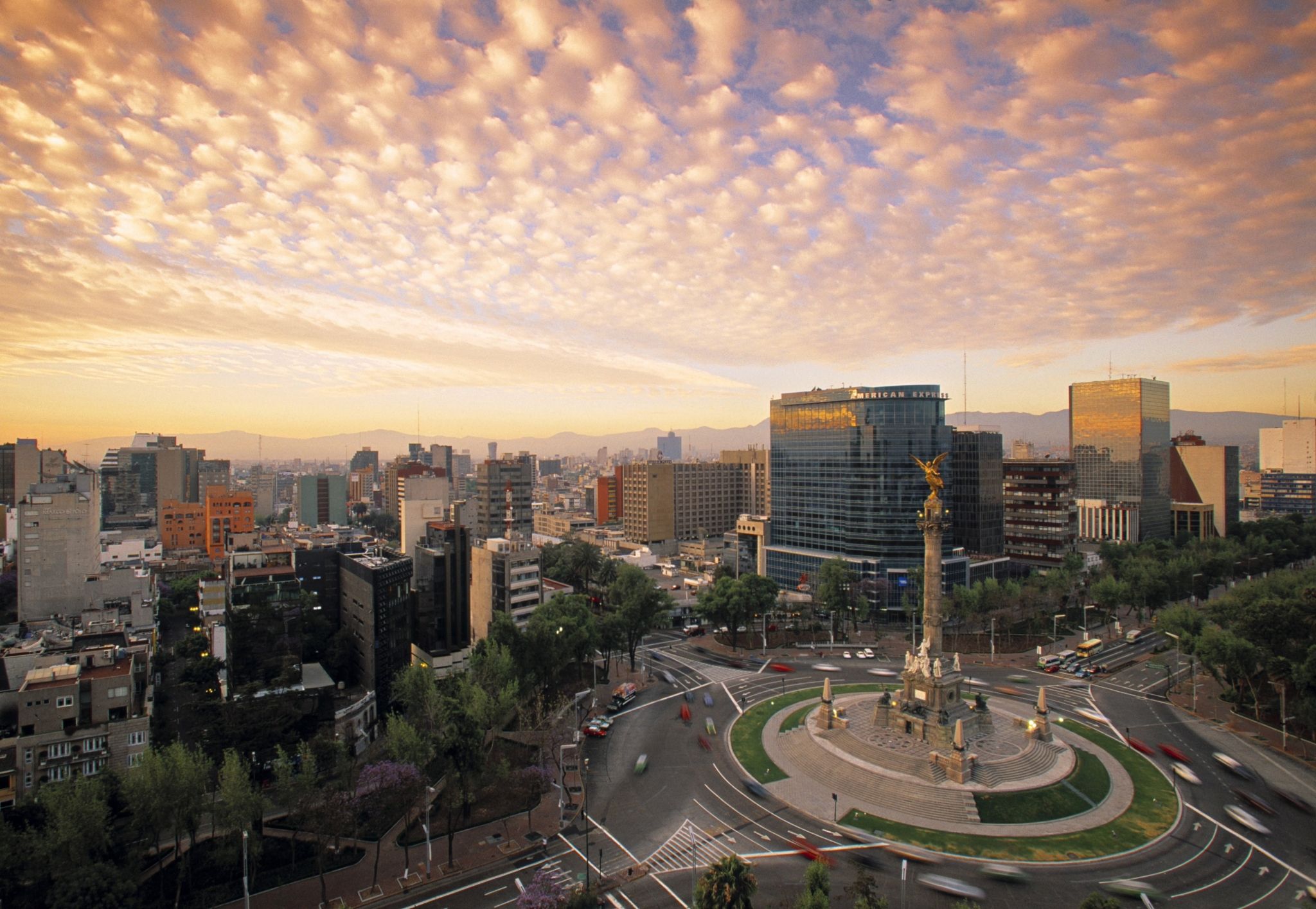
If you’ve been looking at flight deals or scrolling through Instagram lately, you’ve probably seen those four letters everywhere: CDMX. It’s on tote bags, hashtags, and digital nomad bios. But what is CDMX in Mexico exactly?
Basically, it’s the shorthand for Ciudad de México, or Mexico City.
For decades, the world called it "D.F." (Distrito Federal). Then, around 2016, the government decided to shake things up. They rebranded the whole capital. It wasn't just a marketing gimmick; it was a massive political shift that turned the federal district into the 32nd state of the Mexican union. Now, it has its own constitution and a lot more autonomy.
But for you? It’s just the name of one of the most chaotic, beautiful, and overwhelming urban sprawls on the planet.
The Rebrand: Why D.F. Became CDMX
People get confused about this all the time. Imagine if Washington D.C. suddenly decided to call itself "The District" and changed all its legal paperwork. That’s what happened here.
The transition from Distrito Federal to Ciudad de México (CDMX) was legally finalized under the administration of Miguel Ángel Mancera. The goal was to give the city's residents (Chilangos) the same rights as people living in other Mexican states. Before the change, the mayor was more like a department head under the president. Now? The Head of Government (Jefa de Gobierno) has serious power.
It’s a massive place. We are talking about over 22 million people in the greater metropolitan area.
You’ve got history literally stacked on top of history. The Spanish built their cathedral right over the Aztec Templo Mayor. You can see the ruins of the Mexica Empire poking out from the ground right next to colonial architecture. It’s weird. It’s heavy. It’s incredibly cool.
Geography and the "Sinking" Reality
One thing most people don't realize when asking what is CDMX in Mexico is that the city is actually a bowl. It sits in a high-altitude valley—the Valley of Mexico—surrounded by mountains and volcanoes like Popocatépetl and Iztaccíhuatl.
You’re at 7,350 feet (2,240 meters).
If you fly in from sea level, you will feel it. Your head might throb. You’ll get winded walking up a flight of stairs to a rooftop bar in Roma Norte. Drink water. Seriously.
Also, the city is sinking.
Because the Aztecs built Tenochtitlán on an island in Lake Texcoco, and the Spanish drained that lake, the city is sitting on soft clay. According to research from the University of Oregon and UNAM, parts of the city are dropping by as much as 20 inches a year. If you walk around the Centro Histórico, you’ll see buildings leaning at angles that look like they shouldn't be possible. The Angel of Independence statue has had to have extra steps added to its base over the years because the ground around it is falling away.
Navigating the "Colonias"
CDMX isn't just one big blob. It’s a collection of neighborhoods, or colonias, each with its own soul. If you just stay in the tourist bubble, you’re missing the point.
Roma and Condesa
These are the darlings of the expat world. If you want oat milk lattes, Art Deco architecture, and parks full of pampered golden retrievers, this is it. It’s gorgeous, sure, but it’s also the epicenter of the city’s gentrification debate. Rents have skyrocketed here, pushing out locals who have lived there for generations.
Polanco
Think Beverly Hills but with better food. It’s where the high-end boutiques are. It’s home to Pujol, Enrique Olvera’s world-famous restaurant that you usually have to book months in advance. It’s polished, safe, and very expensive.
Coyoacán
Way south. This is where Frida Kahlo and Diego Rivera lived. It feels like a small colonial village that got swallowed by a giant city. Cobblestone streets, colorful markets, and a lot of history. It’s slower.
Centro Histórico
The heart of it all. This is where you find the Zócalo, one of the largest city squares in the world. It’s loud. It’s crowded. There are street vendors selling everything from fried grasshoppers (chapulines) to knock-off electronics. It’s the raw energy of the city.
The Food: More Than Just Tacos
You can’t talk about what is CDMX in Mexico without talking about the street food. Honestly, the food is the main reason people visit.
You’ve got the Taco al Pastor. Pork marinated in dried chilies and spices, cooked on a vertical spit (the trompo), and topped with a slice of pineapple. It’s a legacy of Lebanese immigrants who brought the shawarma style to Mexico in the early 20th century.
But it’s not just tacos. You have:
- Chilaquiles: Fried tortilla chips smothered in green or red salsa, topped with cream, cheese, and eggs. The ultimate breakfast.
- Tlacoyos: Oval-shaped masa cakes stuffed with beans or cheese, topped with cactus (nopales).
- Pambazos: Sandwiches dipped in guajillo chili sauce and fried.
The culinary scene ranges from a 50-cent taco on a street corner to a $200 tasting menu at Quintonil. Both are equally valid "CDMX experiences."
The Complexity of Safety and Life
Is it safe? People ask this constantly.
Look, CDMX is a massive global megacity. It has the same problems as New York, London, or Paris. Petty theft happens. There are neighborhoods you shouldn't go into, like parts of Tepito or Iztapalapa, unless you have a reason to be there and know the area.
But for the most part? If you use common sense—don't flash expensive jewelry, use Uber instead of hailing street taxis at night, keep an eye on your phone—you’ll likely be fine.
The biggest "danger" for most visitors is actually the traffic. It is legendary. A five-mile trip can take an hour and a half during rush hour. The "Hoy No Circula" program limits which cars can be on the road on certain days to try and cut down on smog, but it’s still a car-heavy city. Use the Metro if you can; it’s one of the cheapest and most extensive in the world, though it gets incredibly crowded.
Why the City Matters Globally
CDMX is the financial hub of Latin America. The Bolsa Mexicana de Valores is here. It’s a tech hub. It’s a design hub.
In recent years, it has become a magnet for "digital nomads." With the rise of remote work, thousands of Americans and Europeans have flocked to the city for its low cost of living (relative to USD or EUR) and high quality of life. This has created a weird tension. On one hand, the city is booming. On the other, "digital nomadism" is driving up prices so fast that many locals can no longer afford to live in their own neighborhoods.
It’s a city of contradictions. It’s incredibly green—Bosque de Chapultepec is twice the size of New York’s Central Park—but it also struggles with air quality. It’s deeply traditional, yet it’s one of the most progressive cities in Latin America (same-sex marriage and abortion were legal here long before many other places).
How to Actually Experience CDMX
Don't try to see it all in three days. You can't. You’ll just end up tired and stuck in a car.
Pick two neighborhoods and stick to them. Walk as much as possible. Stop at the stands that have a line of locals—that’s the golden rule for street food. Go to the Anthropology Museum; it’s genuinely one of the best museums on earth.
Take a "trajinera" boat ride in Xochimilco. Yes, it’s touristy, but drinking a beer on a colorful boat while a mariachi band floats past you is a core Mexico City memory.
Actionable Steps for Your Visit:
- Download Uber or DiDi: Don't bother with street taxis. Apps are safer and give you a fixed price.
- Carry Cash: Many of the best taco stands and markets don't take cards. Small bills (50s and 100s) are your best friend.
- Learn Basic Spanish: You can get by with English in Roma/Condesa, but knowing how to order "dos de pastor con todo" (two pastor tacos with everything) goes a long way.
- Respect the Water: Do not drink the tap water. Even locals don't. Use bottled water for drinking and brushing your teeth if you have a sensitive stomach.
- Sunday Bike Rides: Every Sunday, the city closes Paseo de la Reforma (the main boulevard) to cars. Thousands of people bike, skate, and run. It’s the best way to see the city's monuments without the exhaust fumes.
CDMX isn't just a destination. It’s an endurance sport. It’s loud, it smells like exhaust and jasmine, and it never stops moving. Whether you call it Mexico City, D.F., or CDMX, it remains the beating heart of North America. It’s a place that demands your full attention and usually gives back way more than it takes.
If you're planning to go, stop overthinking the logistics and just book the ticket. The city will figure itself out for you once you arrive. Just remember to breathe—the air is thin up there.