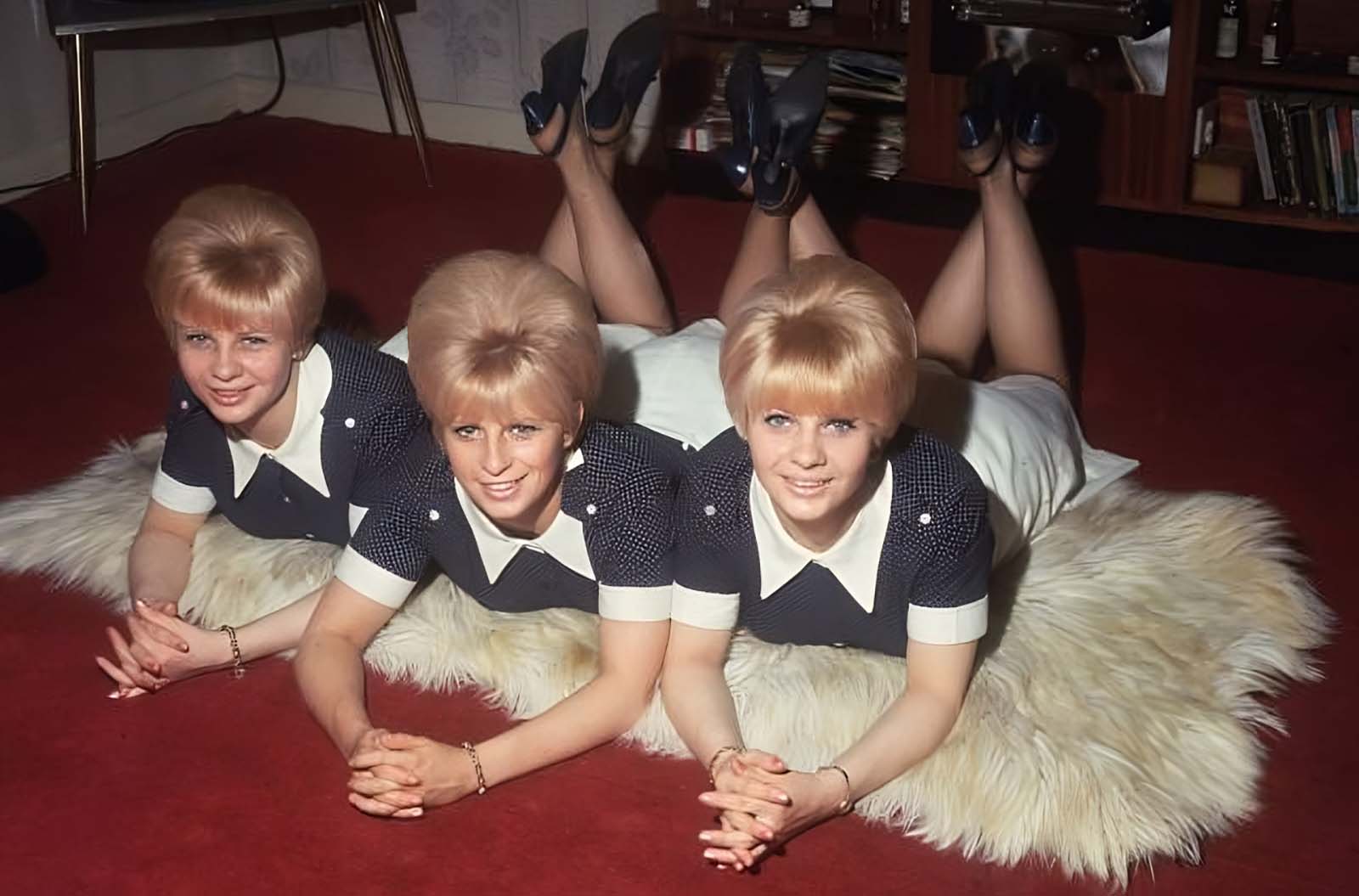
Everyone knows the legend. The girl from a one-room cabin in the Great Smoky Mountains who shows up in Nashville with nothing but a cardboard suitcase and a dream. It's the ultimate "rags-to-rhinestones" story. But if you look at Dolly Parton in 1960, you’ll realize the "overnight success" narrative is basically a myth. She wasn't some wide-eyed kid just starting out when she hit the big time later that decade. By 1960, she was already a seasoned professional with years of radio experience and a record deal under her belt.
She was fourteen.
Fourteen years old and already hustling harder than most adults in the industry. Honestly, it's wild to think about. While most teenagers in 1960 were obsessing over the Everly Brothers or worrying about algebra, Dolly was commuting from Sevier County to Knoxville to perform on the Cas Walker Farm and Home Hour. She’d been doing that since she was ten.
The Teenage Professional of East Tennessee
People tend to skip over these years. They jump from her birth in 1946 straight to her 1964 move to Nashville. Big mistake. 1960 was actually a pivotal "grind" year for her. She was a regular on local television. She had already released her first single, "Puppy Love," on Goldband Records a year prior. It didn't chart, but it proved she could hold her own in a studio.
Imagine the logistics.
She lived in rural Locust Ridge. No electricity. No running water. To get to those early morning radio spots, her Uncle Bill Owens—the man she credits for basically launching her career—had to drive her across winding mountain roads. 1960 was a year of repetition. It was about singing for grocery store openings and local festivals. It was about the "little Martin" guitar that she took everywhere.
"I always knew I was going to be a star," Dolly has said in various interviews over the years. "I just didn't know how long it would take for everyone else to figure it out."
The Sound of 1960: Not Quite Country?
Here is something that really surprises people: her early sound wasn't the pure country we associate with her. If you listen to those late 50s and early 1960-era recordings, she was leaning into rockabilly and bubblegum pop.
The industry didn't know what to do with her.
Producers thought her voice was too high, too "tremulous." They tried to force her into a pop mold. This struggle actually defined her early twenties, but the roots of that tension started right here in 1960. She was a songwriter first, even then. She and Bill Owens were constantly writing. They weren't just writing about heartbreak; they were writing about the grit of mountain life, even if the labels wanted "Puppy Love" sequels.
Why 1960 Was the Foundation for Nashville
Without the trials of 1960, the 1964 move never happens. You can't just drop a teenager into Music City and expect them to survive. But Dolly wasn't just any teenager. By the time 1960 rolled around, she had already:
- Performed at the Grand Ole Opry (introduced by Johnny Cash, no less).
- Dealt with the rejection of a non-charting debut single.
- Learned how to command a live television audience in Knoxville.
She was building a thick skin.
She was also watching. She watched how Cas Walker ran his business. She watched how performers handled the crowd. Most importantly, she saw that being a "girl singer" in the 1960s meant you were often treated like scenery. She decided, likely during these formative years, that she wasn't going to be scenery.
The Misconception of the "Poor Girl" Narrative
We love to talk about the "sack of corn" her father used to pay the doctor for her birth. It’s a true story, and it’s beautiful. But in 1960, the Parton family’s poverty wasn't a PR talking point; it was a daily reality.
Yet, she wasn't "poor" in spirit.
By 1960, the family had moved to a slightly better situation than the original cabin, but things were still tight. This is the year she was halfway through high school. She was the first in her family to eventually graduate, which happened in 1964. People think she hated her hometown because she left the day after graduation. Wrong. She loved it so much she spent the rest of her life trying to buy it back and turn it into an economic engine for her people.
Key Milestones Around This Era
- 1959: Released "Puppy Love" on Goldband Records.
- 1960: Continued as a regular on the Cas Walker Show.
- 1962: Signed to Mercury Records (a major label) and released "It's Sure Gonna Hurt."
- 1964: Graduated and left for Nashville on a Greyhound bus.
If you look at that timeline, 1960 is the quiet center. It’s the year of the "slow build."
What You Can Learn From Dolly’s 1960 Strategy
Honestly, the way she handled her career as a fourteen-year-old is a masterclass in modern branding. She didn't wait for permission. She didn't wait for a talent scout to find her in the woods. She went to where the microphones were.
If you're trying to build something today, her 1960 mindset is basically the blueprint.
- Diversify your skills early. She wasn't just a singer; she played the guitar, banjo, and wrote the lyrics.
- Local fame is a stepping stone. She conquered Knoxville before she ever tried to conquer Nashville.
- Ignore the "No." Mercury Records told her she should be a pop singer. She did it to get her foot in the door, then pivoted back to her roots the second she had leverage.
Dolly Parton in 1960 was a girl with a plan. She wasn't lucky. She was prepared.
When you look back at that era, don't see a victim of poverty. See a CEO in training. She was learning the business of being "Dolly" before the world even knew what that meant. It's a reminder that the years where "nothing is happening" are usually the years where everything is being built.
To truly understand the legend, you have to look at the teenager in the itchy dresses, singing for groceries on a black-and-white TV screen in East Tennessee. That’s where the steel was forged.
Actionable Insights for the Dolly Fan or Historian:
- Listen to the Goldband sessions: Hunt down the 1959-1960 recordings. You’ll hear a raw, rockabilly energy that she eventually smoothed out for the Opry.
- Visit the Cas Walker history: If you're ever in Knoxville, look for the history of the Farm and Home Hour. It's the real "college" where Dolly learned to entertain.
- Track the Songwriting: Look at the credits for her early 60s songs. The partnership with Bill Owens is one of the most underrated duos in country music history.
The real story isn't that she made it; it's that she was already a pro before she even left home.