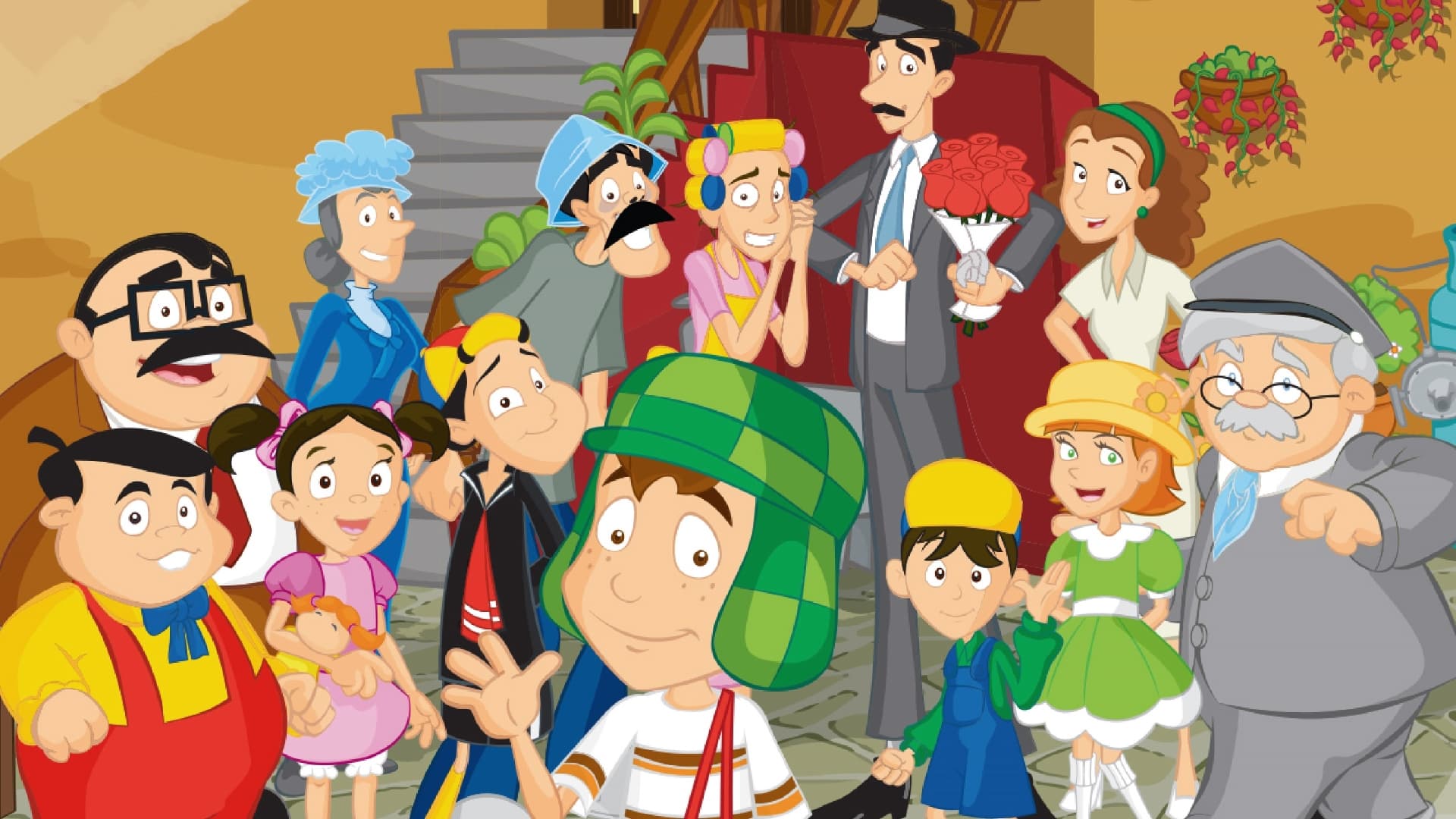
He was skinny. He was perpetually unemployed. He wore the same faded blue denim hat and black t-shirt for nearly a decade. Honestly, if you grew up anywhere in Latin America, Spain, or even parts of Brazil, Don Ramón wasn't just a character on a sitcom. He was your neighbor. Or maybe he was your uncle who always had a "business idea" that involved borrowing twenty pesos.
Ramón Valdés, the man behind the character, didn't just play a role in El Chavo del Ocho. He basically lived it. There’s a famous story—often repeated by his co-stars like Edgar Vivar (Señor Barriga)—that Roberto Gómez Bolaños "Chespirito" didn't give Valdés much direction. He just told him, "Be yourself."
That’s the secret sauce.
While the rest of the cast wore elaborate costumes or acted like caricatures, Don Ramón was painfully, hilariously real. He was the emotional anchor of the vecindad. Without him, the show eventually lost its soul. Let’s get into why this grumpy, debt-ridden man remains the most iconic figure in Spanish-language television history.
The Reality of 14 Months of Rent
The running gag was simple: Don Ramón owed Señor Barriga 14 months of rent. It never went up. It never went down. It was a mathematical constant of the universe. But if you look deeper, that conflict represented a very real tension in 1970s Mexico.
The struggle was relatable.
He wasn't lazy, per se. We saw him try everything. He was a boxer, a carpenter, a balloon salesman, a hairdresser, and a shoemaker. He even tried teaching the kids in the courtyard. The problem wasn't a lack of will; it was a lack of luck. In a region where the informal economy is the lifeline for millions, Don Ramón became the patron saint of the "hustle."
Interestingly, Ramón Valdés came from a family of comedic royalty. His brothers were Germán Valdés (the legendary Tin Tan) and Manuel "El Loco" Valdés. Yet, while his brothers played flamboyant, charismatic leads, Ramón found his niche as the everyman. He had this incredible "rubber face" that could convey exhaustion, terror, and fatherly love in a single frame.
Why the Chemistry Worked (and Why It Broke)
The dynamic between Don Ramón and Doña Florinda was pure slapstick gold. It followed a rigid, almost ritualistic pattern:
- Quico gets into trouble (usually his own fault).
- Quico cries against the wall.
- Doña Florinda appears, assuming Don Ramón did something.
- She slaps him.
- He spins around, his hat flies off, and he stomps on it in frustration.
It sounds repetitive. On paper, it is. But Valdés brought a specific timing to that "hat stomp" that modern comedians still study. It was a physical manifestation of the unfairness of life.
Then there was the relationship with Chavo. This is where the "human" quality of the writing really shines. Don Ramón was the only adult who treated Chavo like a person rather than a nuisance or a charity case. He lost his temper with the kid, sure. He flicked him on the head (el coscorrón). But he also shared his food when he barely had any for himself and La Chilindrina.
The 1979 Departure
Everything changed in 1979. Valdés left the show.
The reasons have been debated for decades. Some say it was internal politics involving Florinda Meza taking more control over the production. Others, including his daughter Carmen Valdés in various interviews, suggested he simply wanted more freedom and wasn't happy with the changing atmosphere on set.
He returned briefly in 1981, but the magic was flickering out. When you watch those later episodes without him, the void is massive. The show tried to fill the gap with "Jaimito el Cartero," a sweet but far less dynamic character. Jaimito was tired; Don Ramón was exhausted. There’s a difference in comedic energy there that couldn't be replicated.
Beyond the Vecindad: The Man Behind the Denim
People often ask if he was really like the character. By all accounts from his family, yes. He was reportedly a man of simple tastes who hated the "diva" behavior often found in show business.
- He loved his cigarettes: Unfortunately, this led to his battle with stomach cancer.
- He was a nomad: Even after becoming wealthy from the show’s success, he didn't live a flashy life.
- The Funeral: When he passed away in 1988, Angelines Fernández (Doña Clotilde, the "Bruja del 71") reportedly stayed by his coffin for hours, crying and calling him "mi rorro." They were incredibly close friends in real life, which makes their on-screen "unrequited love" plotline both sweeter and sadder.
The Global Phenomenon of "Seu Madruga"
In Brazil, the show is known as Chaves, and Don Ramón is "Seu Madruga." To say he is a cult hero there is an understatement. There are statues of him. There are rock songs dedicated to him.
Why? Because the "malandro" spirit—the street-smart guy surviving on his wits—is universal. Whether you call it picardía in Mexico or jeitinho in Brazil, Don Ramón is the face of the survivor. He’s the guy who gets knocked down by life (or a physical slap from a neighbor) and just puts his hat back on.
The Technical Brilliance of Ramón Valdés
If you watch the show today, pay attention to his "dead air" acting. When other characters are talking, Valdés is constantly moving. He’s adjusting his pants, scratching his neck, or looking at the camera with a "can you believe this?" expression.
He was a master of the double take.
Most actors overact for children's programming. Valdés did the opposite. He played the frustration completely straight. When he told Quico "No te doy otra nomás porque..." (I’m not giving you another one only because...), he looked genuinely ready to snap. That edge made the eventual moments of tenderness feel earned.
What Most People Get Wrong About the Character
A common misconception is that Don Ramón was a "deadbeat" dad. Actually, the show subtly portrays him as a widower doing his absolute best in a desperate situation. He is a single father raising a daughter in a rough environment. He prioritizes her education and her happiness over his own comfort.
He’s also surprisingly cultured. In various episodes, he references classical music, history, and philosophy—usually right before failing to pay a 50-cent bill. This contrast made him the most intellectual character in the courtyard, despite his lack of formal status.
Actionable Insights: How to Appreciate the Legacy Today
If you want to dive back into the world of Don Ramón, don't just look for "Best Of" clips. To truly see the craft, you need context.
- Watch the "Boxer" episodes: These showcase his physical comedy at its peak. His movements are fluid and his timing with the props is flawless.
- Look for the 1981 Return: Search for the episode where he returns to the vecindad and reunites with La Chilindrina. The tears on Maria Antonieta de las Nieves' face weren't scripted; she didn't know he was coming back that day. It’s one of the few truly "unscripted" emotional moments in the series.
- Follow the Valdés Family: His children and grandchildren often share rare, behind-the-scenes photos on social media that humanize the man behind the myth, showing him as a dedicated family man who happened to be a global icon.
Don Ramón wasn't just a character. He was a mirror. He showed us that you can be poor, stressed, and constantly losing, but you can still have dignity. You can still have a sense of humor. And you can still be a hero to a kid in a barrel.
The next time you see a skinny guy in a faded black shirt, remember the man who taught an entire continent that "no hay trabajo malo, lo malo es tener que trabajar" (there is no bad work, the bad thing is having to work). He wasn't just a comedian; he was the heart of the most important show in Latin American history.