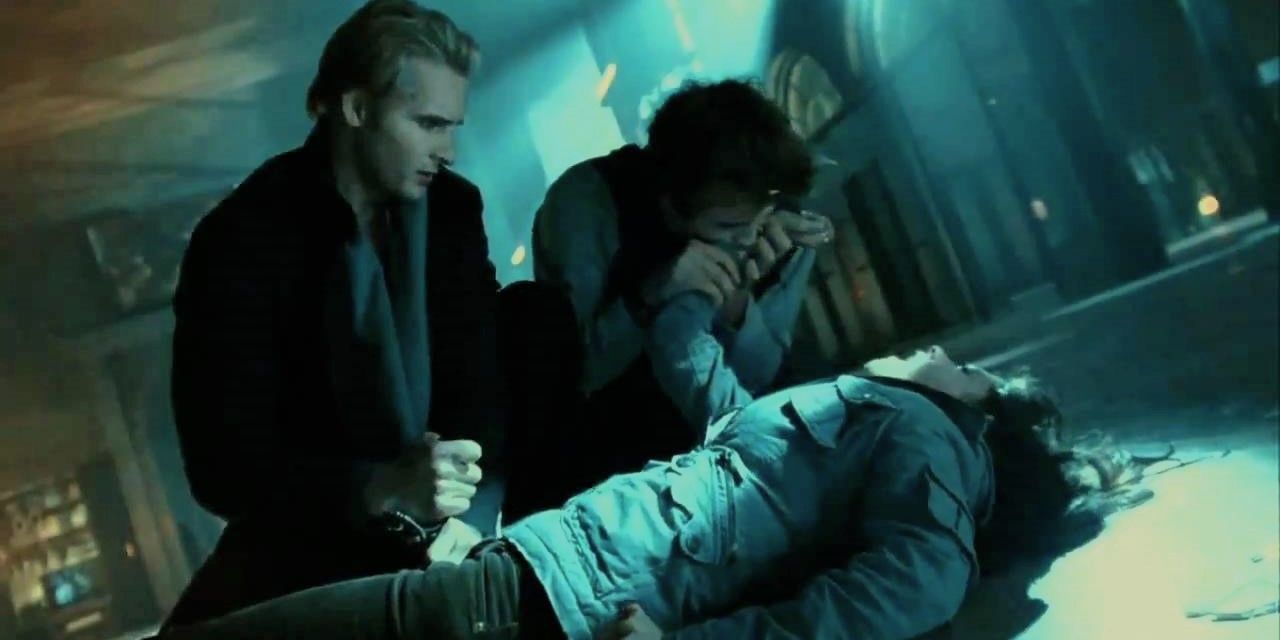
It was the moment an entire generation of Twi-hards had been waiting for. After three books of intense, agonizingly slow-burn celibacy, Stephenie Meyer finally gave readers what they wanted in Breaking Dawn. But the reality of Edward and Bella sex wasn't exactly a typical romance novel trope. It was messy. It was destructive. Honestly, it was a little bit terrifying if you actually stop to think about the physics involved.
Fans remember the feathers. They remember the broken bed frame. Most of all, they remember the bruises that sparked a massive controversy about the nature of their relationship.
The Logistics of Vampire Intimacy
How does a "vegetarian" vampire who can crush granite with his pinky finger actually manage to have a physical relationship with a fragile human? This wasn't just a plot point; it was the central tension of the first three novels. Edward Cullen spent years terrified that he would literally kill Bella Swan in the heat of the moment.
He wasn't being dramatic. In the world Meyer built, vampires are essentially living statues made of a substance harder than diamond. Their skin is cold. Their muscles don't fatigue. When Edward and Bella finally consummate their marriage on Isle Esme, the aftermath looks more like a construction site than a honeymoon suite.
The scene in the book is famously told through Bella’s perspective the morning after. She wakes up covered in feathers from pillows Edward shredded in his attempt to restrain his own strength. It's a polarizing moment. Some readers found the "dangerous love" aspect incredibly romantic. Others looked at Bella’s bruised body and felt a deep sense of unease. This shift in the Twilight Saga from chaste longing to "honeymoon horror" changed the series’ tone overnight.
The Problem with the Bruises
Let’s talk about those bruises. In the Breaking Dawn novel, Bella wakes up and realizes her body is covered in large, purple welts. Edward is horrified. He’s so distraught by the sight of her injuries that he initially refuses to touch her again until she becomes a vampire.
This is where the expert discourse on Twilight gets complicated. Critics, including those like Bitch Media and various feminist scholars, have long pointed out that the portrayal of Edward and Bella sex leans heavily into the "glamorization of domestic violence" trope. Even if the intent was supernatural fantasy, the visual of a woman covered in marks inflicted by her partner—marks she then tries to hide or dismiss—is heavy.
Bella’s reaction is what fascinates me. She doesn't care. She’s actually frustrated that Edward wants to stop. For her, the physical connection was worth the physical cost. It’s a classic example of Meyer’s focus on sacrifice in the name of love, even when that sacrifice is literal flesh and bone.
How the Movie Handled the Heat
When Bill Condon signed on to direct Breaking Dawn – Part 1, he had a massive problem. How do you film Edward and Bella sex for a PG-13 audience without losing the intensity of the book?
The result was a highly stylized, almost impressionistic sequence. We see flashes of Bella’s hands gripping the headboard. We see the bed frame snapping. We see the feathers. It’s remarkably chaste compared to the R-rated "fan fiction" versions people had in their heads, yet it remains one of the most searched scenes in cinematic history.
Kristen Stewart and Robert Pattinson have both talked about how awkward it was to film. Pattinson famously joked in interviews about his "vampire movements" and the absurdity of trying to look "ecstatic" while worrying about the logistics of the pillows. The chemistry between the two actors, who were dating in real life at the time, certainly helped sell the scene, but the film had to walk a very fine line between eroticism and the horror of Bella’s pregnancy that followed almost immediately.
The Biological Aftermath
You can't discuss Edward and Bella sex without discussing the "demon baby" in the room. Renesmee Cullen.
The mechanics of vampire reproduction in Meyer’s universe are... specific. Since vampires don't have blood flow, the explanation provided in the "Twilight Saga Official Illustrated Guide" is that their bodies are filled with a fluid similar to venom that acts as a lubricant and, apparently, a carrier for genetic material.
- Vampires are frozen in time, but they can still produce "fluids."
- Human females are fertile, allowing for the hybrid conception.
- The pregnancy progressed at an impossible speed, nearly killing Bella from the inside out.
It turned the story from a romance into a body-horror survival tale. The act of sex wasn't just a climax of their emotional journey; it was a catalyst for Bella’s near-death experience and her eventual transformation.
Why the Fanbase is Still Obsessed
Why do we still talk about this? It’s been years since the last movie hit theaters.
Part of it is the "Midnight Sun" effect. When Stephenie Meyer released Edward’s version of the first book, it reignited interest in his internal struggle. Knowing how much he obsessed over her safety for four books makes the Breaking Dawn payoff feel more significant.
There's also the "Fifty Shades" connection. It's common knowledge now that E.L. James’s mega-hit started as Twilight fan fiction. The dynamics of Edward and Bella sex—the power imbalance, the danger, the intense emotional stakes—essentially birthed a whole new subgenre of "dark romance" that dominates the Kindle charts today.
But beyond the industry impact, there's a psychological hook. People are drawn to the idea of a love so intense it’s literally breaking things. It’s a heightened, supernatural version of the "all-consuming" love people crave or fear in their own lives. Whether you think it’s a beautiful fantasy or a toxic mess, you can’t deny its staying power in the cultural zeitgeist.
Examining the Cultural Impact
Back in 2008-2012, the "Twilight" phenomenon was unavoidable. The discourse surrounding the couple’s physical relationship often mirrored real-world debates about purity culture. Meyer, a member of the Church of Jesus Christ of Latter-day Saints, infused the books with themes of abstinence.
By making Edward and Bella sex dangerous, the narrative reinforces the idea that waiting for marriage is the only "safe" way to navigate that level of passion. It’s a moral framework dressed up in velvet capes and glittery skin. Some scholars argue this makes the sex scene a "reward" for Bella’s "virtue," while others see it as a cautionary tale about the loss of agency.
Whatever your take, the scene remains a masterclass in tension. It took four books to get there. That kind of narrative restraint is rare in modern media.
The Evolution of the Scene in Fan Culture
If you go to sites like Archive of Our Own (AO3), the "Isle Esme" tags are still incredibly active. Fans have spent over a decade rewriting that night, often removing the bruises or adding more dialogue. It shows that the "canon" version left people wanting.
Some felt the book was too vague. Others felt it was too violent. By leaving so much to the imagination (or to the feathers), Meyer created a vacuum that fans have been filling with their own interpretations for fifteen years.
Final Thoughts on the Cullen Honeymoon
Looking back, the Edward and Bella sex scene wasn't really about the act itself. It was about the transition of Bella Swan from a girl who was "obsessed" to a woman who was "equal." It marked the end of her human vulnerability. Once she survived that night—and the subsequent birth—she became the predator, not the prey.
The broken bed and the bruises were the last gasps of her human life. In the final book, when they are both vampires, the dynamic shifts entirely. The danger is gone because she is just as strong as he is. But interestingly, those later scenes never captured the public’s imagination quite like the "first time" on the island. The risk, it seems, was the whole point.
Understanding the Legacy: Next Steps
To truly grasp the impact of this cultural moment, you should look at how it changed the "Young Adult" genre.
- Compare the Source Material: Read the Isle Esme chapters in Breaking Dawn and then watch the film back-to-back. Notice what the movie emphasizes (the romance) versus what the book emphasizes (the physical damage).
- Explore the "Twilight" Influence: Look at modern "Romantasy" novels like A Court of Thorns and Roses. You'll see the DNA of Edward and Bella’s high-stakes intimacy in almost every chapter.
- Analyze the Purity Culture Discourse: If you're interested in the "why" behind the writing, research Stephenie Meyer’s interviews regarding her faith and how it shaped the "wait until marriage" plotline.
The fascination with Edward and Bella isn't going anywhere. As long as people are interested in the intersection of danger and desire, that broken bed on Isle Esme will remain a cornerstone of pop culture history.