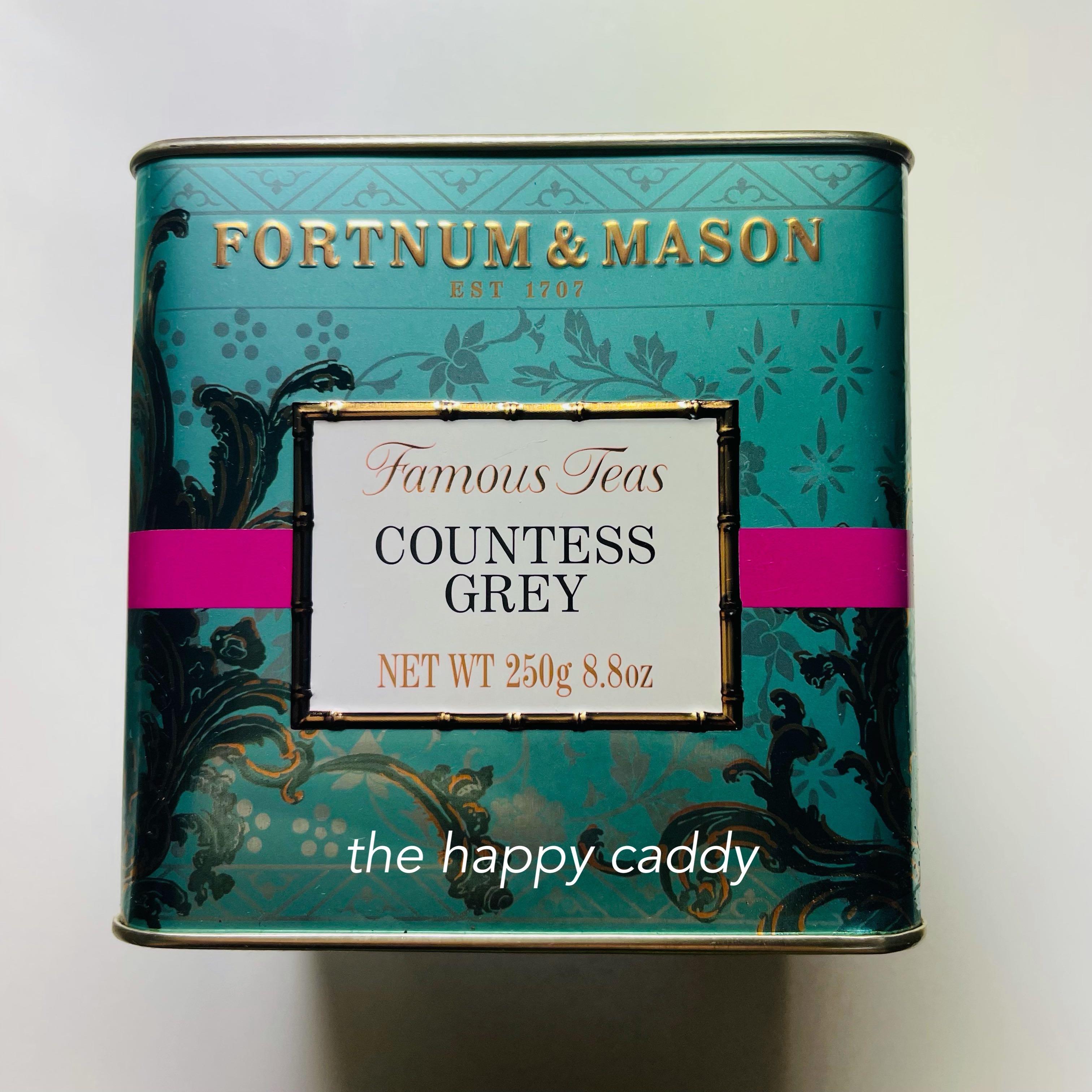
If you’ve ever walked down Piccadilly in London, you know the vibe. It’s turquoise. It’s gold. It’s aggressively British. Most people go there for the hampers, but honestly, most of us are there for the blue tins. Specifically, the Fortnum and Mason Earl Grey tea. It’s the kind of thing you buy because you want your kitchen to look like a Pinterest board, but then you actually drink it and realize there’s a massive rabbit hole of history and chemistry behind that specific bergamot scent.
Tea is weird. We’re basically just drinking flavored hot water, yet people get incredibly tribal about it.
Earl Grey is arguably the most famous flavored tea in the world. It’s basically just black tea and bergamot oil. Simple, right? Not really. There’s a huge difference between a grocery store tea bag that tastes like floor cleaner and the stuff Fortnum’s puts out.
The Weird History of the Grey Family
Nobody actually knows who "invented" Earl Grey.
Charles Grey, the 2nd Earl Grey and British Prime Minister in the 1830s, is the namesake. One story says a Chinese mandarin saved the son of one of Grey’s men from drowning and gifted the recipe in gratitude. Total nonsense. Charles Grey never even went to China.
Another theory? The bergamot was added to offset the taste of lime in the water at Howick Hall, the family estate in Northumberland.
Fortnum and Mason didn't just jump on the bandwagon; they helped build it. While Jacksons of Piccadilly and Twinings both claim they have the "original" recipe, Fortnum’s version became the gold standard for the luxury set. They’ve been at 181 Piccadilly since 1707. Think about that. They were selling tea before the United States was even a country.
Why the Bergamot Matters
Bergamot isn't a lemon. It’s not an orange. It’s a citrus fruit that looks like a lumpy green lime and tastes incredibly bitter. You wouldn't want to eat one. But the oil extracted from the rind is liquid gold.
Most cheap brands use "natural flavoring," which is often a polite way of saying "engineered in a lab to smell like fruit." Fortnum and Mason Earl Grey tea uses high-quality bergamot oil, and you can tell by the "nose." When you crack open that tin, it shouldn't smell like perfume. It should smell bright, slightly peppery, and sharp.
What’s Actually Inside the Tin?
Fortnum’s doesn't just have one Earl Grey. That’s a common mistake. They have a whole hierarchy.
The classic Earl Grey is usually a blend of China and Ceylon teas. Why? Because you need a base that is robust enough to handle the citrus but light enough that it doesn't bury it. If you use a heavy, malty Assam, the bergamot gets lost. It ends up tasting like a muddy orange.
Then you’ve got the Smoky Earl Grey. This one is polarizing. It’s basically Earl Grey mixed with Lapsang Souchong. It smells like a campfire in a lemon grove. Some people find it revolting; others won’t drink anything else.
And don't get me started on the Countess Grey. It’s lighter, usually with a bit of orange peel. It’s basically the "summer" version of the classic.
Loose Leaf vs. Tea Bags
I'll be blunt: if you're buying the tea bags, you're paying for convenience, not the best flavor.
Tea bags usually contain "fannings" or "dust." These are the tiny broken bits left over from the tea sorting process. Because they have more surface area, they infuse faster (good for a quick mug), but they also release tannins faster, which makes the tea bitter.
Loose leaf Fortnum and Mason Earl Grey tea uses larger leaves. They take longer to unfurl. This gives the bergamot time to mingle with the water without the tea turning into battery acid.
The Brewing Science Most People Ignore
You’re probably burning your tea.
Most people boil the kettle, wait for it to whistle, and pour that 100°C (212°F) water directly onto the leaves. Stop doing that.
Black tea likes high heat, sure, but boiling water can scorch the delicate bergamot oils. Ideally, you want your water at about 95°C. Let the kettle sit for 60 seconds after it clicks off.
- Amount: One teaspoon (about 2g) per person, plus "one for the pot."
- Time: 3 to 5 minutes. No more. If you leave it for 10 minutes, you aren't getting "stronger" tea; you're just getting a cup of polyphenols and bitterness that will dry out your mouth.
- The Milk Debate: This is where friendships end. Traditionally, Earl Grey is taken black or with a slice of lemon. Bergamot is acidic. Milk is alkaline. They don't always play nice together. However, Fortnum’s blend is sturdy enough that a tiny splash of milk won't ruin it. Just don't tell a tea sommelier I said that.
Is It Better Than Grocery Store Brands?
Honestly, yeah.
I’ve done side-by-side tastings. The stuff you buy for three bucks at the supermarket usually has a synthetic aftertaste. It sticks to the back of your throat. Fortnum and Mason Earl Grey tea has a clean finish.
Is it overpriced? Probably. You’re paying for the brand, the fancy shop, and the turquoise tin. But in the world of luxury goods, a $20 tin of tea is a lot more accessible than a $2,000 handbag. It’s "affordable luxury."
The Environmental Elephant in the Room
We have to talk about the packaging. Those tins are iconic. Most people keep them for years to store pens or loose change. That’s great. But if you're buying the tea bags, check the material.
Fortnum’s has been moving toward plastic-free tea bags, using cornstarch-based materials (often called Soilon). This is a big deal because many "premium" silky tea bags are actually made of nylon or PET plastic, which can release billions of microplastics into your cup. Always check the box to ensure you're getting the compostable version.
The Source of the Leaves
Fortnum’s is pretty secretive about their exact estates, but they do source heavily from India and Sri Lanka. They are members of the Ethical Tea Partnership. This matters because the tea industry has a pretty dark history regarding labor rights. While no large-scale supply chain is perfect, buying from established houses that face high public scrutiny generally offers more accountability than buying "no-name" bulk tea.
What Most People Get Wrong
People think Earl Grey is a "type" of tea like Oolong or Green tea. It's not. It’s a flavor profile.
You can have Earl Grey Rooibos, Earl Grey Green Tea, or even Earl Grey chocolate. But for the purist, it has to be black tea. Specifically, a blend that mimics the 19th-century English style.
Another misconception: "The stronger the smell, the better the tea."
Nope. If it smells like a candle, they’re hiding bad tea leaves under a mountain of artificial oil. Real Fortnum and Mason Earl Grey tea should smell like tea first, with the bergamot acting as a supporting actor, not the lead role.
How to Store It So It Doesn't Taste Like Dust
Tea is a sponge. It absorbs odors. If you store your Earl Grey next to your spice rack, you’re going to end up with Cumin Earl Grey.
- Keep it in the tin. That's what it's for. It keeps the light out. Light degrades the tea leaves.
- Airtight is key. Bergamot oil is volatile. It wants to evaporate. If the tin isn't sealed well, your tea will lose its "zing" in a month.
- Cool and dry. Don't put it in the fridge (condensation is the enemy) and don't keep it above the stove.
Actionable Steps for the Perfect Cup
If you’ve got a tin of Fortnum’s sitting in your pantry, or you’re about to pull the trigger on a purchase, here is how to actually respect the leaves:
- Check the "Best Before": Tea doesn't really "expire" in a way that makes you sick, but Earl Grey loses its soul after about a year. If your tin is from 2022, use it for baking (Earl Grey shortbread is incredible) rather than drinking.
- Water Quality: If your tap water tastes like chlorine, your tea will taste like chlorine. Use a basic charcoal filter. It makes a bigger difference than the tea itself.
- The "One Pour" Rule: Don't re-boil water. Re-boiling drives out the dissolved oxygen, making the tea taste flat. Start with fresh, cold water every time.
- The Ritual: Use a teapot. There’s something about the way the heat distributes in a ceramic or porcelain pot that just works better than a mug.
At the end of the day, tea is supposed to be a moment of calm. Whether you drink it out of a fine bone china cup or a chipped "World's Best Dad" mug, the quality of the leaf matters. Fortnum and Mason have spent three centuries convincing us that their turquoise tins hold the secret to the perfect afternoon. For the most part, they aren't lying.