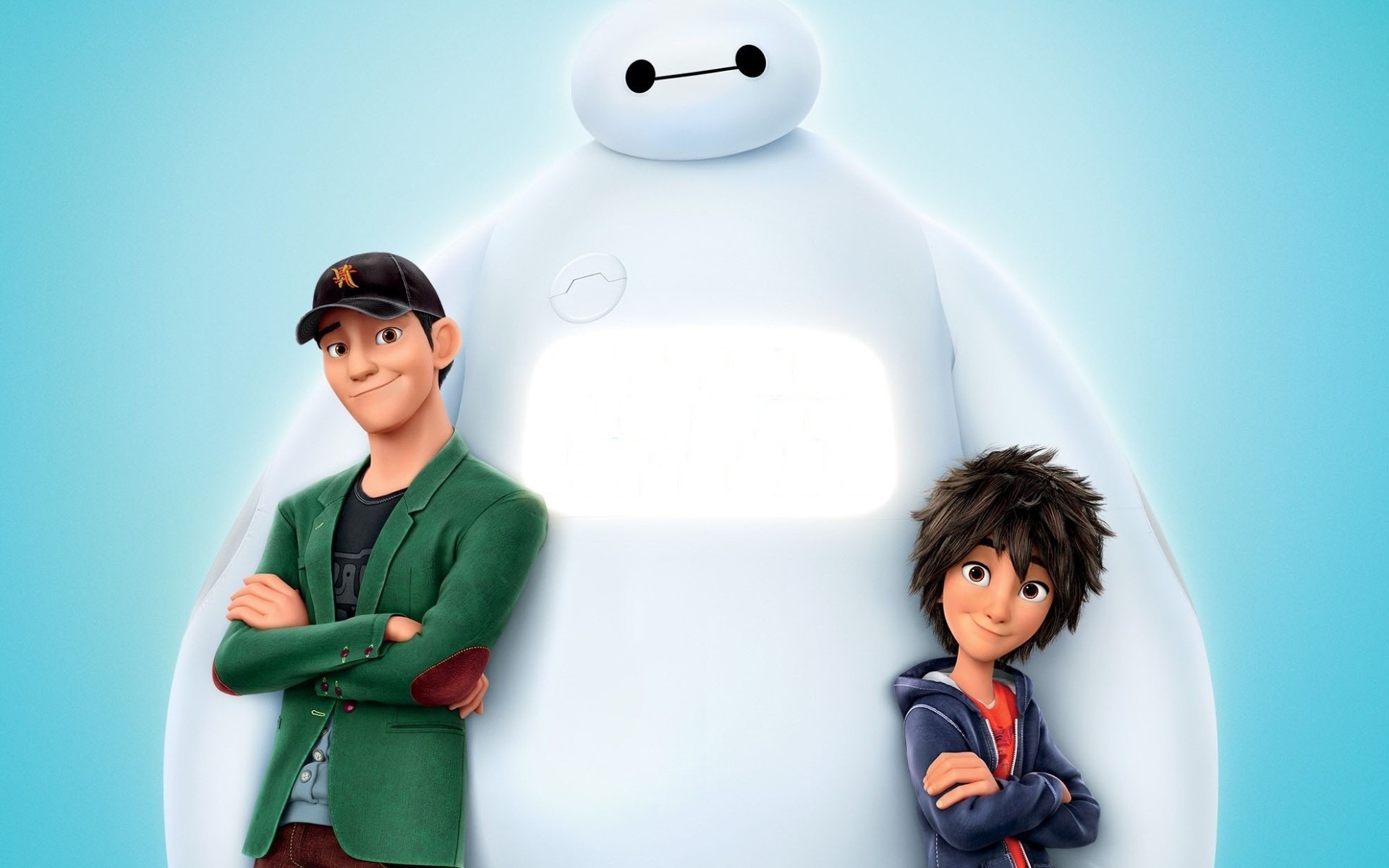
You know that feeling when a movie character dies and it actually feels like you lost a friend? That's the Tadashi Hamada effect. It has been over a decade since Big Hero 6 hit theaters, yet the bond between Hiro and Tadashi Hamada remains the gold standard for sibling dynamics in animation.
Most people see a "superhero movie." I see a story about a kid who lost his north star.
Let’s be real for a second. Hiro is a brat when we first meet him. A genius, sure, but a brat. He’s 14, he’s graduated high school already, and he’s spending his nights in dark alleys winning illegal bot fights. He thinks he’s the smartest person in any room, and honestly, he usually is. But Tadashi? Tadashi is the only person who knows how to handle that massive ego without bruising it.
What Most People Get Wrong About Hiro and Tadashi Hamada
There’s this common idea that Tadashi was just the "good brother" who died to give Hiro a reason to fight. That’s such a surface-level take. If you look at the lore—and the series that followed—the Hamada brothers were basically raised in a vacuum of grief long before the movie even starts.
They lost their parents when Hiro was only three. Think about that.
Tadashi was about seven or eight at the time. He didn't just become a big brother; he became a surrogate father figure while their Aunt Cass was busy trying to keep the Lucky Cat Café from going under. When Hiro was being bullied at school for being "too smart," it was Tadashi who taught him how to defend himself. He even taught him karate.
The Real Age Gap and Dynamics
- Hiro Hamada: 14 years old, high school graduate, robotics prodigy.
- Tadashi Hamada: Approximately 18–21 (sources like the Disney Book of Secrets say 18, but voice actor Daniel Henney once suggested 19 or 20).
- The Guardian: Aunt Cass, their maternal aunt who runs the café in San Fransokyo.
- The Living Legacy: Baymax, the healthcare companion Tadashi built through 84 failed attempts.
Tadashi didn't just want Hiro to go to college because "education is important." He wanted Hiro to stop wasting his life. He saw a kid who was intellectually bored and heading for a jail cell. That "nerd school" tour wasn't an accident. It was a calculated move by a brother who knew exactly which buttons to push to make Hiro want more for himself.
The Tragedy of the "Look for a New Angle" Philosophy
"Look for a new angle."
It’s the most famous line in the franchise. Tadashi says it when Hiro is stuck during his microbot development. He literally picks Hiro up and shakes him upside down to change his perspective.
It’s a fun, quirky brother moment. But it becomes devastating later.
When the fire breaks out at the exhibition, Tadashi doesn't hesitate. He runs into the burning building because Professor Callaghan is still inside. His last words to Hiro? "Someone has to help."
That is the Hamada curse. They are both too smart for their own good and too kind for their own safety.
Is Baymax Actually Tadashi?
Kinda. Sorta. Not really, but also yes.
There’s a theory that Baymax is basically a digital ghost of Tadashi. While Baymax is an AI, he carries Tadashi's literal "heart"—the green healthcare chip. Tadashi spent years coding Baymax with one goal: to help people.
When Hiro tries to turn Baymax into a killing machine to get revenge on Callaghan (who, surprise, survived the fire while Tadashi didn't), the robot resists. Not because he has a soul, but because his programming is a direct reflection of Tadashi’s moral compass.
The most emotional scene in the movie isn't the explosion. It's when Hiro is at his lowest point, and Baymax shows him the video logs of Tadashi’s 84 tests. You see Tadashi frustrated, tired, and failing. Then you see him succeed. You see his joy.
In that moment, Hiro realizes that seeking "justice" through murder would be the ultimate betrayal of the brother who literally built a robot to heal people.
Why San Fransokyo Matters
The setting isn't just a cool backdrop. The blend of San Francisco and Tokyo represents the brothers' dual heritage (half-Japanese, half-white). It’s a world built on the "Great Catastrophe" of 1906, which in this timeline led to a city rebuilt with Japanese architectural influences. This environment of "rebuilding from ashes" mirrors Hiro’s entire character arc. He is a kid who has to rebuild his life twice—once after his parents, and once after Tadashi.
The Legacy Beyond the Big Screen
If you haven't watched Big Hero 6: The Series, you're missing out on a lot of context regarding Hiro and Tadashi Hamada.
The show goes deeper into Tadashi's time at SFIT (San Fransokyo Institute of Technology). We find out more about his "nerd" friends—Go Go, Wasabi, Honey Lemon, and Fred. We see that Tadashi was the glue holding that group together. Without him, they were just a bunch of scientists in separate labs.
Hiro eventually takes Tadashi’s spot at the lab. He uses his brother's old desk. He wears his brother's old cap (the one with the San Fransokyo Ninjas logo).
It’s a bit heavy for a "kids' show," honestly.
But it works because it’s authentic. Grief doesn't just disappear after the credits roll. It’s a constant presence that Hiro has to navigate while trying to be a "hero." He struggles with the pressure of living up to the "perfect" image of Tadashi. He realizes that Tadashi wasn't perfect—he was just a guy who tried really, really hard.
Actionable Takeaways from the Hamada Story
If you’re looking for the "why" behind the staying power of these characters, it comes down to these three things:
- Redefine "Helping": Tadashi’s "Someone has to help" wasn't about being a superhero; it was about being a neighbor. Start small in your own community.
- The "New Angle" Method: When you're stuck on a problem—whether it's code, writing, or a life choice—physically change your environment. Stand up. Go for a walk. Look at it "upside down."
- Legacy is Living: You don't honor someone by mourning them forever; you honor them by carrying forward the things they valued. For Hiro, that meant using his tech for good instead of gain.
The story of Hiro and Tadashi Hamada isn't just about a boy and his robot. It's about how the people we love shape us into the people we become, even—and especially—after they're gone.
To truly understand Hiro's journey, you have to watch the original 2014 film followed by the Baymax! shorts on Disney+. These smaller stories highlight the "healthcare" aspect of Tadashi's vision, showing that the real heroism wasn't in the flying suits, but in the simple act of checking a pulse and asking, "On a scale of one to ten, how would you rate your pain?"