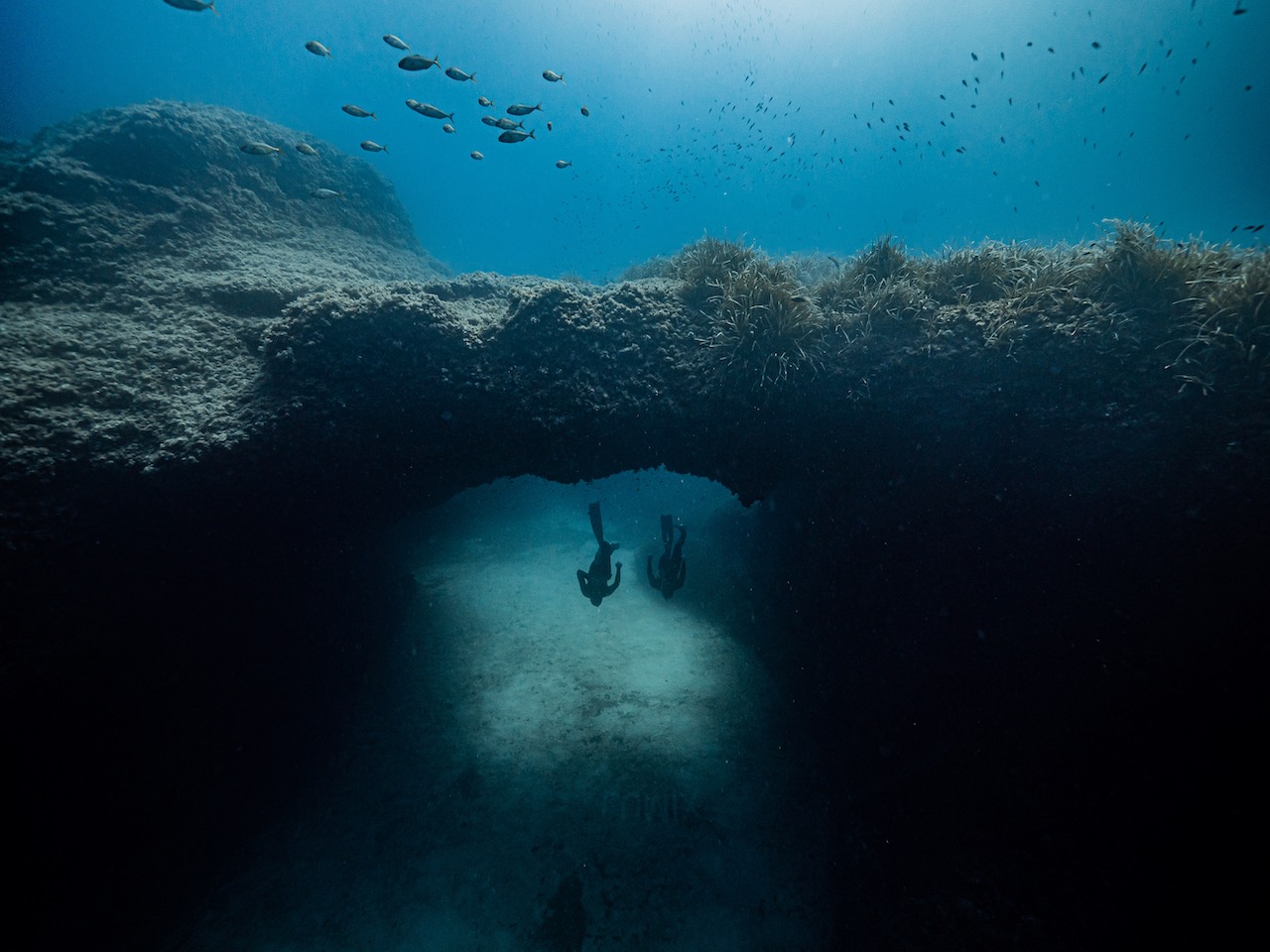
You've probably heard that we know more about the surface of Mars than our own seafloor. It's a cliché. Honestly, it’s also mostly true. By the start of 2025, the number everyone throws around—how much of the ocean has been explored—sits at roughly 25 to 26 percent. That sounds like a lot until you realize it means three-quarters of our own planet is still a giant, watery blind spot.
We aren't just talking about missing a few shipwrecks. We are talking about massive underwater mountain ranges, hydrothermal vents that might hold the secret to life’s origin, and biological diversity we can't even fathom yet. The ocean isn't just a big bathtub. It's 70% of the Earth's surface, and for most of human history, we’ve treated it like a rug we can just sweep our ignorance under.
The 2025 Reality Check: Mapping vs. Exploring
People get "mapping" and "exploring" mixed up all the time.
If you look at Google Earth, the ocean looks "mapped." You see ridges, bumps, and trenches. But that’s mostly "satellite altimetry." Satellites measure the height of the ocean surface; if there’s a massive mountain on the bottom, its gravity pulls a bit more water over it, creating a slight bump on the surface. We use those bumps to guess what’s underneath. It’s like trying to describe a bedroom by looking at the shape of the roof from a drone. You know there's a bed in there somewhere, but you have no clue what color the sheets are or if there's a sock under the dresser.
True exploration means high-resolution bathymetry. It means ships using multibeam sonar to "mow the lawn" across the surface, sending sound waves down to get a crisp, 3D picture.
As of early 2025, the Seabed 2030 project—a massive international collaboration between the Nippon Foundation and GEBCO—has confirmed we have about 26.1% of the seafloor mapped at a decent resolution. This is a huge jump from 2017, when the number was a measly 6%. We are moving faster than ever, but 74% is still a lot of "here be dragons" territory.
Why haven't we finished the job?
Physics is the short answer. Sound travels well in water, but light doesn't. You can't just point a camera down from a plane and see the bottom. Pressure is the other nightmare. At the bottom of the Mariana Trench, the pressure is about 16,000 pounds per square inch. That is like having an elephant stand on your thumb.
Building tech that doesn't implode is expensive. Actually, it's insanely expensive. A single day on a research vessel like the RV Falkor (too), operated by the Schmidt Ocean Institute, can cost tens of thousands of dollars. Fuel, crew, specialized ROVs (Remotely Operated Vehicles), and the constant risk of losing a multi-million dollar robot to a snagged cable make people nervous.
The Deep Sea Mining Factor
Money usually drives exploration. Right now, the race to find out how much of the ocean has been explored in 2025 is being pushed by the controversial deep-sea mining industry. Companies are eyeing "polymetallic nodules"—potato-sized rocks rich in cobalt and nickel needed for EV batteries. They are exploring the Clarion-Clipperton Zone (CCZ) in the Pacific with a frantic energy.
Scientists are racing to keep up. Experts like Dr. Diva Amon have pointed out that we are discovering species in these areas at the same time we are prepping to potentially destroy their habitat. It’s a weird, high-stakes game of "find it before we lose it."
New Tech is Changing the Percentage
We aren't just relying on big, slow ships anymore. 2025 is the year of the "drone swarm."
Companies like Saildrone and Ocean Infinity are deploying Uncrewed Surface Vehicles (USVs). These are basically robotic boats that can stay out for months, powered by wind and sun, clicking away with sonar. They don't need to feed a crew or head back to port for coffee. This is how we get from 26% to 100%.
Then you have the AUVs—Autonomous Underwater Vehicles. These are the torpedo-shaped robots that dive deep. In recent missions off the coast of Chile, researchers found "seamounts" (underwater mountains) that were home to completely new species of deep-sea corals and glass sponges. These mountains were "mapped" by satellite years ago, but nobody knew they were biological hotspots until a robot actually swam past them.
What we are finding in the 74% we haven't seen
Every time we drop a camera into a new spot, something weird happens. We find "blue holes" in the Great Barrier Reef that act as time capsules for ancient climate data. We find "brine pools"—underwater lakes at the bottom of the ocean that are so salty they kill anything that swims into them.
It’s not just about biology. It’s about survival.
The seafloor dictates how tsunamis move. If we don't know the shape of the bottom, we can't accurately predict where a massive wave will hit hardest. It also dictates how ocean currents move, which is the main engine for our global climate. If you want to understand why Europe is getting a heatwave or why California is flooding, you need to understand the deep ocean.
Common Misconceptions
- "We've explored 5% of the ocean." This is an old stat from the 90s. We've surpassed that. If you're talking about basic mapping, we're over a quarter of the way there. If you're talking about actually seeing the bottom with eyes or cameras? That number is likely still under 1%.
- "The bottom is just sand." Nope. It’s canyons deeper than the Grand Canyon and mountains taller than Everest. The Mauna Kea in Hawaii is technically the tallest mountain on Earth if you measure from the base on the seafloor.
- "Nothing lives down there." There is life everywhere. Even in the Hadal zone (the deepest trenches), we find snailfish and tiny amphipods that thrive in total darkness.
Actionable Insights for 2025 and Beyond
If you’re interested in the progress of ocean exploration, don't just wait for a documentary to come out. The field is moving too fast for traditional media.
1. Follow Live Dives
Organizations like NOAA Ocean Exploration and the Nautilus Live team stream their ROV dives in real-time on YouTube. You can literally watch as a scientist sees a new species for the first time. It’s slow-paced but incredibly addictive.
2. Watch the Seabed 2030 Progress
Check the GEBCO (General Bathymetric Chart of the Oceans) website annually. They release the updated "percentage mapped" every June for World Hydrography Day. This is the gold standard for knowing how much of the ocean has been explored.
3. Support Open Data Initiatives
The biggest hurdle isn't just mapping; it's sharing. A lot of data is held by private oil and gas companies or navies. Push for policies that require "open access" to bathymetric data. If the data isn't public, it doesn't count toward the global map.
4. Understand the Impact of Deep-Sea Mining
Stay informed on the International Seabed Authority (ISA) meetings. The decisions made in 2025 and 2026 regarding mining regulations will determine whether the remaining 74% of our ocean is explored for science or exploited for minerals before we even know what's there.
The ocean is the last great frontier on Earth. We are currently in the middle of the most significant mapping project in human history. By the time 2030 rolls around, we might finally have a complete picture of the floor of our world, but for now, we're still just scratching the surface of a very deep, very dark mystery.