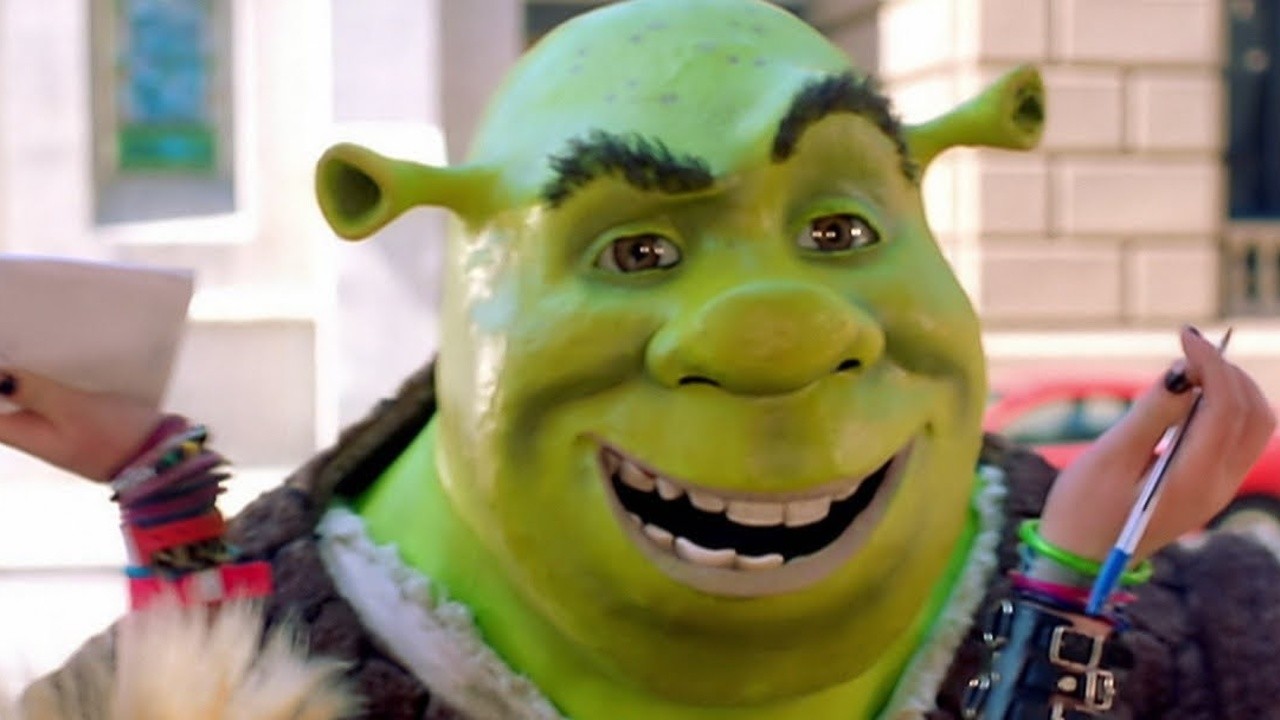
It is almost impossible to think about the year 2001 without hearing that Hammond B3 organ riff. You know the one. It kicks in with a certain bouncy, garage-rock swagger that immediately signals a giant green ogre is about to emerge from an outhouse. Smash Mouth I'm a Believer isn't just a song; it's a cultural marker that bridges the gap between the gritty alternative rock of the 90s and the hyper-polished pop of the new millennium. Honestly, it shouldn't have worked as well as it did. Taking a 1966 Neil Diamond classic—originally made famous by The Monkees—and coating it in a layer of California ska-pop sounds like a recipe for a forgotten movie soundtrack filler. Instead, it became a multi-platinum behemoth.
Steve Harwell’s raspy, conversational delivery turned a song about romantic skepticism into a universal anthem for "believing" in something better. It’s loud. It’s bright. It’s aggressively catchy. But the story of how this specific cover became the definitive version for an entire generation is actually pretty complicated.
The Shrek Effect: Why This Version Stuck
Before DreamWorks Animation got their hands on it, Smash Mouth was already a household name. They had "Walkin' on the Sun" and "All Star" under their belts. But when they recorded Smash Mouth I'm a Believer for the Shrek soundtrack, something shifted. The song was no longer just a radio hit; it became the emotional heartbeat of a cinematic revolution.
Eddie Murphy, who voiced Donkey, actually performs a version of the song in the film’s finale. However, the radio edit—the one that dominated the Billboard Hot 100—was the band’s studio version. Produced by Eric Valentine, who also worked with Third Eye Blind and Queens of the Stone Age, the track has a sonic weight that most "bubblegum" covers lack. He pushed the drums forward. He made sure the bass line had enough grit to satisfy the rock fans while keeping the melody sweet enough for the kids. It was a delicate balancing act.
Interestingly, the band wasn't initially sold on being the "soundtrack guys." They had legitimate alt-rock roots in San Jose. But the success of Shrek was undeniable. The soundtrack ended up being nominated for a Grammy, and much of that momentum was carried by the sheer infectiousness of their lead single.
Deconstructing the Sound: It’s Not Just a Simple Cover
Most people assume Smash Mouth I'm a Believer is a note-for-note remake of the Monkees' version. It’s not. If you listen closely to the 1966 original, it’s a baroque pop masterpiece with a fairly thin arrangement. Smash Mouth thickened it. They added a layer of "surf-punk" energy that was pervasive in the NorCal scene at the time.
The keyboard work is the real hero here. The organ isn't just background noise; it provides a rhythmic counterpoint to the guitars. This creates a "wall of sound" effect that feels massive in a stadium or a car with the windows down. Greg Camp, the band’s primary songwriter and guitarist, understood that for a cover to succeed in 2001, it needed to sound "expensive." It needed to compete with the likes of NSYNC and Britney Spears, who were dominating the airwaves.
- The tempo was slightly nudged up.
- The vocal harmonies were layered to create a more communal, "sing-along" vibe.
- The bridge was given a more aggressive guitar crunch.
Basically, they took a 60s folk-pop tune and gave it a 21st-century skeleton.
The Neil Diamond Connection and Songwriting Royalty
We can't talk about this song without mentioning Neil Diamond. He wrote it in two days. At the time, he was a struggling songwriter trying to make a name for himself in the Brill Building scene. He actually wanted to keep it for himself, but his label head at the time, Jeff Barry, convinced him that it was a perfect fit for The Monkees.
When Smash Mouth took it on, they were interacting with a piece of songwriting royalty. Diamond has often praised the various covers of his work, noting that "I'm a Believer" has a certain "indestructibility." You can play it on an acoustic guitar, a techno synth, or a distorted electric guitar, and the hook remains flawless. Smash Mouth's version proved that the song was timeless. It wasn't just a relic of the hippie era; it was a blueprint for how to write a perfect three-minute pop song.
Cultural Legacy and the "Meme-ification" of the Band
In the last decade, Smash Mouth’s discography has taken on a second life through internet culture. For a while, "All Star" was the primary target, but Smash Mouth I'm a Believer followed close behind. It’s a fascinating phenomenon. Younger generations who weren't even born when Shrek premiered in theaters now know every lyric.
This isn't just irony, though. There’s a genuine nostalgia for the sincerity of that era. The song represents a time when pop-rock could be unashamedly happy. There’s no brooding. No complicated metaphors. It’s just a guy saying he was sad, he saw a face, and now he’s not. In an age of increasingly complex and dark pop music, that simplicity feels like a relief.
What Really Happened with the Chart Success?
While the song is a staple now, its chart performance was a bit of a slow burn compared to "All Star." It peaked at number 25 on the US Billboard Hot 100, which is respectable but doesn't quite capture how omnipresent it felt. It performed even better internationally, hitting the top 10 in New Zealand, Spain, and several other European markets.
The real longevity came from licensing. If you watch a movie from 2002 to 2008, there is a statistically significant chance you will hear this song during a montage. It became shorthand for "the characters are finally getting their act together." This kind of sync licensing kept the band relevant long after the initial radio hype died down.
Nuance in the Performance: Steve Harwell’s Unique Tone
The late Steve Harwell had a voice that was often imitated but never quite duplicated. He had this "Rat Pack meets Punk" swagger. In Smash Mouth I'm a Believer, his pronunciation is key. He doesn't sing it like a traditional crooner. He barks the lines with a wink in his voice.
When he hits the line "I'm in love, ooh / I'm a believer," there’s a grit there. It’s the sound of a guy who has seen some stuff but is choosing optimism anyway. That specific vocal texture is why the Smash Mouth version feels more "real" to many than the polished 60s versions. It feels lived-in.
Actionable Insights for Music Fans and Creators
If you are a musician or a content creator, there are several lessons to be learned from the success of this specific track. It wasn't just luck; it was a masterclass in branding and adaptation.
- Study the "Sync" Potential: If you're covering a song, ask yourself if it fits a specific mood or "trope." This song became the gold standard for "the happy ending" because of its arrangement.
- Balance the Old with the New: Don't just copy the original. Smash Mouth kept the melody of the 60s but used the production techniques of the 2000s. This made it palatable to modern ears while retaining the "soul" of the composition.
- Embrace the Visual Identity: The association with Shrek was a double-edged sword, but it ultimately provided a visual hook that made the audio unforgettable.
- Focus on the Hook: The organ riff at the beginning is a "sonic logo." Within two seconds, the listener knows exactly what song it is. In the era of short-form video like TikTok and Reels, having a two-second hook is more important than ever.
To truly appreciate the impact of Smash Mouth I'm a Believer, you have to look past the memes. You have to listen to the tight production, the deliberate vocal choices, and the way it managed to breathe new life into a thirty-year-old song. It stands as a testament to the power of a well-executed cover and the enduring appeal of high-energy pop-rock. Next time it comes on the radio, or more likely, during a family movie night, pay attention to that bass line—it's doing a lot more work than you probably remember.