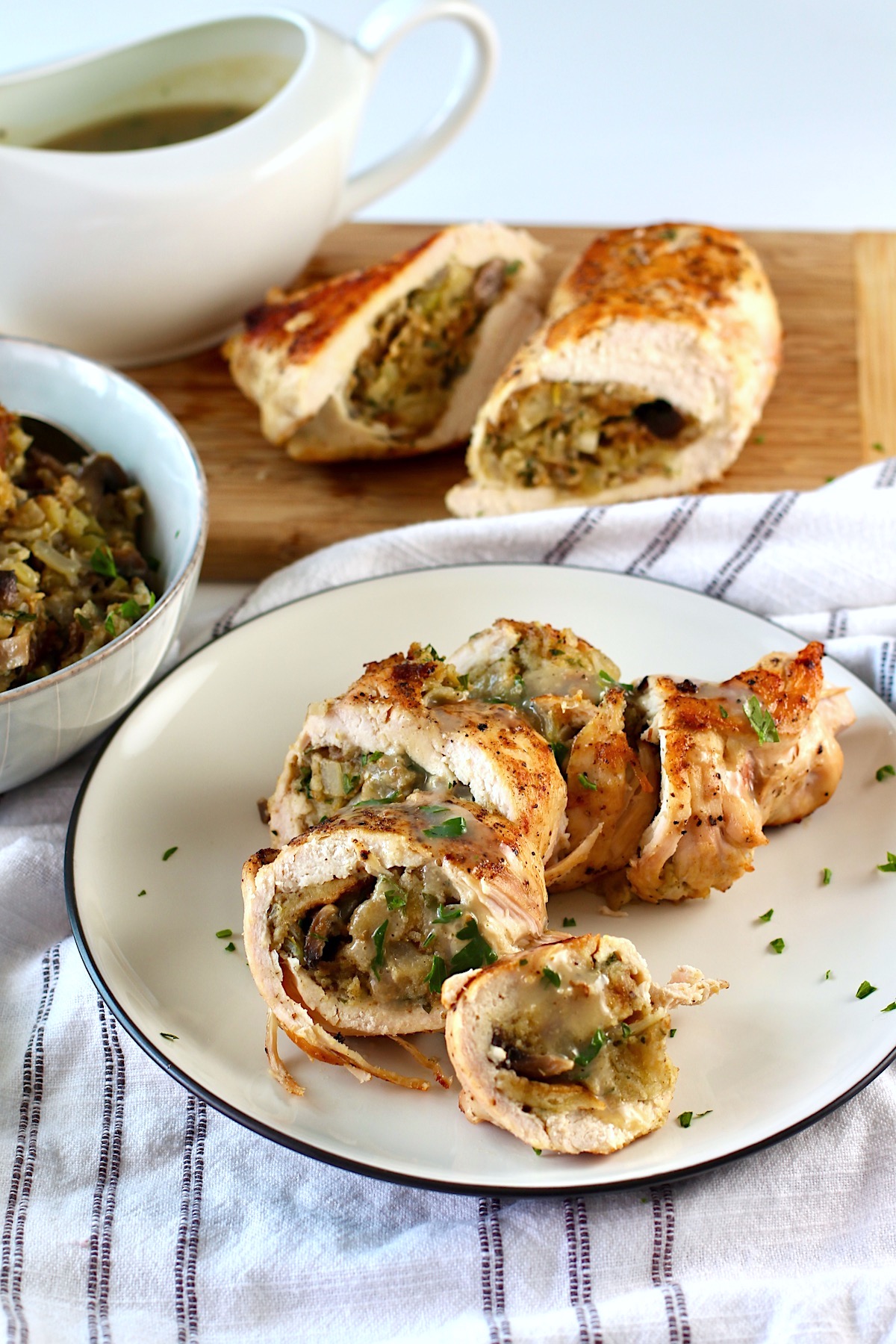
Stuffing a chicken breast sounds easy enough until you’re standing over a cutting board with a slippery piece of meat and a pile of breadcrumbs that won't stay put. It’s a mess. Honestly, most people end up with a "deconstructed" version where the chicken is on one side and the stuffing is wandering around the pan. But when you get it right? It’s arguably the best way to elevate a boring weeknight dinner into something that feels like it cost fifty bucks at a bistro.
The trick isn't just about the flavor. It’s about the mechanics. You have to understand the anatomy of the breast.
If you just hack into it, the meat will shrink as it cooks, squeezing the filling out like a tube of toothpaste. You need a pocket. Not a slit. A pocket. We're going to dive into the actual physics of how to stuff a chicken breast with stuffing so your dinner doesn't look like a culinary crime scene.
The Secret is the Pocket (And the Knife)
Stop using a dull knife. Seriously. If you’re trying to saw through raw poultry with a serrated steak knife, you’ve already lost the battle. You need a sharp chef’s knife or a utility knife with a narrow blade.
Place your hand flat on top of the breast. This is the "bridge" method. Carefully slide the tip of the knife into the thickest part of the side. You aren't cutting all the way through. You’re creating a cavern. Swing the blade in a small arc inside the meat, being careful not to puncture the top or bottom. It takes practice. If you poke through, don't panic. You can patch it with a toothpick later, but the goal is a seamless envelope of protein.
Some people prefer the "butterfly" method where you open the whole thing up like a book. That's fine if you're rolling it (roulade style), but for a true stuffed breast, the pocket is superior because it self-seals better during the searing process.
Why Your Stuffing Matters More Than You Think
You can't just shove dry bread cubes in there. It won't work. The stuffing needs to be "tight." Think about the consistency of a good crab cake. It should hold its shape when you squeeze a handful.
If you’re using a traditional bread-based stuffing, make sure the veggies (onions, celery, maybe some fennel) are sautéed until they're soft. Crunchy onions inside a chicken breast are a texture nightmare. Also, use a binder. An egg or a splash of heavy cream goes a long way. Without it, the stuffing will just crumble and fall out the moment your fork hits the plate.
Flavor Profiles That Actually Work
- Classic Herb: Sourdough cubes, sage, thyme, and plenty of butter. This is the "Sunday Roast" vibe.
- The Mediterranean: Spinach, feta, and sun-dried tomatoes. You don't even need bread for this one, but a few panko crumbs help soak up the moisture from the spinach.
- The Wild Mushroom: Cremini or shiitake mushrooms sautéed with garlic and a hint of sherry. This is deep, earthy, and feels very high-end.
The Temperature Danger Zone
Let’s talk safety because nobody wants salmonella for dessert. This is the biggest hurdle when learning how to stuff a chicken breast with stuffing. The stuffing is insulated by the meat. By the time the very center of that bread stuffing reaches the safe temperature of 165°F (74°C), the outside of the chicken is often dry and overcooked.
Expert move: Pre-cook your stuffing ingredients. Never put raw sausage or raw aromatics inside. If the stuffing is already warm when it goes into the chicken, you’re cutting down the "dwell time" in the oven.
Use a digital meat thermometer. Don't guess. Stick the probe into the center of the stuffing. If the meat is 165°F but the stuffing is only 145°F, keep cooking. It’s not negotiable.
The Sear-and-Bake Method
You want a golden-brown crust. You aren't going to get that by just tossing raw, pale chicken into an oven.
Get a cast-iron or stainless steel skillet screaming hot with a little oil—something with a high smoke point like avocado or grapeseed oil. Brown the chicken for about 3 minutes per side. Be gentle when you flip. Use tongs, not a fork. If you use a fork, you’re just poking holes for the juices to escape.
Once it’s browned, move the whole pan into a 375°F (190°C) oven. This dual-heat approach ensures the meat stays juicy while the stuffing gets hot enough to be safe.
To Toothpick or Not?
Honestly? Yes. Just do it. Two or three toothpicks slanted across the opening will save you so much frustration. Just remember to count them so you don't serve a wooden splinter to your guests. It’s a bit "grandma style," but it works. Professional chefs might use butcher’s twine to tie the breast, but that’s overkill for a Tuesday night.
Dealing with Common Disasters
Sometimes, despite your best efforts, the breast splits. If the meat is too thin, it’ll tear. If this happens, lean into it. Turn it into a "crust" instead. Spread the stuffing on top and bake it like a casserole. It’ll still taste great.
Another common issue is "leaking." This usually happens if your filling is too wet. If you’re using frozen spinach, you have to squeeze it until it's bone-dry. Use a kitchen towel. Squeeze it harder than you think you need to.
The Resting Period
Do not cut that chicken the second it comes out of the oven. I know you're hungry. Just wait. Five minutes.
Resting allows the muscle fibers to relax and reabsorb the juices. If you cut it immediately, all that moisture—and the flavor of the stuffing—will just run out onto the cutting board. Give it a rest, and the stuffing will actually set slightly, making for a much cleaner slice.
Actionable Steps for Your Next Meal
- Prep the pocket first. Do this while the chicken is cold; it's easier to handle.
- Sauté your aromatics. Raw onions have no place inside a chicken breast.
- Check the moisture. Your stuffing should be moist but not "dripping." If it’s too wet, add more breadcrumbs.
- Sear for color, bake for safety. Use a thermometer to hit that 165°F mark in the very center.
- Let it sit. Give the chicken five minutes of peace before you serve.
Getting the hang of how to stuff a chicken breast with stuffing takes a few tries to perfect the knife work, but the payoff is a protein that isn't just a vehicle for salt, but a complete, flavorful meal in every bite. Keep the pocket deep, the stuffing tight, and the thermometer handy.