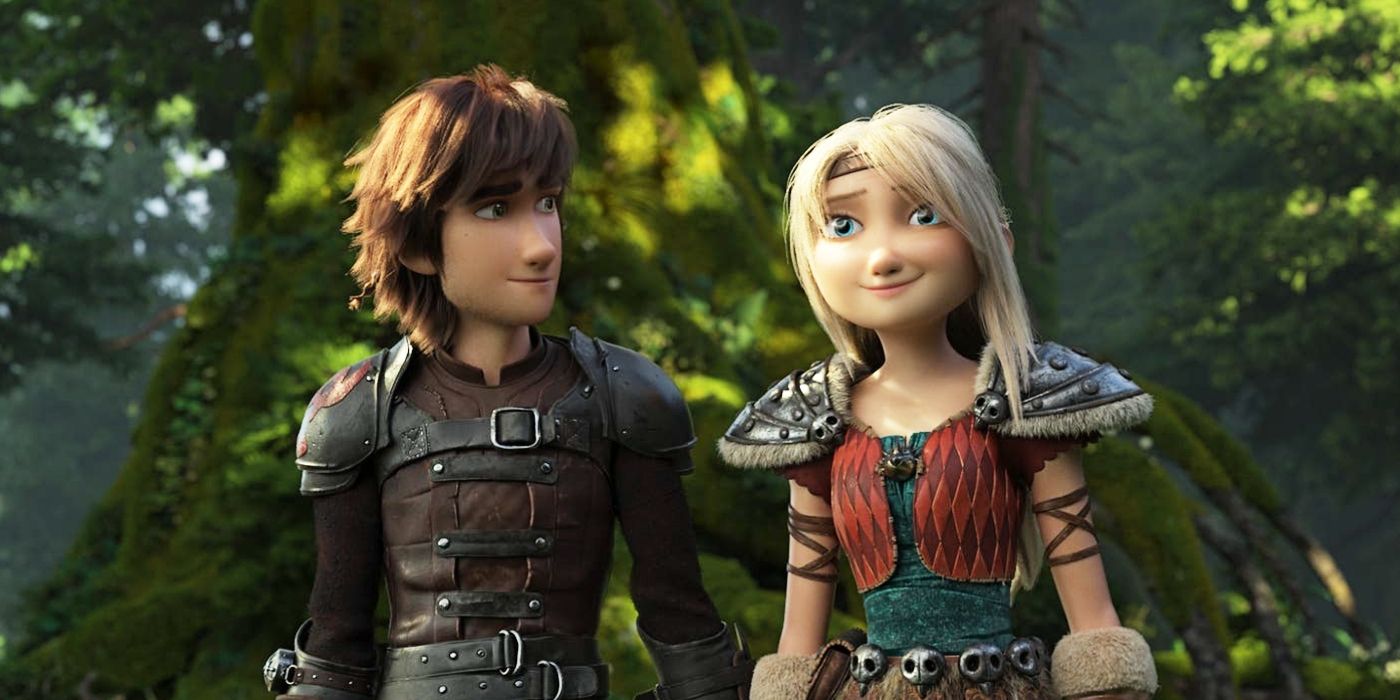
Honestly, if you look back at the landscape of DreamWorks Animation in the early 2010s, things were... fine. We had Shrek, we had Madagascar. But when How to Train Your Dragon hit theaters in 2010, something shifted. It wasn't just the soaring flight sequences or the John Powell score that made us sit up. It was the grounded, slightly awkward, and surprisingly mature dynamic between a scrawny inventor and a fierce shield-maiden. The How to Train Your Dragon Hiccup Astrid relationship—often dubbed "Hiccstrid" by the fandom—became the beating heart of a decade-long franchise.
It's rare. Most animated romances are love at first sight or "opposites attract" tropes that resolve in ninety minutes. This didn't do that. It took three movies, several TV seasons, and about a dozen years of in-universe time to actually get it right. They started as competitive classmates and ended as the Chieftain and Chieftainess of Berk.
The Evolution of the Hiccup and Astrid Dynamic
In the beginning, Astrid Hofferson was everything Hiccup Horrendous Haddock III was not. She was the star pupil of Dragon Training. She was disciplined. She was, frankly, a bit of a terrifying warrior who had no time for Hiccup’s "Hiccup-ness."
The genius of the writing in the first film lies in how their bond forms through shared discovery rather than forced proximity. When Astrid follows Hiccup to the cove and discovers Toothless, the power dynamic flips. She goes from being his superior in the ring to being the only person who truly knows his secret. That "Romantic Flight" sequence isn't just about the visuals; it’s about Astrid’s worldview being dismantled in real-time. She realizes the dragons aren't the monsters the Vikings of Berk have fought for seven generations.
By the time we get to How to Train Your Dragon 2, they’ve been dating for years. It’s comfortable. They finish each other's sentences. You see it in the way Astrid mocks Hiccup’s impression of his father, Stoick. It feels lived-in. Unlike many sequels that manufacture drama to keep a couple apart, Dean DeBlois and the creative team opted for stability. Astrid becomes Hiccup's moral compass. When he’s spiraling because he doesn't think he can be the leader Berk needs, she’s the one who grounds him. She doesn't just coddle him; she reminds him of who he is.
Why Their Relationship Avoids Typical Tropes
Most animated films treat the female lead as a prize for the hero’s growth. Astrid isn't a trophy. In fact, in many ways, she is more naturally suited for leadership than Hiccup is. She has the tactical mind and the respect of the tribe.
The How to Train Your Dragon Hiccup Astrid arc works because they are distinct individuals with their own dragons (Toothless and Stormfly) and their own agency. Astrid doesn't just exist to be Hiccup’s girlfriend. Throughout the DreamWorks Dragons television series (Riders of Berk, Defenders of Berk, and Race to the Edge), we see them clash over leadership styles. Hiccup is often the visionary, looking for the next discovery, while Astrid is the pragmatist, focusing on the defense of the Edge and the safety of the riders.
- They communicate. Mostly. Even when they argue, it’s about the mission or the safety of their friends.
- The physical affection is subtle. It’s a hand on a shoulder, a forehead touch, or a quick punch to the arm. It feels like a teenage relationship growing into an adult partnership.
- Competence is attractive. They respect each other’s skills. Astrid is the better fighter; Hiccup is the better engineer. They know this and lean into it.
The Impact of Race to the Edge on Hiccstrid
If you’ve only watched the movies, you’re missing about seventy percent of their development. The Netflix series Race to the Edge is where the "How to Train Your Dragon Hiccup Astrid" relationship really gets its legs. This is where we see the transition from teenage crushes to a committed engagement.
There’s an episode called "Blindsided" that fans always point to. Astrid is temporarily blinded during a storm and a dragon attack. It’s a vulnerable moment for a character who is usually invincible. The way Hiccup supports her—not by taking away her agency, but by helping her adapt—is a masterclass in writing healthy relationships. It’s also where they officially acknowledge their feelings in a way that feels earned after seasons of "will they, won't they" tension.
Then you have the Betrothal Gift. In Viking culture, as presented in the show, this is a huge deal. Hiccup creates a necklace for Astrid made from Monstrous Nightmare scales and a tooth from a Speed Stinger. It’s not a diamond ring; it’s a piece of gear. It fits their world perfectly.
The Emotional Payoff in The Hidden World
By the third film, The Hidden World, the stakes have changed. The village is overpopulated with dragons, and a genocidal hunter named Grimmel is closing in. Hiccup is feeling the weight of the crown.
There’s a specific scene on the balcony of their new home on New Berk. Hiccup is doubting everything. He thinks he’s nothing without Toothless. Astrid is the one who tells him, "You're the one who changed our world, Hiccup. Not the dragon." This is the core of their journey. She fell in love with the boy who was brave enough to drop his knife in the woods, not the man who rides a Night Fury.
The ending of the trilogy—the wedding—is one of the most satisfying "happily ever afters" in cinema. Not because it’s a fairy tale, but because we saw the work they put in. We saw the scars, the loss of parents, the loss of limbs, and the constant threat of war. When they finally stand before the village to marry, it feels like a hard-won peace.
Key Moments in the Hiccup-Astrid Timeline
- The First Flight: Astrid realizes dragons are friends, not food.
- The First Kiss: After the battle with the Red Death, Astrid kisses Hiccup, then punches him. Classic.
- The Battle of Itchy Armpit: In the second film, their effortless teamwork against Drago's forces shows how synchronized they've become.
- The Wedding: A culmination of nearly a decade of storytelling.
- The Homecoming: Seeing them as parents to Zephyr and Nuffink brings the story full circle, showing that their bond outlasted the age of dragons.
What Other Storytellers Can Learn
The "How to Train Your Dragon Hiccup Astrid" dynamic works because it’s built on a foundation of mutual growth. They changed each other. Hiccup became more confident and grounded because of Astrid’s belief in him. Astrid became more open-minded and compassionate because of Hiccup’s empathy.
They didn't lose their edges. Astrid remained a warrior. Hiccup remained a dork.
In an era where many fictional couples feel like they’re put together by a marketing committee to check boxes, Hiccstrid feels organic. It’s messy. They have misunderstandings. They get frustrated with each other's stubbornness. But they always come back to the "us."
Actionable Takeaways for Fans and Writers
If you’re a writer looking to replicate this kind of chemistry, or a fan trying to understand why this specific couple stuck with you for years, consider these elements:
- Shared Goals Over Romance: Focus on the characters working toward a common objective. The romance should be a byproduct of their partnership, not the only reason they interact.
- Show, Don't Tell: Don't have characters say "I love you" every five minutes. Show it through a shared look during a crisis or a small sacrifice one makes for the other’s comfort.
- Let Them Be Wrong: A perfect couple is a boring couple. Let them disagree about important things—like where to move an entire village of people—to see how they navigate conflict.
- Respect the "Power Balance": Ensure both characters bring something essential to the table. If one character is constantly saving the other, the relationship feels lopsided. Hiccup saves Astrid as much as she saves him, usually in very different ways.
The legacy of How to Train Your Dragon is often cited as the gold standard for how to end a trilogy. While the dragons are the spectacle, the human connection is the anchor. Hiccup and Astrid aren't just a "ship"; they are the blueprint for a partnership built on respect, growth, and the courage to change the world together.
Next time you rewatch the series, pay attention to the background animations. The way they lean into each other or exchange a quick glance while others are talking. That’s where the real magic happens. It’s in the quiet moments between the roars of the dragons.