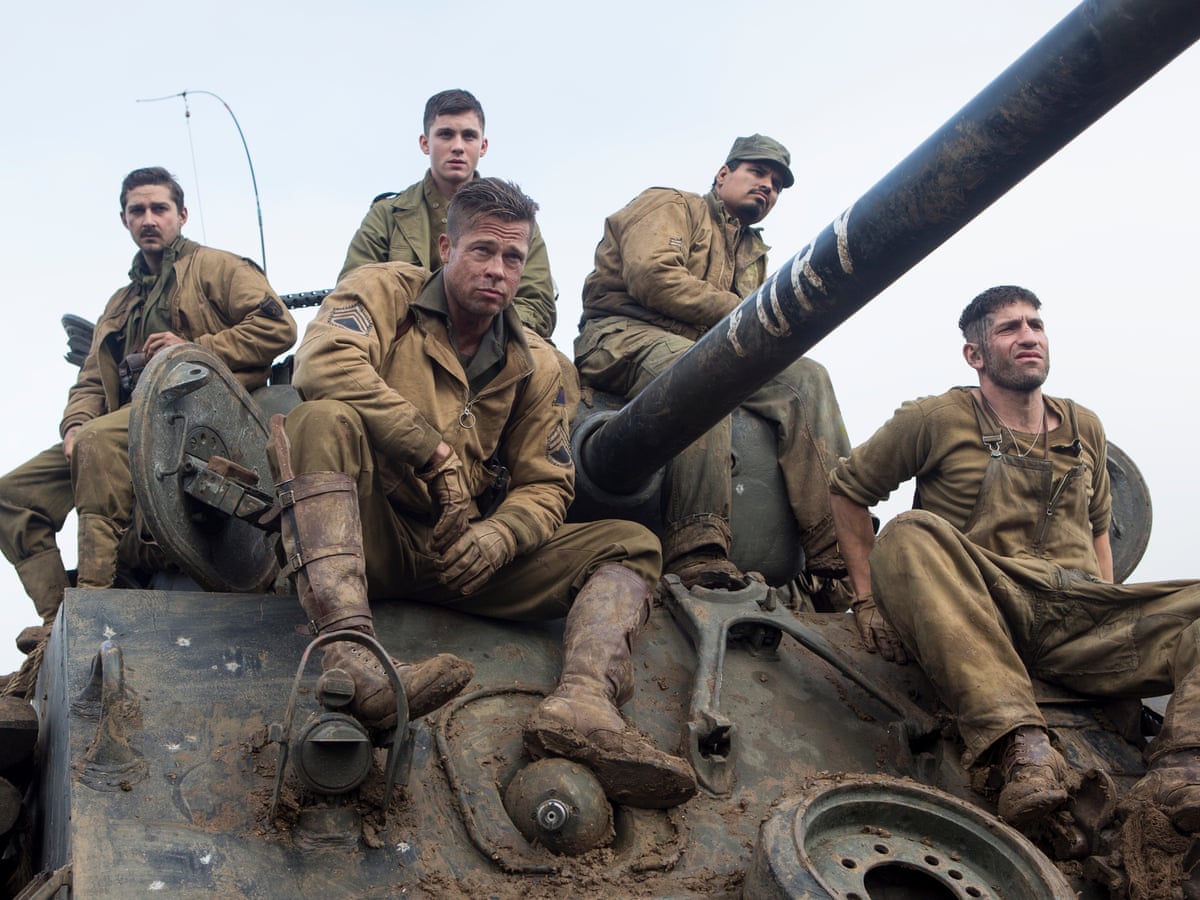
You’ve probably seen the movie Fury. Brad Pitt’s character, Wardaddy, leans over a young, shell-shocked soldier and spits out a line that hits like a sledgehammer: "Ideals are peaceful, history is violent." It’s one of those quotes that sticks to your ribs. It feels true because, honestly, it is. We spend our lives talking about justice, equality, and the sanctity of life, yet the actual record of human existence—the stuff that gets written down in textbooks—is mostly a long, bloody list of people hitting each other over the head.
It’s a paradox. We dream of utopias while living in a world built on top of old battlefields. If you look at the timeline of human civilization, the "peaceful" parts are often just the brief moments where everyone was too tired or too broken to keep fighting.
The Gap Between What We Want and What We Do
Human beings are weird. We are the only species that can sit in a quiet room and conceptualize "universal human rights" or "eternal peace." These are our ideals. They’re beautiful. They’re soft. They’re based on the way we wish the world worked.
But then there's history.
History doesn't care about your feelings. History is the Mongol Empire sweeping across Asia, leaving mountains of skulls in its wake. It’s the Somme. It’s the brutal reality of the Atlantic slave trade. When people say ideals are peaceful history is violent, they’re acknowledging that while our thoughts are in the clouds, our feet are usually standing in the mud.
Take the Enlightenment as an example. You had brilliant thinkers like John Locke and Voltaire writing about liberty and the social contract. These were the ultimate peaceful ideals. But how were those ideals actually implemented? Through the French Revolution—a period defined by the "Reign of Terror" and the rhythmic thud of the guillotine. We wanted liberty; we got a bloodbath. It’s a recurring theme. Even the most "noble" shifts in human history usually require a violent shove to get moving.
Why We Keep Falling for the "Peaceful" Myth
Why do we struggle to accept that history is inherently messy? Part of it is how we’re taught. We like to sanitize things. We turn revolutionary wars into neat paintings of men in powdered wigs. We forget that those men were often covered in lice, suffering from dysentery, and literally blowing the heads off their neighbors.
Conflict is the engine of change. That’s a hard pill to swallow.
Political scientist Francis Fukuyama famously wrote about the "End of History" after the Cold War. The idea was that Western liberal democracy had "won" and we were entering a permanent state of peaceful ideals. It was a nice thought. It was also completely wrong. The decades that followed gave us the Yugoslav Wars, the invasion of Iraq, and the current instability in Eastern Europe. History didn't end; it just took a breather.
The Biology of the Brawl
Biologically, we aren't wired for pure peace. This isn't an excuse for cruelty, but it's a factual reality of our evolution. Our ancestors survived because they were better at defending their resources than the group next door. We carry that baggage.
Our ideals are a relatively recent software update. Our history, however, is the old, hard-coded hardware. When the two clash, the hardware usually wins. Steven Pinker argues in The Better Angels of Our Nature that violence has actually declined over the centuries. He uses a mountain of data to show that you're less likely to die a violent death today than you were in 1300.
But even Pinker admits that the potential for massive violence is higher than ever. One bad afternoon in a nuclear silo could undo 10,000 years of "progress." This is why the phrase ideals are peaceful history is violent feels so urgent today. We are playing with world-ending tools while still guided by ancient, violent impulses.
Case Studies in Violent Reality
Look at the 20th century. It was supposed to be the century of progress. Instead, it became the most violent hundred years in human records.
- The Russian Revolution: It started with the ideal of a classless society where everyone’s needs were met. It ended with the Gulags and millions dead from man-made famines.
- The Partition of India: An ideal of independence and self-determination. The reality? Up to 2 million people killed in sectarian violence and 15 million displaced.
- The Arab Spring: It began with Twitter hashtags and dreams of democracy. It spiraled into the Syrian Civil War, a conflict so complex and brutal it has redefined modern warfare.
In every one of these cases, the "peaceful ideal" was the spark, but the "violent history" was the fire. We often mistake the spark for the whole event. We celebrate the idea and try to ignore the body count that follows it.
Honestly, it’s a bit of a coping mechanism. If we truly focused on how much blood it took to build the chair you're sitting in right now—the wars fought over the wood, the land, the labor—we’d probably never get out of bed.
Can Ideals Ever Win?
So, are we doomed? Is the phrase ideals are peaceful history is violent a death sentence for human hope?
Not necessarily.
The trick is realizing that ideals aren't there to replace history; they are there to tame it. History is the wild animal; ideals are the cage. The cage isn't perfect. The animal gets out sometimes. But without the cage, there’s nothing but the animal.
Think about the Civil Rights Movement in the U.S. The ideal was "all men are created equal." The history was fire hoses, police dogs, and assassinations. But because people held onto the peaceful ideal in the face of violent history, the needle actually moved. It wasn't a clean victory, and the violence didn't magically disappear, but the "violent history" was forced to give up some ground.
The Danger of Ignoring the Violence
The biggest mistake we make is pretending that our peaceful ideals make us immune to violence. When a society thinks it has "evolved" past the need for strength or defense, it usually gets steamrolled by someone who hasn't.
This is the grim lesson of history.
Diplomacy only works when there is a credible threat behind it. It’s a cynical view, sure, but find me a period of long-term peace that wasn't enforced by a dominant military power (what historians call a "Pax"). Whether it was the Pax Romana or the Pax Americana, peace is almost always a product of overwhelming force. It’s the ultimate irony: you need the capacity for violence to protect your peaceful ideals.
Real-World Takeaways for Survival
Understanding that ideals are peaceful history is violent isn't just about being a cynical historian. It’s about how you navigate the modern world. Here is how you can apply this perspective without becoming a total nihilist.
Stop expecting "clean" solutions.
Whether it’s a corporate merger, a political movement, or a personal dispute, there is no such thing as a conflict-free resolution. If you go into a situation expecting everyone to act according to high-minded ideals, you’re going to get blindsided. Prepare for the "history" (the ego, the greed, the aggression) while aiming for the "ideal."
Value the stability you have.
If you live in a place where you don't have to worry about a marauding army taking your house tomorrow, you are an extreme historical outlier. Most humans who have ever lived did not have that luxury. Don't take the "peaceful" part of your life for granted. It is fragile. It is rare.
Vet your leaders based on reality, not rhetoric.
Anyone can sell you a peaceful ideal. It's easy. It's free. Look for the people who understand the violent machinery of history and know how to keep it in check. You want the person who acknowledges the cliff, not the one who tells you gravity doesn't exist.
Don't let the violence win the moral argument.
Just because history is violent doesn't mean violence is right. It just means it's present. The fact that we keep dreaming of peace despite 200,000 years of evidence that we’re bad at it is actually the most impressive thing about humans. Our stubbornness in the face of our own nature is our only real superpower.
History is a record of what happened, but ideals are a map of where we’re trying to go. You need both to survive. If you only look at the map, you’ll trip over a rock. If you only look at the ground, you’ll never find your way out of the woods.
The goal isn't to erase the violence of history—that’s impossible. The goal is to make sure the peaceful ideals get the last word, even if they have to shout to be heard over the noise of the past.