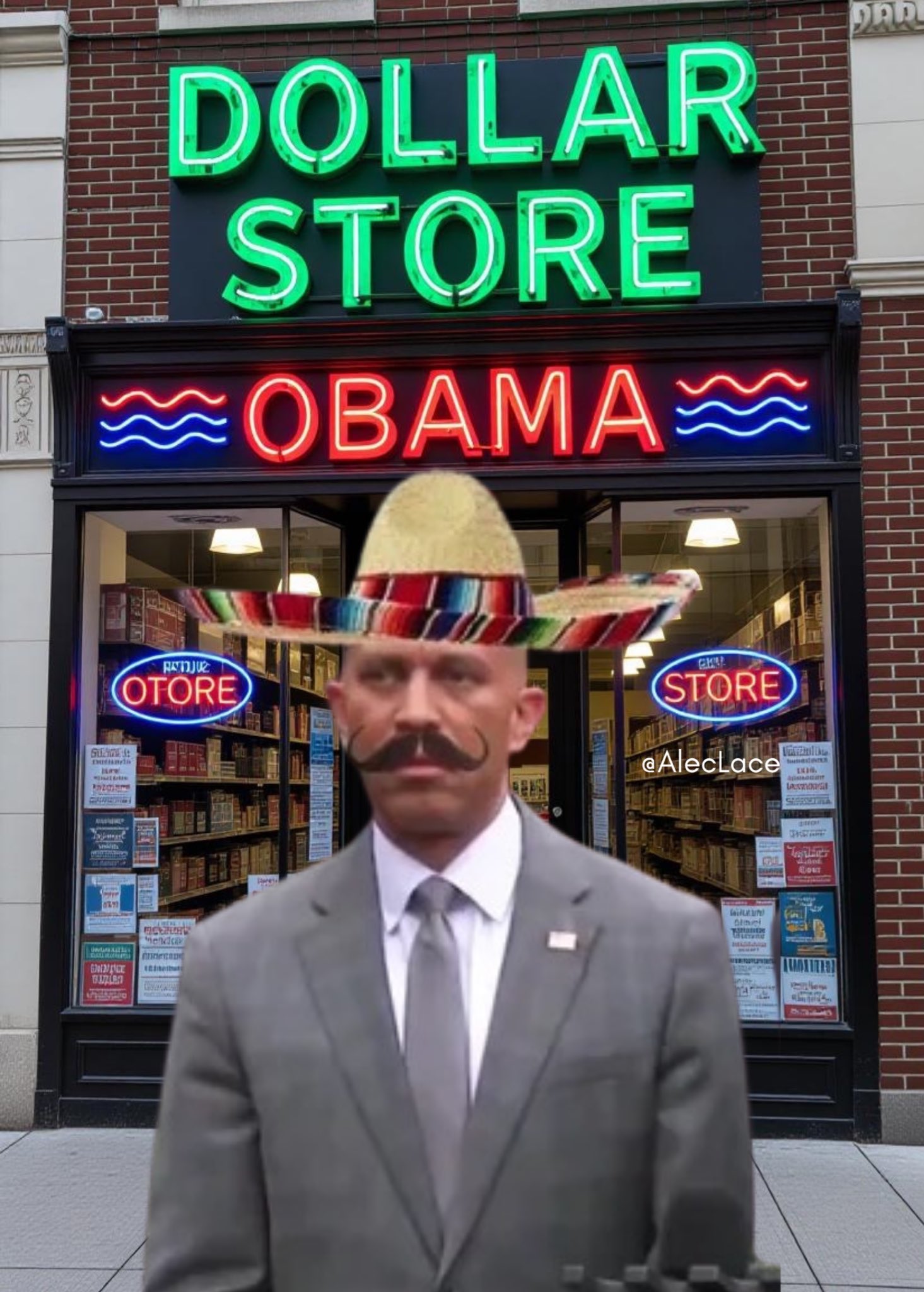
You’ve probably seen the image or the video by now. It’s everywhere. Hakeem Jeffries in a sombrero, sporting a cartoonish, curly handlebar mustache, while mariachi music blares in the background. It looks like something a teenager would cook up in five minutes on a smartphone, yet it became the center of a massive political firestorm in late 2024 and early 2025.
Honestly, the whole thing is a bit surreal. We aren't talking about a leaked photo from a college party or a weird Halloween costume from twenty years ago. This wasn't some "gotcha" moment involving a dusty yearbook. Instead, it was a high-stakes, AI-generated jab that came straight from the top of the executive branch.
The Origin of the Sombrero Meme
So, where did this actually come from? The timeline is pretty specific. In late September 2025, the U.S. government was hurtling toward a shutdown. House Minority Leader Hakeem Jeffries and Senate Minority Leader Chuck Schumer had just finished a meeting at the White House with President Donald Trump. They were trying to hash out a funding deal to keep the lights on.
Hours after that meeting, Trump took to Truth Social. He didn't post a policy memo. He posted a deepfake.
The video featured AI-generated versions of Jeffries and Schumer. In the clip, Jeffries was wearing the now-infamous sombrero and mustache. The audio was fabricated too, making it sound like the Democratic leaders were admitting to a plot to use illegal immigration to win future elections. It was weird. It was jarring. And for the internet, it was instant fuel for the fire.
Why the Sombrero?
The choice of a sombrero wasn't random, though it was certainly bizarre. The Trump administration was pushing a narrative that Democrats were prioritizing health insurance subsidies for undocumented immigrants over American citizens. By putting Jeffries in a sombrero, the meme was trying to visually link the Brooklyn-born Congressman to a specific border narrative.
Jeffries, who is the first Black person to lead a major political party in Congress, didn't find it funny. He called it "racist and disgusting." He told the President to "say it to my face" instead of hiding behind AI videos.
JD Vance and the "Solemn Promise"
The story didn't end with a single post. It actually got weirder. During a White House briefing on October 1, 2025, then-Vice President JD Vance was asked if these memes were actually helpful for negotiations.
Vance’s response went viral almost immediately. He laughed it off, calling the video "funny" and a "joke." He basically told reporters that people should give the American public more credit—no one actually thought Hakeem Jeffries walked into the Oval Office wearing a Mexican hat and a fake mustache.
Then came the line that launched a thousand more memes:
"I'll tell Hakeem Jeffries right now, I make this solemn promise to you that if you help us reopen the government, the sombrero memes will stop."
It was a bizarre moment in American diplomacy. A government shutdown was literally on the line, and the "bargaining chip" being discussed was whether or not the President would stop posting AI-generated photos of the opposition leader in traditional Mexican attire.
The AI Factor: Why This Hit Differently
We've had political cartoons since the dawn of the republic. Ben Franklin was doing this stuff in the 1700s. But the Jeffries in a sombrero saga feels different because of the tech.
- Realism: Even though the mustache was "curly and animated," the facial mapping of Jeffries was high-fidelity.
- Audio Spoofing: The video used "cloned" voices of Schumer and Jeffries, making it sound like a real confession.
- Speed: These assets were created and distributed within hours of a real-world meeting.
The Congressional Hispanic Caucus and the Congressional Black Caucus both slammed the imagery. Representative Adriano Espaillat called it "insulting" and "out of touch." They argued that using a sombrero as a prop to mock a Black leader over immigration policy wasn't just a joke—it was a dog whistle.
What People Get Wrong About the Meme
There is a common misconception that this was a "leaked" photo. You’ll see people on social media asking, "Is that photo of Jeffries real?" or "When did Hakeem Jeffries wear a sombrero?"
The answer is never. There is no record of Hakeem Jeffries ever wearing a sombrero in real life. It didn't happen at SUNY Binghamton, it didn't happen at NYU Law, and it certainly didn't happen during a White House negotiation. If you see an image of Jeffries in a sombrero, you are looking at an AI-generated composite.
The Fallout
The government did eventually reopen, but the "sombrero gate" left a mark. It signaled a new era where deepfakes aren't just used by rogue actors in dark corners of the web. They are now mainstream tools used by the highest offices in the land to troll opponents and shape public perception during active legislative crises.
Actionable Insights: How to Spot the Fake
In a world where these memes can pop up in minutes, you've got to be a bit of a detective. Here is how you can handle these viral political moments:
- Check the Source: If the image first appeared on a partisan social media account or a "meme" page, treat it as fake until proven otherwise.
- Look for "AI Artifacts": In the Jeffries video, the mustache had a slightly "shimmering" effect that didn't match the lighting of his face. That’s a dead giveaway.
- Search for Context: If a major political figure did something as wild as wearing a sombrero to a budget meeting, every single news outlet like AP, Reuters, or the New York Times would have multiple high-res photos of it from different angles. If there's only one "shaky" version, it's a deepfake.
- Verify the Audio: AI voices often have a "flat" cadence. They miss the natural stumbles, breaths, and emotional shifts of real human speech.
The saga of Jeffries in a sombrero is a weird footnote in political history, but it's also a warning. The line between a "funny joke" and a digital disinformation campaign is getting thinner every day. Staying skeptical isn't just a good idea anymore; it's basically a requirement for anyone with an internet connection.