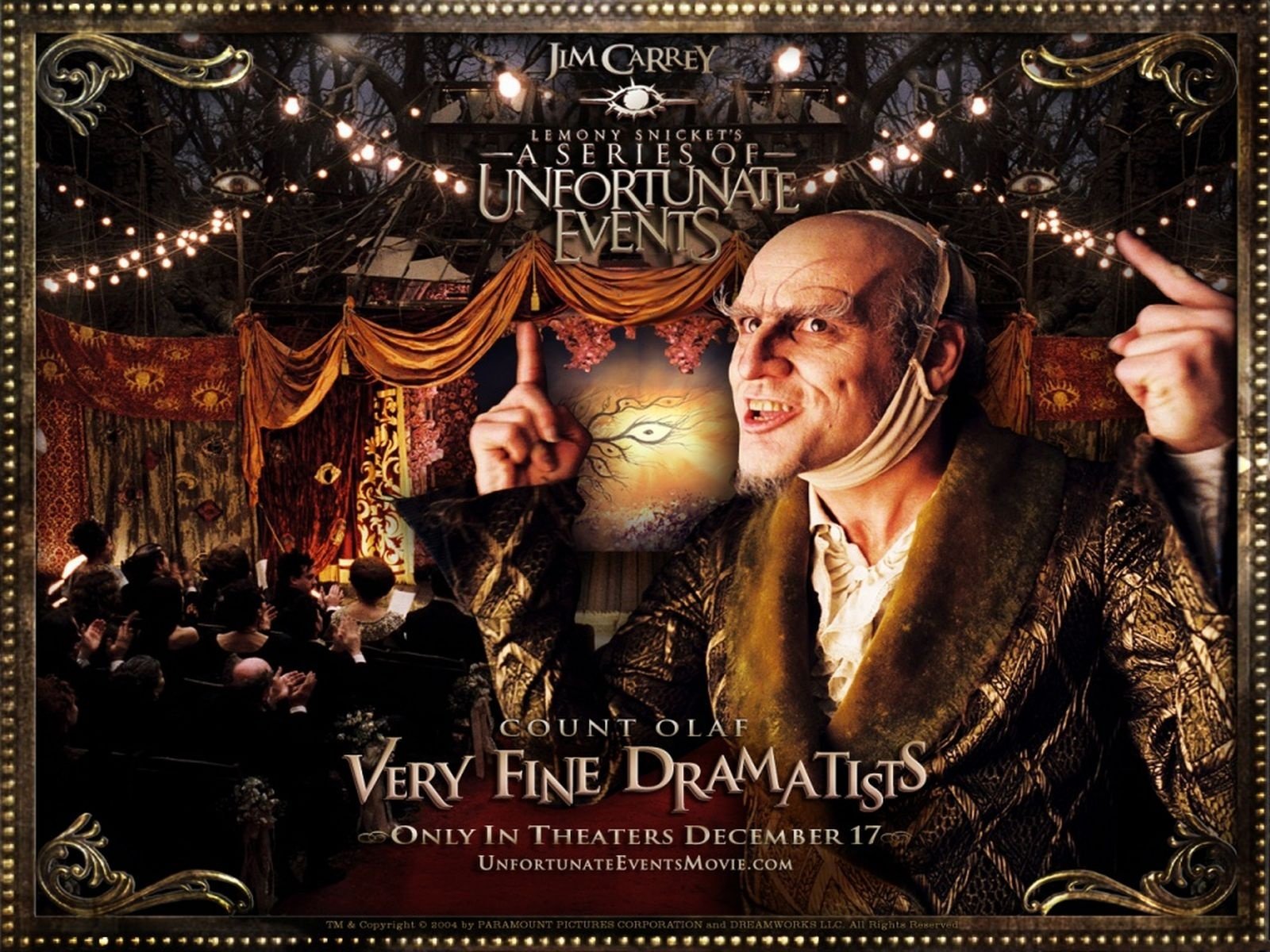
The year was 2004. Lemony Snicket’s A Series of Unfortunate Events was a literary juggernaut, and Hollywood finally had its hands on the Baudelaire orphans. But there was a problem. Or a solution, depending on who you ask. That solution was Jim Carrey as Count Olaf.
You remember the posters. The prosthetic nose. The receding hairline. The sheer, unadulterated "Carrey-ness" of it all. At the time, Carrey was the biggest comedic force on the planet, coming off hits like Bruce Almighty. Casting him as the villainous, theater-obsessed Count Olaf seemed like a slam dunk for Paramount and DreamWorks. Yet, twenty years later, his portrayal remains one of the most debated pieces of casting in modern cinema. Was he too funny? Too scary? Or just too much Jim Carrey?
The Impossible Task of Adapting Lemony Snicket
Adapting Daniel Handler’s books—written under the pen name Lemony Snicket—is a nightmare for any director. The books are bleak. They’re dry. They’re filled with a specific brand of meta-humor that treats children like intelligent adults. Count Olaf in the books is a terrifying, hygiene-challenged failure of an actor. He isn't a "fun" villain. He is a child abuser and a murderer.
When Brad Silberling took the helm for the 2004 film, he had to figure out how to market a movie where three children lose their parents in a fire and are hunted by a greedy relative. Enter Jim Carrey as Count Olaf. By putting Carrey in the lead, the studio signaled to parents that this wouldn't be too depressing. It would be a ride.
Carrey didn't just play Olaf. He consumed him.
He spent three hours in the makeup chair every single day. Kazu Hiro, the legendary makeup artist who later won Oscars for Darkest Hour and Maestro, was the man behind the look. He created a visage that was both grotesque and fascinating. But once the cameras rolled, the makeup was just a canvas. Carrey brought his signature kinetic energy to a character that, on the page, was often quite still and menacing.
Improvisation and the "Stefano" Problem
If you watch the behind-the-scenes footage, you’ll see something wild. Carrey didn't stick to the script. Honestly, he rarely does. There is a famous scene where Olaf meets the Baudelaires for the first time. Carrey, as Olaf, asks them to "Wait, give me that line again." He wasn't supposed to say that. He was actually talking to the script supervisor because he forgot his line, but he stayed in character, and Silberling kept it in.
That’s the essence of Jim Carrey as Count Olaf.
The performance is a meta-commentary on bad acting. Since Olaf is a terrible actor, Carrey plays him as a man who thinks he’s a genius but is actually transparent. This works brilliantly during the middle of the film when Olaf disguises himself as Stefano, the Italian assistant, and Captain Sham.
Here is where the divide happens:
- The Pro-Carrey Camp: They argue that Olaf is a theatrical ham. By leaning into the absurdity, Carrey captures the "theatricality" that the books emphasize. His Stefano is hilarious because it's so obviously Olaf in a bad wig.
- The Purist Camp: They argue Olaf should be scary first and funny second. In the film, the threat feels diminished because you’re waiting for the next joke. The orphans look less like victims and more like straight-men in a comedy routine.
It's a valid critique. In the 2017 Netflix adaptation, Neil Patrick Harris took a slightly different approach, though he also leaned into the musical theater aspect. But Carrey’s Olaf felt like a Looney Tunes character dropped into a Tim Burton landscape.
The Physicality of the Performance
Carrey's body is made of rubber. We know this. But as Olaf, he used his height and gangly limbs to create something bird-like. He’s predatory. There’s a scene where he’s leaning over a train track, and the way he tilts his head is genuinely unsettling.
Critics like Roger Ebert actually praised the film's look, giving it three stars and noting that Carrey's performance was the glue holding the disparate book plots together. But the film only covered the first three books (The Bad Beginning, The Reptile Room, and The Wide Window). Because the movie tried to cram so much into 100 minutes, Carrey had to work overtime to establish Olaf’s menace while keeping the "PG" rating in mind.
It’s hard to be a child killer and a box-office draw at the same time.
Why We Don't See This Kind of Performance Anymore
In the current era of "prestige" streaming and gritty reboots, the "Big Character Performance" has fallen out of fashion. Everything is grounded now. Everything has a "realistic" explanation. Jim Carrey as Count Olaf belongs to an era of experimental big-budget filmmaking where actors were allowed to be weird.
Think about the costumes. Colleen Atwood, the costume designer, gave Olaf a silhouette that looked like a Victorian nightmare. Carrey filled that suit with a performance that felt like a silent film star on acid. He wasn't trying to be "relatable." He was trying to be an icon.
The film was a modest success, grossing about $211 million worldwide. By today’s standards, that’s a flop given the $140 million budget. But its legacy isn't in the box office numbers. It’s in the visual language it established. If you look at the Netflix series years later, you can see the DNA of the 2004 film everywhere, from the color palette to the prosthetic work.
Misconceptions About the 2004 Casting
Some people think Carrey was the second choice after Jude Law (who narrated the film). That’s not true. Carrey was the centerpiece from the jump. The real struggle was the tone. Director Barry Sonnenfeld was originally attached to the project, and he wanted it to be much darker and more faithful to the books' dry tone. When he left over budget disputes, the movie shifted toward the more "accessible" Carrey-centric version we got.
Also, many fans forget how much the kids—Emily Browning and Liam Aiken—had to do. They had to act against a man who was constantly changing the script. Browning later mentioned in interviews that keeping a straight face was the hardest part of the job. You can actually see her biting her lip in a few scenes.
Actionable Insights for Fans and Collectors
If you are revisiting this performance or looking to dive deeper into the Snicket lore, there are a few things you should actually do to appreciate what Carrey was trying to pull off.
- Watch the "Bad Acting" nuances: Don't look at Olaf as a villain; look at him as a character playing a character. Notice how Carrey deliberately flubs his "acting" within the movie. It’s a double-layered performance that is actually quite technical.
- Compare the "Captain Sham" sequence: Read the third book and then watch Carrey’s version. The film captures the absurdity of the business-suit-meets-sailor-aesthetic better than any other medium.
- Check the Kazu Hiro archives: If you’re into film production, look up the original prosthetic molds for Olaf. They were designed to look like a "dead bird," which explains Carrey’s jerky, avian movements.
- Track the "Lemony Snicket" commentary: The DVD commentary (if you can find an old copy or a rip) features Daniel Handler and Brad Silberling. It provides a massive amount of context on why they chose to let Carrey run wild.
The 2004 film didn't launch a franchise, but it gave us a singular vision of a literary monster. Jim Carrey as Count Olaf might not be the book-accurate version some fans wanted, but it remains a masterclass in physical comedy and prosthetics. It’s a reminder of a time when Hollywood would spend $140 million just to let a genius act like a total weirdo for two hours.
To truly understand the impact, one has to look past the makeup and see the actor underneath who was trying to balance the whimsical with the wicked. It wasn't just a role for Carrey; it was an audition for a version of the character that could only exist in a specific moment in cinematic history. Whether he's your definitive Olaf or just a "fun distraction," there's no denying that Carrey left an indelible mark on the Baudelaire legacy.