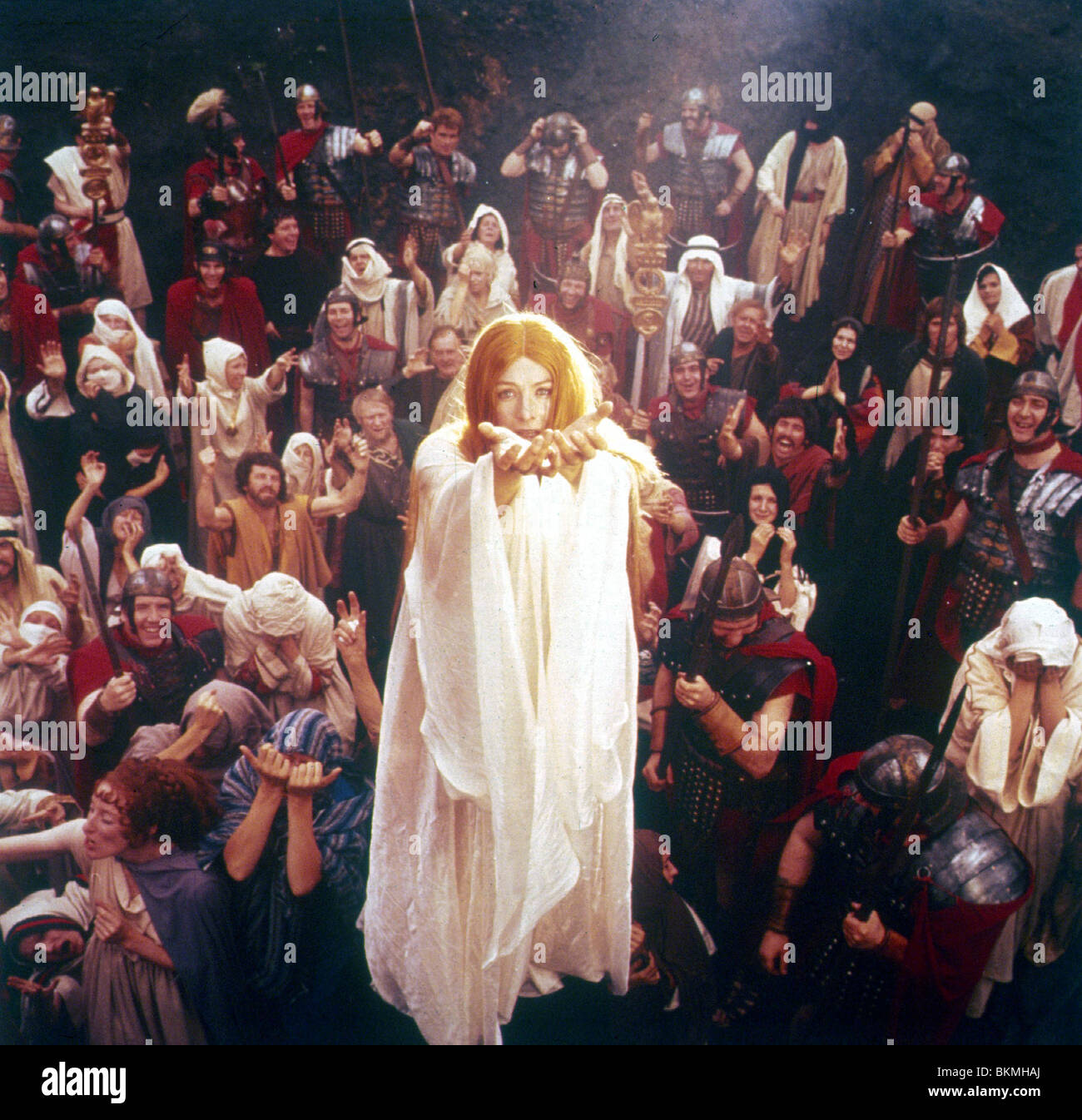
You’ve probably heard the whispers. A movie so "filthy" it was locked in a vault for decades. A scene involving nuns and a crucifix that supposedly made studio executives vomit. A director who hit a critic with a rolled-up newspaper on live television because the guy called his work "monstrously indecent."
Honestly, most of what people say about Ken Russell The Devils sounds like urban legend. But here’s the thing: the reality is actually weirder. And much, much darker.
When The Devils premiered in 1971, it didn't just ruffle feathers. It set the whole coop on fire. The Vatican called it "an insult to cinema." Several countries outright banned it. Even today, in 2026, you still can’t just hop onto a standard streaming service and watch the full, uncut director’s cut. Warner Bros. treats the film like a radioactive secret they’d rather everyone just forget.
Why Does This Movie Still Scare People?
It’s not just the gore. We’ve all seen Terrifier and Saw by now; a bit of 17th-century torture shouldn't theoretically stop the heart of a modern viewer. The reason Ken Russell The Devils remains a lightning rod is because of how it mixes the sacred and the profane.
Russell wasn't some atheist trying to "edge" the church. He was actually a devout Catholic at the time. He saw the film as a deeply religious work—a story about a sinner (Father Urbain Grandier, played with a terrifying, sweaty charisma by Oliver Reed) who becomes a saint through suffering.
The plot is based on real history. In 1634, in the French town of Loudun, a group of Ursuline nuns allegedly became "possessed" by demons. They claimed Grandier had sent the devils to bewitch them. In reality? It was a political hit job orchestrated by Cardinal Richelieu to destroy a priest who was too popular, too handsome, and too vocal about protecting his city's independence.
The Visual Language of a Fever Dream
If you watch it today, the first thing that hits you isn't the "blasphemy." It’s the sets. Derek Jarman, who later became a legendary director himself, designed a version of 17th-century France that looks like a futuristic public restroom.
Everything is white. Clinical. Tiled.
Russell didn't want a "ye olde England" look with mud and thatched roofs. He wanted Loudun to look like a pressure cooker. When you see the black-clad nuns writhing against those stark, sterile white walls, it creates a visual dissonance that makes your skin crawl before a single word is even spoken.
The Performances: Reed and Redgrave
Oliver Reed as Grandier is... well, he's a force of nature. He starts the movie as a total "cad," as they used to say. He’s sleeping with half the town, he’s arrogant, and he’s basically a rockstar in a cassock. But as the state begins to break him—literally—he transforms. By the time he’s being burned at the stake, screaming "I am a man! I am not a magician!", you’re not looking at a movie star. You’re looking at someone being erased from existence.
Then there’s Vanessa Redgrave.
As Sister Jeanne of the Angels, the humpbacked Mother Superior, she is heartbreaking and terrifying. Her performance is built on repression. She’s obsessed with Grandier—she’s never even met him, but she’s built a whole sexualized religious fantasy around him. When he rejects her request to be the convent's confessor, her "love" curdles into a murderous, hysterical rage.
It's one of the bravest performances in cinema history. She isn't afraid to look ugly, pathetic, or insane.
The Censorship War: What’s Actually Missing?
For decades, the "holy grail" for cinephiles has been the "Rape of Christ" sequence. It sounds exploitative, and yeah, on paper, it is. It involves the nuns, in a state of mass hysteria, attacking a crucifix.
The British Board of Film Censors (BBFC) and the American MPAA went to town on it. They didn't just cut it; they buried it. It wasn't until 2002 that critic Mark Kermode and researcher Paul Joyce found the lost footage in a Warner Bros. vault.
Even with that footage found, the studio has been incredibly stubborn. They allowed a few screenings of the "Director’s Cut," but they’ve consistently blocked a wide 4K release or a definitive Blu-ray. In 2024 and 2025, directors like Guillermo del Toro were still publicly pleading with the studio to let the film out of its cage.
Why the Studio Is Still Hesitant
Basically, Warner Bros. is scared of the optics. Even in the mid-2020s, a major studio doesn't really want to be the "official" distributor of a film where nuns do... what they do in this movie. It’s a corporate headache.
But by suppressing it, they’ve only made it more legendary. The scarcity of Ken Russell The Devils has turned it into a cult object. People trade bootlegs like they're forbidden texts.
Fact vs. Fiction: Did This Really Happen?
Ken Russell based the film on Aldous Huxley's non-fiction book The Devils of Loudun and a play by John Whiting. He played fast and loose with some details—like King Louis XIII being a cross-dressing bird-hunter—but the core is historically accurate.
- Urbain Grandier was a real priest.
- The possessions were a massive public spectacle used for political gain.
- The torture was documented. Grandier’s legs were crushed in "the boot" before he was burned.
Russell’s genius was realizing that history is often more "over the top" than fiction. He didn't need to invent the horror; he just needed to find a way to film it that matched the internal madness of the people living through it.
How to Experience it Today
If you're looking to dive in, don't just grab the first version you find on a random streaming site. Most of those are the heavily butchered 108-minute US "R-rated" cuts. They're choppy and lose the rhythm of the film.
- Look for the BFI DVD: The British Film Institute released a 2-disc set years ago. It’s the "UK X-rated" cut. It’s 111 minutes. It doesn’t have the full "Rape of Christ" scene, but it has the Hell on Earth documentary which shows snippets of it.
- The Shudder Version: Occasionally, the 108-minute or 111-minute versions pop up on Shudder. It’s the best way to see it in decent quality without paying $100 for a rare disc.
- The Criterion Channel: They sometimes host it as part of a Ken Russell retrospective. If you see it there, watch it immediately.
Actionable Insights for the Curious Viewer
If you’re ready to watch Ken Russell The Devils, go in with your eyes open. This isn't a "fun" horror movie. It’s an assault.
- Context is King: Read a quick summary of the real Loudun possessions first. Knowing that the "magic" was a political scam makes the film’s ending ten times more tragic.
- Watch the Score: The music by Peter Maxwell Davies is intentionally dissonant and jarring. It’s supposed to make you feel anxious. Don't turn it down; let it annoy you.
- Look Beyond the Shock: Pay attention to the scenes between Grandier and his secret wife, Madeleine. Amidst all the screaming and fire, there is a genuinely tender human story about a man discovering what it actually means to love.
Ultimately, the film is a warning. It’s about what happens when the state and the church get too close. It’s about how easy it is to start a moral panic to hide a political grab. That’s why it still matters in 2026. The costumes change, but the "devils" are always the same people sitting in the halls of power.
To truly understand the impact of this film, your next step should be to seek out the documentary Hell on Earth: The Desecration of The Devils. It provides the necessary framework to understand why this movie was nearly deleted from history and why Ken Russell fought so hard to keep his vision alive.