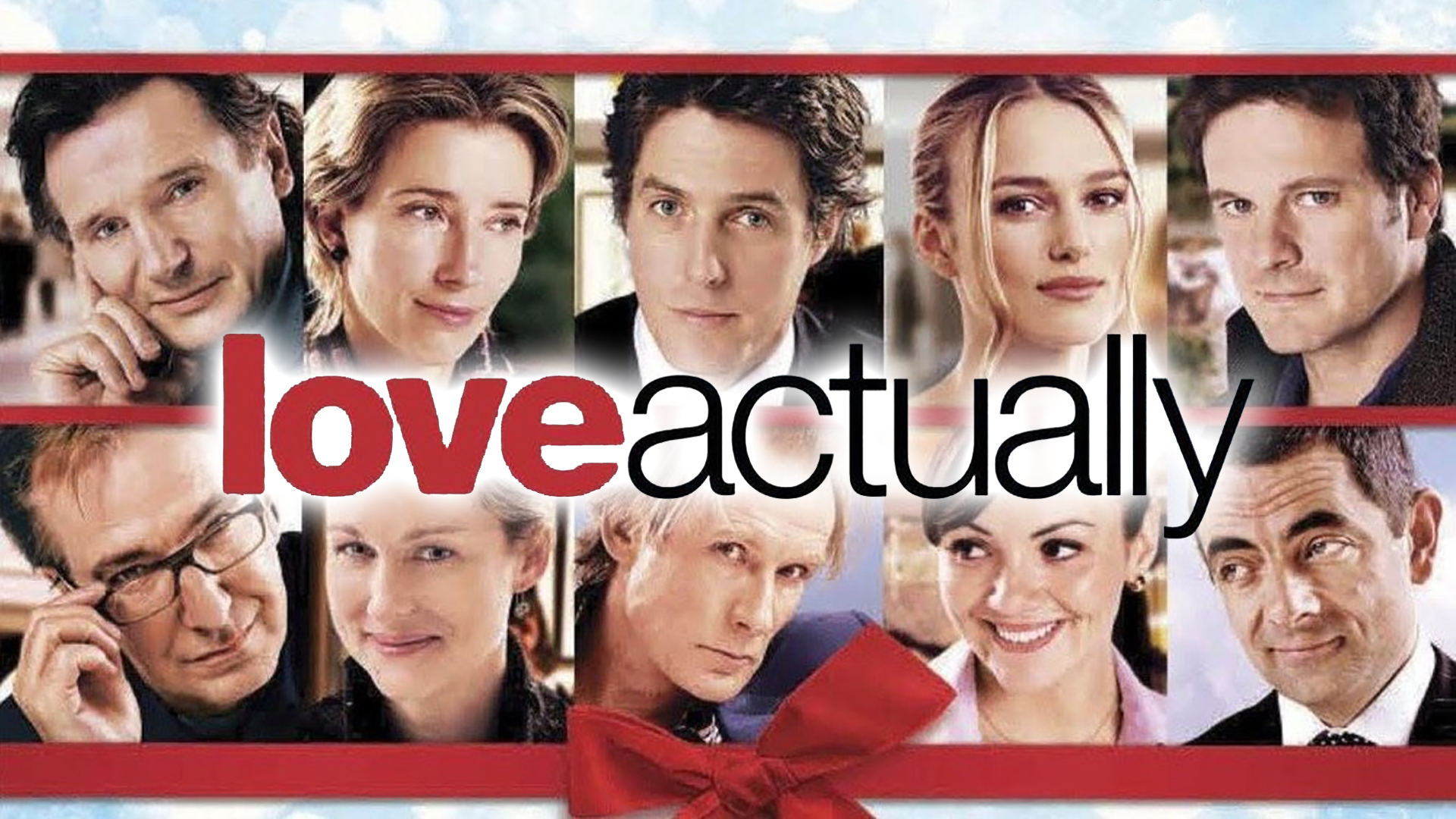
You’re sitting on the couch with your parents, the cocoa is hot, and you hit play on a holiday classic. Then, suddenly, Martin Freeman and Joanna Page are simulate-bonking as professional stand-ins while chatting about traffic. It's awkward. It's really awkward. That’s the thing about the Love Actually film rating—it’s a bit of a sneaky one. Most people categorize this flick as a "cozy Christmas rom-com," but if you look at the technical classification, it’s actually punchier than your average Hallmark special.
Richard Curtis’s 2003 ensemble piece is a staple, yet every year, parents get caught off guard by the nudity or the sheer volume of "F-bombs." Honestly, it’s fascinating how our collective memory softens the edges of movies we love. We remember Bill Nighy being a hilarious old rock star, but we forget the specific rating that kept it out of reach for younger kids back in the day.
What is the Love Actually Film Rating, Really?
In the United States, the Motion Picture Association (MPA) slapped Love Actually with an R rating. That’s the big one. Restricted. Under 17 requires accompanying parent or adult guardian. Why? The official breakdown cites sexuality, nudity, and language. It isn't just a stray swear word or two. We’re talking about roughly 70 uses of the word "fuck" and its various derivatives. If you compare that to other rom-coms of the era, it’s surprisingly gritty on the dialogue front.
Across the pond in the UK, the British Board of Film Classification (BBFC) gave it a 15 certificate. In Britain, that means nobody under the age of 15 is even allowed in the cinema to see it. While the US is often more sensitive about skin and the UK is more sensitive about violence, both boards agreed that this wasn't a film for small children.
It’s a bit of a paradox. The movie features a literal elementary school Christmas pageant with a "First Lobster," yet the Love Actually film rating ensures those same kids shouldn't be watching the movie without some serious fast-forwarding from their parents.
The Nudity Controversy: Why It Earned That R
A huge chunk of the rating comes down to the characters John and "Just" Judy. Their entire subplot involves them being body doubles on a film set. Because they are playing stand-ins for a sex scene, they spend almost their entire screen time naked or semi-naked. While the tone is sweet and incredibly "British-awkward," the MPA doesn't care about "sweet." They see breasts; they give an R.
Then you have the Colin Frissell storyline. Kris Marshall’s character travels to Wisconsin—which, as a side note, is depicted in the most ridiculous "Englishman’s fantasy" version of America ever—and ends up in a house with several women. There is significant nudity in this sequence as well. It’s played for laughs, but it firmly cements the Love Actually film rating in the adult category.
Comparing Global Ratings: A Messy Map
Ratings aren't universal. It’s wild how different cultures view the same scenes. In Canada, most provinces gave it a 14A, meaning you can take your kid if you’re willing to sit through the awkwardness with them. Down in Australia, it landed an M rating, which is a recommendation that it’s for mature audiences but isn't legally restrictive.
- France: They gave it a "Tous publics." Basically, everyone is welcome. The French are famously chill about nudity compared to the English-speaking world.
- Germany: It got a "6," which means it’s considered fine for children aged 6 and up.
- South Korea: An 18+ rating. They went the opposite direction, viewing the sexual content much more strictly.
This disparity shows that the Love Actually film rating is less about the movie's "morality" and more about what specific buttons it pushes in different government offices. If you’re watching in Berlin, it’s a family flick. If you’re watching in Seoul or New York, it’s for the grown-ups.
The Language Factor
We have to talk about Billy Mack. Bill Nighy’s character is a goldmine of profanity. From calling his manager "fat" to his live TV outbursts, his dialogue is a major contributor to the Love Actually film rating.
The "F-word" count in this movie is actually higher than in some action movies. For a movie about love and "Christmas being all around us," the script is incredibly salty. This is a trademark of Richard Curtis (think Four Weddings and a Funeral), who likes to ground his romance in the way people actually talk when they’re stressed or drunk.
Is There a "Clean" Version?
If you’ve ever watched Love Actually on basic cable during the holidays, you’ve probably noticed it feels... different. TV networks often air a "broadcast edit."
In these versions, the John and Judy subplot is usually cut entirely. Poof. Gone. Because their story is almost entirely nudity-based, removing them doesn't actually hurt the rest of the interwoven plots, but it does make the movie feel much more like a standard PG-13 film. They also dub over the swearing. Hearing Bill Nighy say "flipping" instead of the alternative just doesn't have the same comedic weight, does it?
Why This Matters for Modern Streaming
With the rise of streaming platforms like Netflix, Peacock, or Amazon Prime (depending on the year and licensing), the Love Actually film rating is more important than ever. Algorithms often suggest "Holiday Favorites" to users. If a parent clicks on it thinking it’s the same vibe as The Holiday (which is PG-13), they might be in for a shock during the first ten minutes.
The E-E-A-T (Experience, Expertise, Authoritativeness, and Trustworthiness) of film criticism suggests we should look at the intent. Curtis wasn't trying to make a "dirty" movie. He was trying to make a movie about the full spectrum of love—unrequited love, grieving love, new love, and yes, physical love. The rating is just a byproduct of that honesty.
Parental Guidance: What to Watch Out For
If you’re a parent deciding whether to ignore the Love Actually film rating this year, here is the "honest friend" breakdown of what you're actually dealing with:
- The "Sex Gallery": One character visits an art gallery with very graphic images.
- The Stand-Ins: As mentioned, full-frontal (though often obscured) nudity during "work" scenes.
- The "American Dream": Bra/underwear scenes and suggestive situations in the Wisconsin segment.
- The Cursing: High frequency. If your kids repeat what they hear, you're going to have a long talk with their teacher in January.
- Adultery: The Alan Rickman/Emma Thompson storyline is heartbreaking and deals with emotional and implied physical infidelity. It’s heavy stuff for kids to process.
The Verdict on the Love Actually Film Rating
Ultimately, the R rating in the US feels a bit harsh by 2026 standards, where we see much more on basic social media feeds. However, the 15 rating in the UK feels just about right. It’s a movie for people who have lived a little. It’s for people who understand that love isn't just about the "First Lobster"—it’s about the messy, swearing, naked, complicated parts of being human.
If you are planning a viewing, check the platform's rating label first. Sometimes they offer the "Edited for TV" version, which is safer for a mixed-age crowd. But if you want the full, unadulterated Richard Curtis experience, you’re going for the R-rated cut.
Next Steps for Your Holiday Viewing:
- Check the Runtime: The unrated/original cut is about 135 minutes. If yours is significantly shorter, you’re likely watching a censored version.
- Identify the Version: On platforms like Amazon, look for the "Rating" section in the metadata. If it says PG-13, several subplots have been removed.
- Contextualize for Teens: If you’re watching with 14- or 15-year-olds, the "nudity" in the film-set scenes is actually a great conversation starter about how movies are made and the clinical, non-sexual nature of professional acting.
- Pre-Screen the Billy Mack Scenes: If you’re sensitive to language but okay with the rest, just know that whenever the aging rock star is on screen, the "Love Actually film rating" is being earned in real-time.