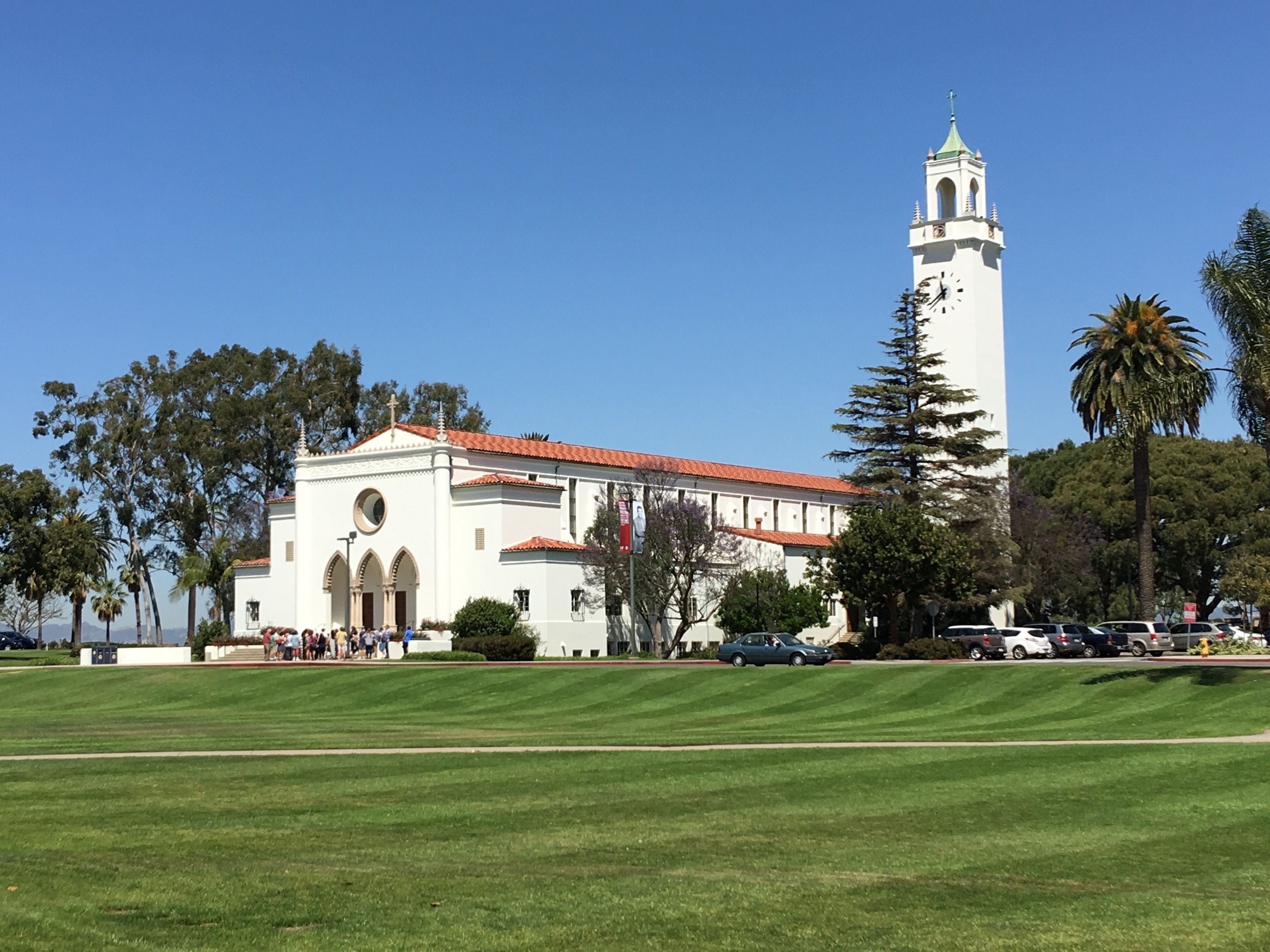
You’ve seen the photos. Those sweeping, cinematic views of the Pacific Ocean from the Westchester bluffs. It's the kind of scenery that makes you wonder if anyone actually gets any studying done. But honestly, Loyola Marymount Los Angeles is a lot more complex than its "Most Beautiful Campus" rankings suggest. It is a place where high-intensity Jesuit rigor meets the laid-back grit of a Silicon Beach startup.
Basically, it's a contradiction that works.
Founded in 1911, LMU isn't just one school; it's a merger of Loyola University and Marymount College that happened back in 1973. That history matters because it blended two distinct traditions—Jesuit intellectual discipline and the Marymount commitment to social justice and the arts. Today, it sits on 142 acres of prime real estate, but the vibe inside the gates is surprisingly focused. Students aren't just here for the sun; they're here for the hustle.
Life on the Bluff: The Reality of Being a Lion
The student-to-faculty ratio is 11:1. That is a small number for a university with about 10,000 total students. It means you can't really hide in the back of the room. Your professor will know if you didn't do the reading for your First-Year Seminar.
Academics here are heavy on the "whole person" concept, or cura personalis if you want to use the formal Latin. It’s not just a brochure slogan. It translates to a core curriculum that forces engineering majors to take philosophy and film students to grapple with ethics. It's kinda intense, but it prevents you from becoming a one-dimensional graduate.
Then there's the location. LMU is situated right next to Playa Vista, which has evolved into a massive tech and media hub. People call it Silicon Beach. For a student at Loyola Marymount Los Angeles, this is a goldmine. You’ve got Google, YouTube, and Electronic Arts practically in your backyard. About two-thirds of students land internships during their time here. It’s not uncommon to see someone rush from a 10:00 AM Shakespeare lecture to a noon internship at a major production house.
The Film School Factor
If you’re talking about LMU, you have to talk about the School of Film and Television (SFTV). It is consistently ranked among the top five or ten film schools in the world by The Hollywood Reporter. Unlike some of the other big-name film schools in LA, LMU’s program is known for being collaborative rather than cutthroat.
Alumni like Barbara Broccoli (who produces the James Bond films) and Francis Lawrence (director of The Hunger Games) started here. The equipment is top-tier, but the real value is the networking. Being a Lion in the entertainment industry is a real thing. It’s a shorthand for "this person knows how to work a set and won't be a diva about it."
What Most People Get Wrong About the "Catholic" Label
There is a misconception that because it’s a Jesuit and Marymount institution, it must be a rigid, ultra-conservative bubble. Honestly? It's the opposite.
The Jesuit tradition is famous for questioning everything. It encourages "disruptive thinking." You’ll find a massive diversity of faiths and perspectives on campus. While there are beautiful spaces like Sacred Heart Chapel, the focus is often more on "faith in action" than dogma.
- Service Hours: Students clock over 250,000 volunteer hours a year.
- Social Justice: It’s a core part of the identity. If you aren't interested in community service, you might feel a little out of place.
- The Law School: Loyola Law School, located in downtown LA, was the first ABA-accredited school in California with a pro bono requirement.
It’s about being "men and women for and with others." That’s the phrase you’ll hear until it’s stuck in your head.
The Price of Admission: Let's Talk Numbers
We have to be real: it isn't cheap. For the 2025-2026 academic year, the estimated total cost of attendance (including tuition, housing, and food) is pushing toward $95,000 if you're living on campus. That’s a staggering number.
However, about 89% of undergraduates receive some form of financial aid. The university contributed over $171 million to student grants and scholarships recently. If you have the grades—the mid-range SAT is usually between 1280 and 1400—there’s a good chance the "sticker price" won't be what you actually pay.
Is it worth it?
The data says 98% of the Class of 2024 was employed, in grad school, or doing full-time service work within six months of graduation. The early career median salary is around $77,000. That's a solid ROI, especially in a city as expensive as Los Angeles.
Sports, Spirit, and Iggy the Lion
LMU competes in NCAA Division I, mostly in the West Coast Conference (WCC). While it might not have the "football school" energy of a USC, the basketball games at Gersten Pavilion get loud. Really loud.
Iggy the Lion is the mascot, and the school spirit is surprisingly tight-knit. Since it’s a medium-sized school, you see the same faces at the bluff or the Lair (the main dining hall). It feels more like a community and less like a factory.
Actionable Steps for Prospective Students
If you're looking at Loyola Marymount Los Angeles, don't just look at the website. The online tour is okay, but it doesn't capture the actual atmosphere of the bluff.
- Visit in Person: Walk the "Bluff Track" at sunset. If you don't feel a connection to the campus then, it might not be the place for you.
- Audit a Class: Contact admissions to see if you can sit in on a lecture in your intended major. See if the "cura personalis" approach actually appeals to you.
- Check the Career Center: Look at the specific employer partnerships for your major. If you’re in business, look at the College of Business Administration’s ties to Silicon Beach firms.
- Review the Core: Look at the Core Curriculum requirements. You will be taking classes outside your major. Make sure you’re okay with that before you commit.
Ultimately, LMU is for the student who wants the "LA experience" without getting lost in the chaos of a 40,000-student state school. It’s for the person who wants to debate philosophy in the morning and edit a short film in the afternoon. It’s a specific vibe—ambitious, reflective, and undeniably beautiful.