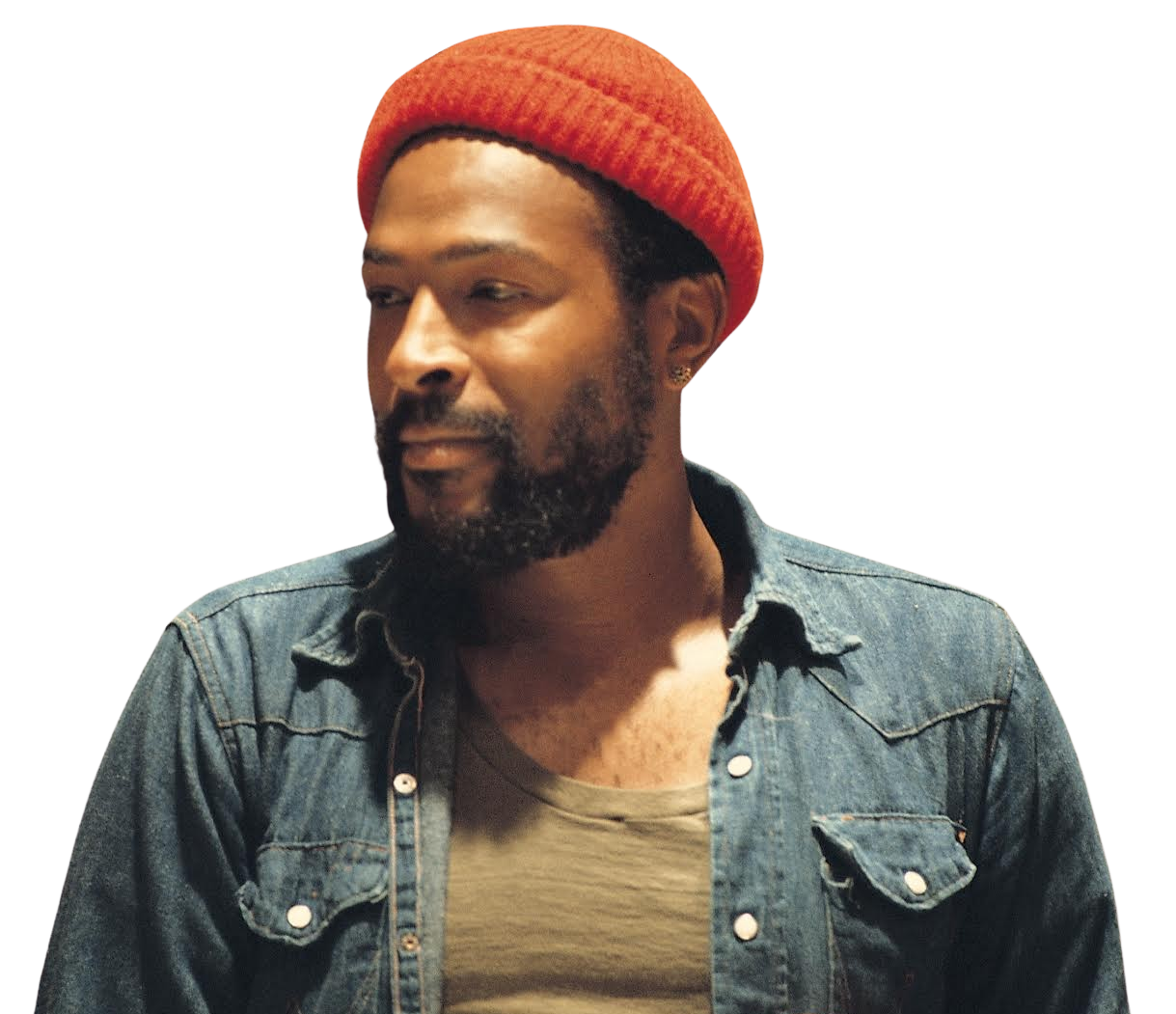
Soul music isn't just about the notes. It’s about the DNA. When people talk about Marvin Gaye and Michael Jackson, they usually start comparing record sales or arguing about who had the smoother falsetto. But that’s missing the point entirely. These two weren't just "label mates" at Motown. They were the bookends of an era. One was the sophisticated prince who broke the mold of the "singing puppet," and the other was the child prodigy who took that broken mold and turned it into a global empire.
Honestly, it’s kinda wild how much their paths overlapped in the hallways of Hitsville U.S.A. Michael was just a kid when Marvin was already a god. Imagine being ten years old and watching the guy who recorded "I Heard It Through the Grapevine" walk past you in the studio. That’s the reality Michael Jackson lived. It wasn't just influence; it was proximity.
The Motown Hierarchy and the Shift in Power
Berry Gordy ran Motown like a factory. You showed up, you sang what the writers wrote, you wore the suit the stylists picked, and you went home. Marvin Gaye hated that. He fought tooth and nail for the right to produce his own music, eventually giving us What's Going On.
Michael Jackson watched this. He saw Marvin’s rebellion. While the Jackson 5 were still doing bubblegum pop, Marvin was proving that an artist could be a visionary. Without Marvin Gaye’s successful strike for independence, Michael might never have had the leverage to demand the creative control he eventually got for Off the Wall and Thriller.
Marvin was the blueprint.
Vocal Textures and the Soul Heritage
There is this specific thing Marvin did with multi-tracking his own voice. If you listen to "Inner City Blues (Make Me Wanna Holler)," you hear layers of Marvin whispering, shouting, and harmonizing with himself. It’s haunting. Michael Jackson took this exact technique and ran with it. Go listen to the vocal arrangements on "Don't Stop 'Til You Get Enough." That's not just a choir; that's Michael layering himself over and over, a direct stylistic descendant of the "Marvin Gaye sound."
Michael once mentioned in an interview how much he studied the older artists on the roster. He didn't just look at their dance moves. He looked at how they breathed. He looked at how Marvin could sound vulnerable and powerful at the same time. It’s that "vocal fry"—that grit at the edge of a note—that connects them.
The 1983 Connection: Motown 25
We all remember the moonwalk. When Michael Jackson performed "Billie Jean" at the Motown 25: Yesterday, Today, Forever special, the world stopped. But do you know who else was there that night? Marvin Gaye.
Marvin gave a seated performance at the piano, delivering a history of Black music that felt like a sermon. It was one of his last great public moments before his tragic death in 1984. Seeing Marvin Gaye and Michael Jackson on the same roster that night was like watching the passing of a torch. Marvin was the weary prophet; Michael was the soaring superstar.
It’s actually pretty heartbreaking. Marvin was struggling with a lot of personal demons at the time—tax debt, addiction, paranoia. Meanwhile, Michael was at the absolute peak of his powers. One was ascending to a level of fame no human had ever seen, while the other was trying to find his way back to the light.
Real Stories from the Studio
There’s a story—often cited by Motown engineers—about how the younger kids would hang around the studio doors when the "adult" stars were recording. Michael was a notorious "sponge." He would sit quietly and observe. He didn't just want to be a singer; he wanted to understand the machinery of a hit.
- Marvin taught him that lyrics could matter.
- The Funk Brothers taught him about the "pocket" of a groove.
- Berry Gordy taught him about the "crossover."
But Marvin gave him the most important lesson: the artist is the boss. Before Marvin, the producer was the boss. After Marvin, the singer had a voice in the booth. Michael Jackson took that voice and shouted it to the rafters.
What People Get Wrong About the Rivalry
People love a good fight. They want to believe there was some massive ego clash between Marvin Gaye and Michael Jackson. In reality? It was more like mutual respect mixed with a little bit of distance. They were in different stages of life. Marvin was a grown man with grown-man problems when Michael was still playing with water balloons.
There wasn't a "rivalry" in the sense of two boxers in a ring. It was more of a competitive excellence. When Michael saw Marvin deliver a masterpiece, it raised the bar. It made him realize that "good" wasn't enough. You had to be "legendary."
The Tragic Parallel of the Final Years
Both men ended up in a weird sort of isolation. Marvin moved to Belgium to get away from the IRS and his own head. Michael built Neverland to get away from a world that wouldn't stop staring at him.
They both had complicated relationships with their fathers. This is the dark thread that connects them. Joe Jackson and Marvin Gay Sr. were both incredibly hard men. They pushed their sons to the brink. That drive for perfection—that "I have to be the best so I can be safe" mentality—fueled their careers but arguably destroyed their personal lives.
Honestly, it’s a miracle we got the music we did.
The Musical Legacy in 2026
Even now, you can’t turn on a R&B station without hearing their ghosts. When you hear The Weeknd or Bruno Mars, you’re hearing a distillation of the Marvin Gaye and Michael Jackson formula.
- The rhythmic precision of Jackson.
- The silky, layered emotionality of Gaye.
- The ability to make a dance track feel like a political statement.
It’s all there.
How to Listen Like an Expert
If you want to really understand this connection, don't just put on a "Best Of" playlist. You have to do the work.
Start with Marvin Gaye’s Here, My Dear. It’s a weird, bitter, beautiful album about his divorce. Then immediately play Michael Jackson’s Bad. Look for the similarities in how they use their voices as percussion. Listen to the "hics" and the "oohs." They aren't just noises; they are rhythmic markers.
Next, check out the live footage from the early 70s. Look at Marvin’s stage presence—the way he commands the room with just a look. Then watch Michael. You’ll see that Michael’s "stillness" moments are a direct lift from the Marvin Gaye playbook. It’s the art of the pause.
Actionable Takeaways for Music Fans
- Audit the Credits: Look at the session musicians on Marvin's 70s records and Michael's 80s records. You'll find a surprising amount of overlap in the "A-list" session players who helped craft both sounds.
- Study the "Vocal Stack": Use headphones to isolate the left and right channels on songs like "Sexual Healing" and "The Way You Make Me Feel." Notice how they both use background vocals to create a "wall of sound" that feels intimate rather than crowded.
- Support the Preservation: Visit the Motown Museum (Hitsville U.S.A.) in Detroit if you ever get the chance. Standing in Studio A is the only way to truly feel the scale of what these two men accomplished in such a small space.
- Read the Source Material: Pick up Divided Soul: The Life of Marvin Gaye by David Ritz. It gives the best insight into the mindset of the man Michael Jackson looked up to.
The connection between these two isn't just a trivia point. It’s the foundation of modern pop. Marvin Gaye gave the music a soul and a conscience; Michael Jackson gave it wings and a global stage. We are still living in the world they built.
To truly appreciate where music is going, you have to acknowledge the heavy lifting done by the Prince of Soul and the King of Pop. They didn't just make songs; they redefined what it meant to be an artist in a world that tried to keep them in a box.
Next Steps for the Deep Diver
Go find the isolated vocal tracks for "What's Going On" and "Earth Song." Listen to them back-to-back. You will hear two men, a generation apart, crying out for the world to change. That is the true link between Marvin Gaye and Michael Jackson. It wasn't about the fame. It was about the message.