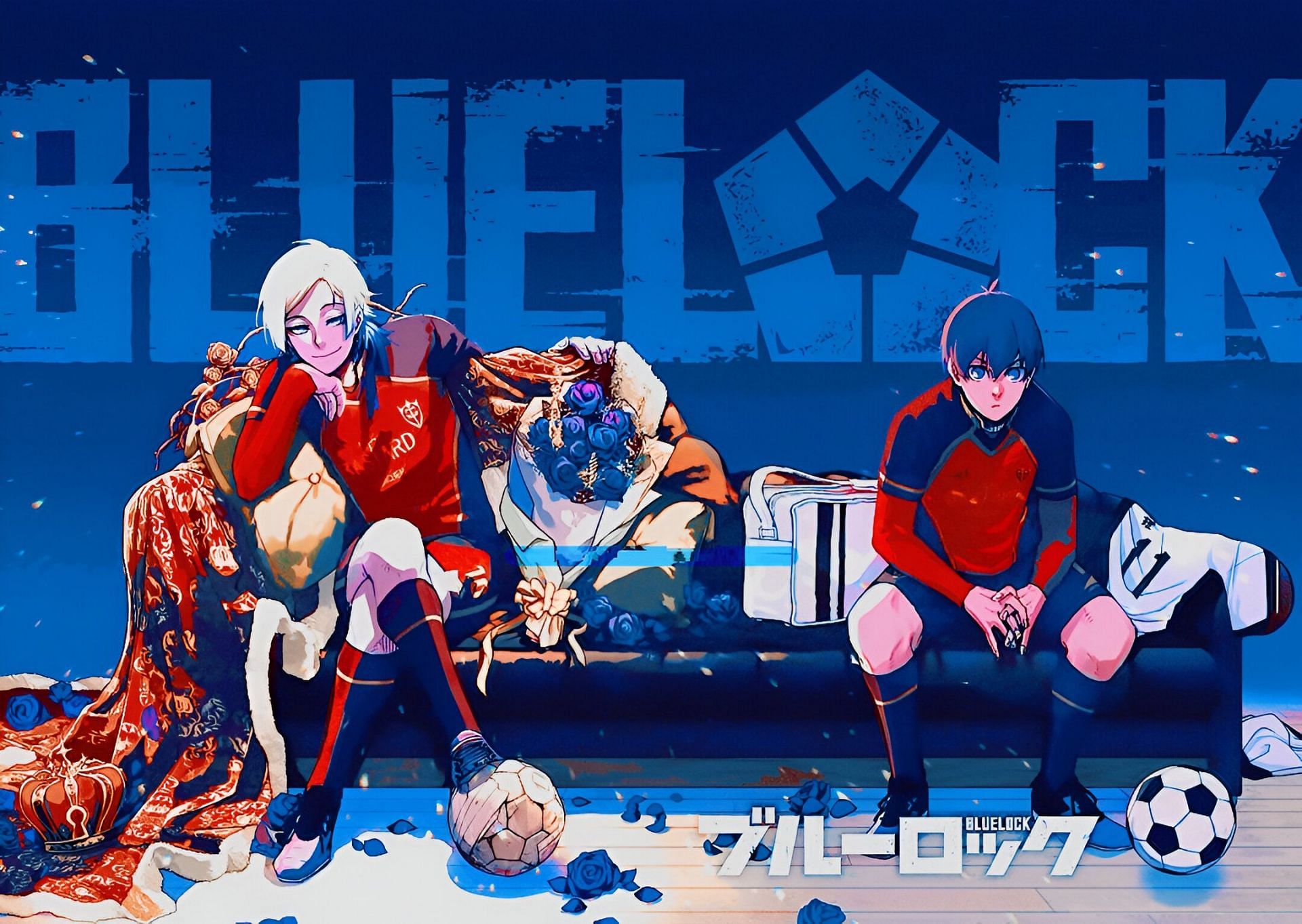
Michael Kaiser is a total jerk. If you’ve been following the Neo Egoist League arc in Blue Lock, you already know that. He’s arrogant, he’s malicious, and he treats his teammates like disposable pawns in his own personal chess game. But then Muneyuki Kaneshiro dropped the bombshell backstory in Chapter 243, and suddenly, the "Naked Emperor" looked a lot less like a villain and a lot more like a survivor. Everything tracks back to Michael Kaiser’s dad, a man who basically turned Kaiser’s childhood into a literal prison before the kid ever stepped onto a pitch.
It’s easy to hate a character who actively tries to sabotage the protagonist. We’ve spent dozens of chapters watching Kaiser choke himself—literally and figuratively—to feel something other than boredom or despair. But when we finally see the basement where he grew up, the perspective shifts. It doesn't excuse him. Honestly, it shouldn't. But it explains why he views the world as a place where you either dominate or get crushed. There is no middle ground in Kaiser's head.
The Grimy Reality of Kaiser’s Upbringing
Let's talk about the man himself. Kaiser’s father was a failed director, a man whose own dreams had curdled into a bitter, alcoholic resentment. He didn't just neglect Michael; he actively tormented him. We're talking about a household where a "reward" was not being beaten for a night. The guy spent his days drinking away what little money they had and his nights taking out his frustrations on his son.
It was bleak.
Kaiser was essentially a thief because he had to be. He stole to eat. He stole to survive. And through all of this, his father loomed over him like a shadow. The imagery in the manga is visceral—a cramped, dirty room filled with trash and the constant threat of violence. This wasn't just a "tough childhood." This was a systematic breaking of a human spirit.
Most people look at Kaiser and see a blue-blooded elite. He plays for Bastard Munchen. He has a World 11 title. He’s got the rose tattoo. But that tattoo? It’s a scar. It covers the physical and emotional marks left by Michael Kaiser’s dad. The rose represents something beautiful growing out of the "garbage" his father called him. When Kaiser finally snapped and used a football to defend himself against his father and the police, it wasn't just a sports moment. It was a liberation.
Why the Backstory Matters for the Neo Egoist League
If you’re wondering why Kaiser is so obsessed with Isagi, the father-son dynamic is the blueprint. Kaiser’s dad stole his sense of self-worth. In response, Kaiser decided he would become the one who steals from everyone else. He creates a world where he is the only "King," because if he isn't the king, he's back in that basement.
Isagi Yoichi represents a threat to that fragile internal hierarchy. Isagi is someone who grows through "devouring" others, but he does it with a weirdly healthy ego. Kaiser can’t wrap his head around that. To Kaiser, every interaction is a struggle for survival. If Isagi wins, Kaiser feels like he's being sent back to the trash heap his father said he belonged in.
The Symbolism of the Ball and the "Impossible" Goal
The football was the only thing Michael Kaiser’s dad couldn’t take away, mostly because he didn't realize it was Michael's way out. When Michael stole that ball, it was the first thing he ever owned that felt "pure." It’s why his Kaiser Impact is so precise. It’s not just talent; it’s a desperate, obsessive need for control.
Think about it.
If you can control a ball to a millimeter, maybe you can control your life. Maybe you can make sure no one ever hits you again. That’s the psychological weight behind every shot he takes. The sheer speed of the Kaiser Impact is a middle finger to the slow, agonizing years he spent under his father's thumb.
Breaking the Cycle or Repeating It?
The tragedy of Kaiser is that he’s essentially acting like a polished version of his father. His dad was a tyrant in a small, miserable room. Kaiser is a tyrant on a world-class football pitch. He belittles Ness, he mocks his rivals, and he demands absolute subservience.
He's trapped.
He thinks he’s free because he has money and fame, but he’s still playing by the rules his father taught him: might makes right, and those below you are garbage. The current arc in Blue Lock is forcing him to realize that this mindset has a ceiling. You can't reach the very top if you're constantly looking down to make sure everyone is still beneath you.
What You Should Take Away From the Reveal
Understanding the trauma inflicted by Michael Kaiser’s dad doesn't mean you have to like Kaiser. In fact, a lot of fans find him even more frustrating now because they see how he's wasting his potential by being stuck in the past. But it adds a layer of E-E-A-T (Experience, Expertise, Authoritativeness, and Trustworthiness) to the storytelling of Blue Lock. Kaneshiro isn't just writing a sports manga; he's writing a study on how trauma shapes ego.
If you want to truly understand Kaiser’s playstyle, look at his eyes when he loses control. That’s not "gamer rage." That’s the look of a kid who is terrified of being powerless again.
Actionable Insights for Blue Lock Fans
- Re-read the Manshine City Match: Look at Kaiser’s interactions with Isagi through the lens of a "survival" instinct rather than just sports rivalry. You'll notice he isn't trying to score goals as much as he's trying to "erase" Isagi's existence on the field.
- Watch the Rose Imagery: Every time the Blue Rose tattoo is highlighted, pay attention to the dialogue. It usually happens when Kaiser is asserting dominance, reminding himself that he is no longer that boy in the basement.
- Analyze Ness’s Role: Ness isn't just a teammate; he's Kaiser's "first subject." Kaiser treats Ness the way he wished he could have treated his father—with total control. Understanding this makes their weirdly codependent relationship make a lot more sense.
- Track the Evolution of the Kaiser Impact: In the most recent chapters, Kaiser is trying to evolve. He's realizing that his "Naked Emperor" style—based on the fear his father instilled in him—isn't enough to beat the world. Watch for him to potentially discard his old ego for something new.
Kaiser is a villain, yeah. But he’s a villain created by a very specific kind of domestic horror. The next time he misses a shot or loses his cool, remember that he isn't just playing against Isagi. He's still trying to outrun the shadow of a failed director in a cramped German apartment. That’s a match he hasn't quite won yet.