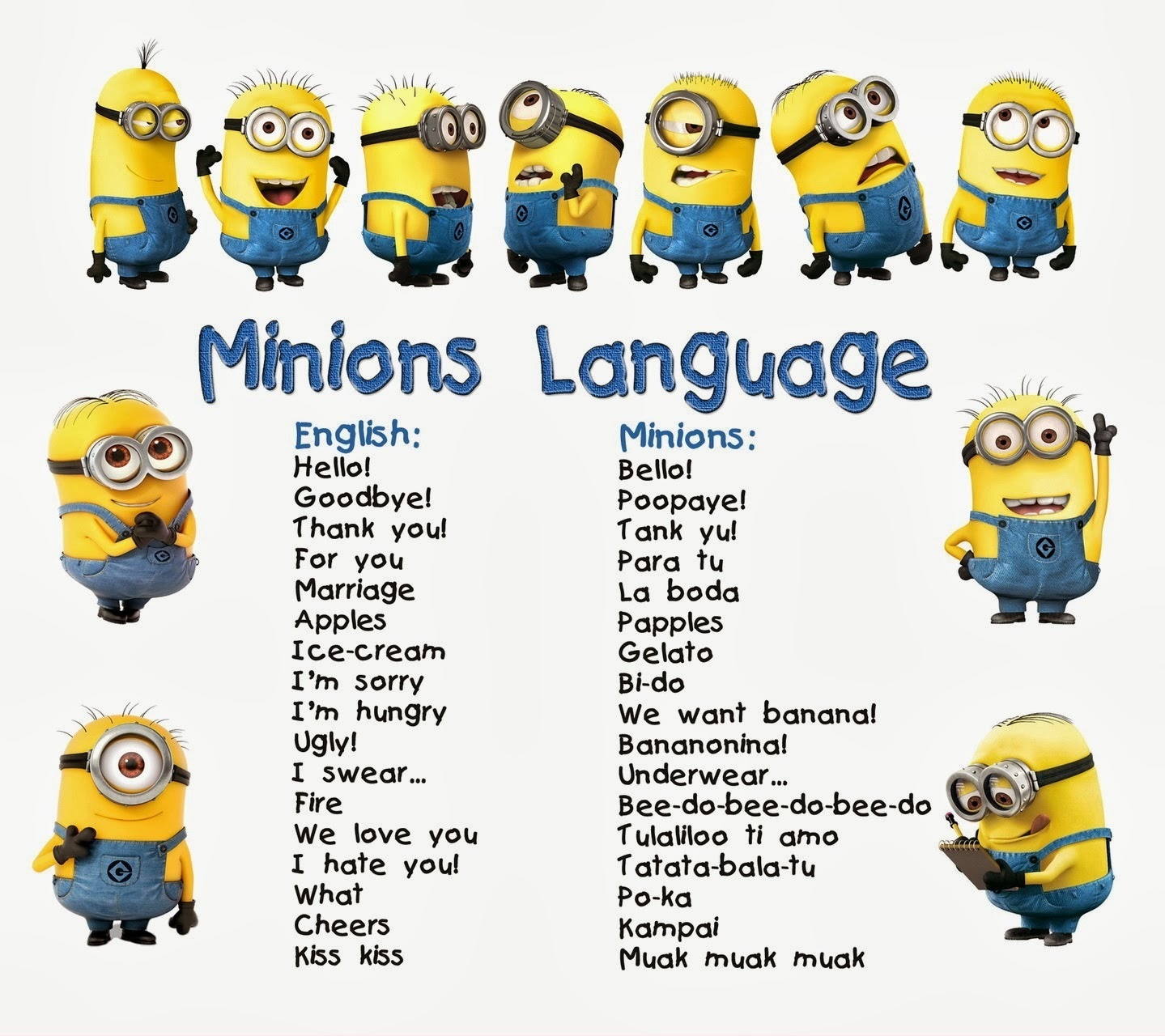
You’ve heard it. That high-pitched, frantic babbling that sounds like a blender full of Spanish, Italian, and a very confused toddler. It’s hilarious. It’s chaotic. And honestly, it’s a stroke of genius. But what exactly is Minions language, and is there a method to the yellow madness?
Most people call it "Minionese." Others stick with "Banana Language." Whatever you call it, it isn't just random noise. It’s a carefully constructed—well, "constructed" might be a strong word—linguistic stew that has helped the Despicable Me franchise rake in billions.
The Weird Origins of Minionese
Back in 2010, when the first movie was being made, the Minions weren't even supposed to be the stars. They were originally designed as big, muscular henchmen. Thugs, basically. But the directors, Pierre Coffin and Chris Renaud, realized that making Gru the boss of a bunch of scary monsters made him look, well, actually evil. Not "fun" evil.
They pivoted.
The Minions became small, pill-shaped goofballs. But they needed a voice. Pierre Coffin, who ended up voicing almost all of them, started experimenting with sounds. He didn't hire a linguist. He didn't sit down with a dictionary. He just started talking into a microphone, mixing sounds that felt right.
It’s a "polyglot" language. That’s a fancy way of saying it’s a mashup. Coffin is half-French and half-Indonesian, which heavily influenced the early sounds. But as the movies progressed, the vocabulary expanded into a global buffet.
How Minions Language Actually Works
If you listen closely, you’ll realize you understand more than you think. That’s intentional. The creators use a technique called onomatopoeia—words that sound like the thing they describe—mixed with "loanwords" from almost every major language on Earth.
There’s no formal grammar. You won't find a Minionese textbook with verb conjugations or past tense rules. Instead, it’s all about the melody and rhythm.
The Global Ingredients
The language is a literal world tour. When a Minion says "Bello," it’s a play on "Hello" but sounds suspiciously like the Italian word for beautiful (bello). When they count "Hana, Dul, Sae," they aren't making it up—that’s straight-up Korean for one, two, three.
Here’s a breakdown of the linguistic DNA found in the movies:
- Spanish: Para tu (for you), la boda (the wedding), gracias (thanks).
- French: Poulet tikka masala (mostly just the word for chicken), c'est par là (it's over there).
- Japanese: Kanpai (cheers), yakitori (grilled chicken).
- Indonesian: Terima kasih (thank you), kemari (come here).
- English: Banana, potato, apple (often pronounced bapple), and underwear.
It’s kinda brilliant because no matter where you are in the world, you’ll catch a word that feels like home. This is why the Minions are a global powerhouse—they literally speak everyone's language, even if they're saying something totally absurd.
Why We Understand "Gibberish"
There is a psychological reason why Minionese works so well. It’s called sound symbolism.
Humans are wired to interpret meaning from tone, pitch, and body language long before we process actual vocabulary. Think about how you talk to a dog or a baby. You don't need them to know the definition of "who's a good boy" to get the point across.
The Minions use high-frequency sounds and explosive consonants (lots of "P" and "B" sounds). This mimics the way toddlers speak, which triggers an "adorable" response in our brains. When a Minion shouts "Bee-do! Bee-do!" while wearing a fire hat, you don't need a translator to know there's an emergency.
Common Words and What They Actually Mean
While most of it is vibe-based, there are "canonical" words that stay consistent across the films. If you’re trying to impress a five-year-old (or just want to be "that person" at a trivia night), keep these in your back pocket:
- Bello: Hello
- Poopaye: Goodbye (A play on the French au revoir or just a silly twist on "bye")
- Bank yu: Thank you
- Tulaliloo ti amo: We love you (Combining Italian ti amo with pure gibberish)
- Papoy: Toy
- Sa la ka: How dare you (Usually shouted when someone takes their banana)
- Underwear: I swear (A classic rhyme-based joke)
The Secret Ingredient: Food
Honestly, the biggest part of Minionese is just food. Pierre Coffin has admitted in interviews that when he gets stuck while recording, he just starts shouting names of food. This is why you hear "gelato," "tikka masala," and "pestou" peppered throughout their dialogue.
It makes sense. Minions are driven by their stomachs and their desire to serve a "Big Boss." Food names are universally recognizable and phonetically funny.
Can You Actually Learn It?
Technically, no. You can’t become "fluent" in Minionese because it’s not a complete language like Klingon from Star Trek or Dothraki from Game of Thrones. Those languages have actual syntax and were built by professional linguists.
Minionese is a performance.
However, you can mimic the pattern. If you want to "speak" Minion, the trick isn't memorizing words; it's the delivery. You have to speak fast, use a nasal tone, and keep your sentences short. Throw in a few Spanish or Italian nouns, add a "Ba-na-na!" at the end, and you’re basically a Minion.
What’s Next for the Language?
As the Despicable Me universe grows, the language is getting slightly more complex. In the later movies, you’ll notice the Minions have different dialects depending on which era they’re in. In the Minions prequel, we see them picking up words from Egyptian, Viking, and Victorian English.
It’s a living, breathing gag that evolves with the characters.
The next time you're watching, try to ignore the subtitles or the plot for a second. Just listen to the sounds. You'll start to hear the Indonesian roots or the French flare. It's a reminder that communication is way more than just words—it's about the energy behind them.
Actionable Insights for Fans
- Watch the international dubs: Interestingly, Minions aren't always dubbed. Since their language is universal, many countries keep Pierre Coffin’s original voice track, though some specific puns are tweaked for local audiences.
- Pay attention to the "P" and "B" sounds: If you're trying to entertain kids, focus on "plosive" sounds. It’s the secret sauce to making the Minion voice sound authentic.
- Use context clues: If you’re ever confused about what they’re saying, look at their goggles. Their eyes and physical comedy do 90% of the heavy lifting in every "conversation."