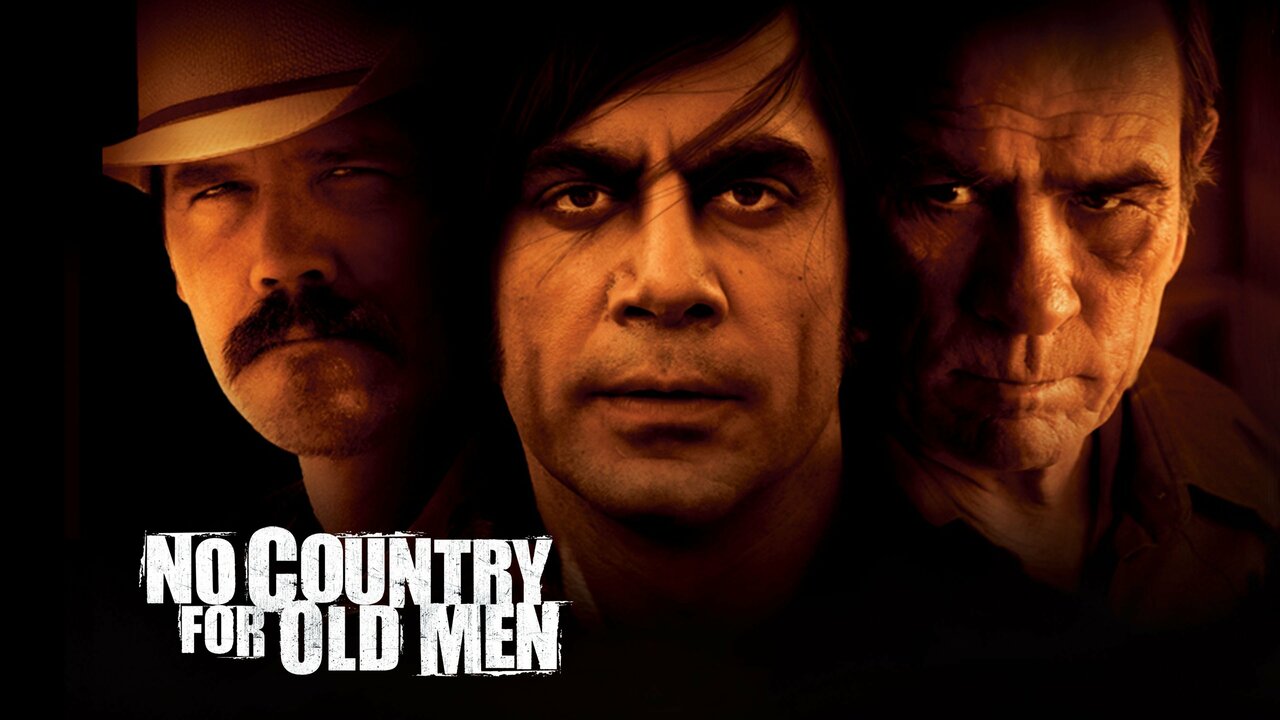
Most people remember the haircut. Or the captive bolt pistol. But the no country for old men story isn't actually about a hitman with a bowl cut, even if Javier Bardem’s performance turned Anton Chigurh into a generational nightmare. It’s actually a story about a briefcase full of money and the realization that the world has become a place where the old rules of "good guys" and "bad guys" simply don't apply anymore.
Llewelyn Moss thinks he’s the hero of a Western. He’s not. He’s just a guy who found two million dollars in the desert and made the fatal mistake of going back to give a dying man a drink of water.
That one act of compassion is what kills him. Seriously. If he had just stayed home, the cartels might never have tracked him to that specific spot at that specific time. But the no country for old men story is built on the idea of inevitable consequences. Once Moss picks up that satchel, he’s already a ghost; he just hasn't stopped breathing yet.
The MacGuffin that Isn't a MacGuffin
In a lot of movies, the "thing" everyone is chasing—the money, the microfilm, the glowing suitcase—doesn't really matter. It’s just a plot device. Here, the money is a character. It represents a shift in the American West from simple cattle rustling and localized crime to a globalized, ultra-violent drug trade that Sheriff Ed Tom Bell can't even begin to comprehend.
Bell is the actual protagonist. People miss this because he spends most of the movie drinking coffee and looking at crime scenes after the action has already happened. But the title refers to him. He’s the "old man" for whom there is no country. He’s looking for a moral framework in a landscape that has been scorched by guys like Chigurh, who don't care about money, or power, or even life itself. Chigurh cares about fate.
Why the ending feels like a gut punch
You probably remember the first time you watched it. You’re waiting for the big showdown. Moss is hunkered down in a motel, he’s got the guns, he’s been clever, and you’re expecting a 1950s-style shootout where the gritty veteran outsmarts the monster.
Then the camera cuts.
Moss is dead. He’s just a body on a motel floor. We don't even see him die.
It’s jarring. It’s frustrating. It’s also the entire point of the no country for old men story. Cormac McCarthy, who wrote the original novel, wasn't interested in giving you a cathartic action climax. He wanted to show that Llewelyn Moss was outclassed from the jump. Moss was playing checkers; the universe was playing a game that didn't even have a board. The Coen Brothers kept this intact because showing the death would have turned Moss into a martyr. Instead, he’s just another casualty in a desert full of them.
Anton Chigurh is a Ghost, Not a Man
If you look at the way Chigurh moves, it’s almost supernatural. He survives a massive car wreck. He heals his own leg in a pharmacy-distraction-fireball sequence that feels more like a slasher movie than a crime drama.
Is he a real person? Physically, yes. But narratively, he’s an unstoppable force of nature. He represents the "new" violence that Ed Tom Bell mentions at the start of the film. When Chigurh makes people flip a coin for their lives, he isn't being a "cool villain." He’s abdicating his own agency to fate. He’s saying, "I’m not killing you; the coin is."
The Coin Toss Logic
- The Gas Station Clerk: He wins the toss because he accidentally stakes everything on a coin he didn't even put up. He’s innocent, and fate spares him.
- Carla Jean Moss: She refuses to play. When Chigurh tells her to call it, she says, "The coin don't have no say. It's just you." This is the only time Chigurh looks even slightly unnerved. She calls out his BS. She points out that he’s choosing to be a murderer.
- The Result: He kills her anyway. Because even if she’s right, the no country for old men story doesn't reward moral high grounds.
Ed Tom Bell’s Dreams Explained
The movie ends with a monologue about two dreams. It’s quiet. It’s understated. Tommy Lee Jones delivers it with this tired, hollowed-out look that makes you want to give the guy a blanket and a nap.
In the first dream, he loses some money his father gave him. In the second, he’s riding through a mountain pass at night. His father, who was also a lawman, rides past him carrying fire in a horn. His father is going ahead to fix a fire in all that "dark and cold," and Bell knows that when he gets there, his father will be waiting.
It sounds hopeful, right? Kinda. But it’s actually about death. Bell realizes he can't keep up with the world. He’s retiring because he’s "overmatched." The fire represents a version of the world that had light and warmth—a world that is gone. He’s ready to stop fighting a war he already lost.
The Real-World Impact of McCarthy’s Narrative
When the film dropped in 2007, it changed how we talk about Neo-Westerns. It stripped away the music. There’s almost no score in the entire movie. If you listen closely, the tension comes from the sound of wind, the crinkle of a candy wrapper, or the rhythmic thwack of the bolt pistol.
The no country for old men story influenced everything from Breaking Bad to Sicario. It taught filmmakers that silence is louder than an orchestra. It also reinforced the "Hard Boiled" philosophy that in the desert, your survival depends more on luck than on how fast you can draw a pistol.
Common Misconceptions About the Plot
People often ask: "Who actually got the money?"
The answer is Chigurh. He returns to the motel, finds the vent, and takes the satchel. But notice how it doesn't change him. He doesn't go to Vegas. He doesn't buy a yacht. He just keeps going. The money was the catalyst for the chaos, but for the man who "won," it was just a checked box on a list.
Another big one: "Why did Moss go back with the water?"
He did it because he’s a "good" man at heart, or at least he wants to be. But in McCarthy’s world, being a "good man" is a liability. It makes you predictable. Chigurh is unpredictable because he has no empathy. Moss’s humanity is his Achilles' heel. If he had been a true sociopath, he would have let the Mexican guy die in the truck, gone home, and moved to another state the next morning.
How to Analyze the Story for Yourself
If you're revisiting the no country for old men story, stop looking for a hero. Look at the transition of the landscape.
- Watch the shadows: The film uses "Golden Hour" lighting not to make things look pretty, but to show the sun setting on an era of law enforcement.
- Listen to the dialogue: Notice how little Chigurh speaks compared to Bell. Bell is trying to talk the world back into making sense. Chigurh doesn't need to talk; he just acts.
- The ending is the key: If you hate the ending, you’re actually reacting the way the directors wanted. You’re supposed to feel the same frustration Bell feels—the sense that the "bad guy" didn't get his comeuppance in a way that feels "fair."
The world isn't fair. That’s the point.
What to do next
To really get the full weight of the no country for old men story, you honestly have to read the book. While the Coen Brothers were incredibly faithful, the novel contains more of Ed Tom Bell's internal thoughts. These chapters (written as italicized monologues) provide the connective tissue for why he feels so disconnected from modern society.
Specifically, look for the passages where Bell talks about the youth of the 1980s and his fears for the future. It’s haunting how much of what he said in a book published in 2005 feels relevant today.
After that, watch the film again, but ignore Moss. Follow Bell's face. Watch the way he looks at the world. You’ll see a man realizing he’s become a relic in real-time. It’s one of the most effective portrayals of aging and obsolescence ever put on screen.
Go watch the "Coin Toss" scene one more time on YouTube. Notice the lack of music. Notice the sound of the plastic bag being crumpled. That is masterclass storytelling that doesn't need to shout to be heard. Then, pick up a copy of The Counselor or Blood Meridian if you want to see how much darker McCarthy’s vision of "fate" can actually get. Just be prepared—there are no happy endings in this part of the world.