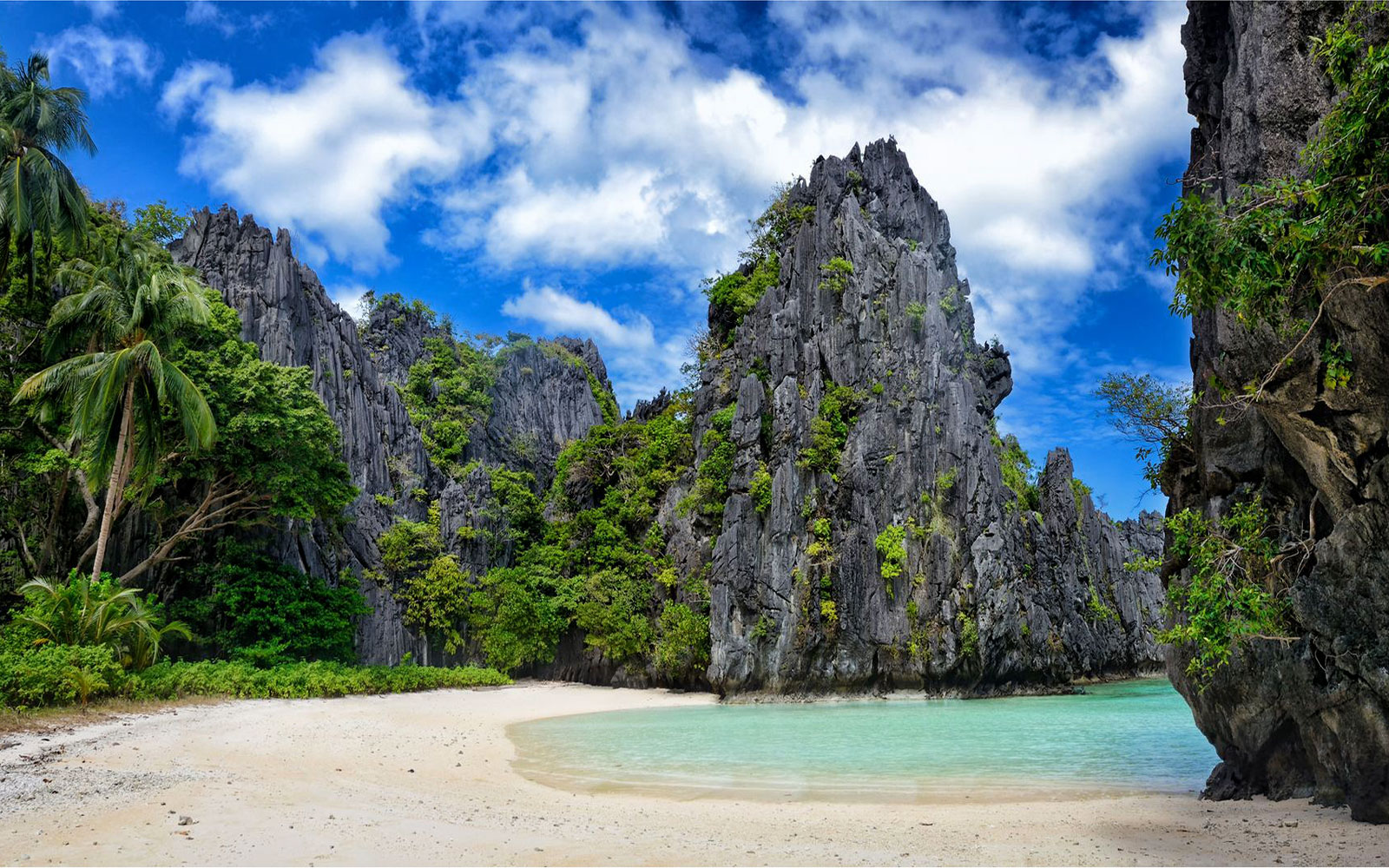
The Philippines is famous for powdery white sand and turquoise water. You've likely seen the drone shots of Boracay or the limestone lagoons of El Nido. But if you’re looking for a nude beach in Philippines territory, you are going to run into a very stiff wall of cultural and legal reality.
It’s complicated.
Honestly, the short answer is that there are no official, government-sanctioned nude beaches in the country. None. If you strip down on a public beach in Cebu or Palawan, you aren't just being "free"—you are likely breaking the law. Specifically, Article 200 of the Revised Penal Code regarding "Grave Scandal" is the big hurdle here. It’s a broad law that covers any act which "shall offend against decency or good customs." Local police and the barangay (village) officials take this pretty seriously because the Philippines remains a deeply conservative, predominantly Catholic nation.
The Reality of Skin in a Conservative Culture
You might see locals swimming in jeans or t-shirts. That’s how modest it can get in some provinces. While the major tourist hubs have relaxed a bit—allowing bikinis and speedos that would have caused a stir thirty years ago—full nudity is still a bridge too far for the general public.
Social media sometimes tricks people. You’ll see a "topless" photo of an influencer on a remote sandbar and think, "Oh, it's fine there." It’s usually not. Those photos are often taken in a five-minute window on a private boat tour when no one else is looking. If a local family with kids pulls up in a bangka (outrigger boat), and you're sunning your backside, you’re going to get a very cold reception, or worse, a visit from the authorities.
There’s a massive difference between "discreet" and "legal."
The Philippines is an archipelago of over 7,000 islands. This geographical fragmentation creates a lot of empty space. Naturally, people find "secret" spots. But "secret" doesn't mean "nude beach." It just means you haven't been caught yet.
Why the Law Matters More Than You Think
Public indecency isn't just a fine. In the Philippines, being an "unruly" foreigner can lead to being declared an undesirable alien. That means deportation and a spot on the Bureau of Immigration blacklist. It sounds extreme for just taking off your clothes, but the country is protective of its "wholesome" family-friendly tourism image.
The Department of Tourism (DOT) has spent decades marketing the islands as a destination for families and couples. They aren't looking to become the next Ibiza or Cap d'Agde.
Private Resorts and the "Grey Area"
If you’re dead set on finding a nude beach in Philippines style, your only real bet is high-end private property. Even then, it’s a gamble. Some ultra-exclusive resorts on private islands might look the other way if you're sunbathing topless on a veranda or a completely secluded cove that belongs to the property.
But even "private" beaches in the Philippines are technically public up to the high-tide mark. This is a crucial bit of land law. The state owns the foreshore. So, even if you paid $1,000 a night for a villa, a local fisherman has every right to sail past or walk along that sand.
Looking for "Clothing Optional" Communities?
They basically don't exist here in any organized capacity. You won't find a "naturist resort" listed on TripAdvisor for Batangas or Siargao.
There have been rumors for years about specific spots in Palawan or remote parts of Romblon where European travelers congregate and "go natural." These are almost always temporary, unverified, and highly dependent on the current local captain (Barangay Captain) being laid back. One change in local leadership and those "safe spots" vanish overnight.
Respecting the "Hiya" Factor
Filipino culture is built on hiya (shame/propriety). Doing something that makes others uncomfortable is a big deal. When you're a guest in the country, the unspoken rule is to blend in.
Imagine you’re at a beautiful, remote beach in Surigao. It feels like paradise. You think, "There's no one here." You strip down. Suddenly, a group of local kids runs over the hill to play in the water. To them, you aren't being a "nature lover." You’re being offensive.
It’s not just about the law; it’s about the vibe.
European vs. Filipino Norms
In Germany or France, the FKK (Freikörperkultur) movement is a normal part of life. You go to the park, you take your clothes off, you tan. In the Philippines, the body is much more private. Even men often wear "rash guards" or shirts while swimming to protect from the sun and stay modest.
If you want the "nude beach" experience, you're honestly better off heading to Thailand (where it's still technically illegal but more common in specific "hippy" enclaves) or sticking to Southern Europe.
Alternatives: How to Get That "Free" Feeling
If you just want to avoid tan lines, there are ways to be smart without getting arrested.
- Topless Sunbathing: This is "softly" tolerated in very specific parts of Boracay (Station 1) or El Nido, mostly among European tourists. But even then, keep a sarong or "pareo" nearby. The moment you stand up to walk to a bar, cover up.
- Private Boat Charters: Rent a private boat for the day. Tell the captain you want to go to a "hidden" beach where there are no other tourists. Most captains know the spots. Once the boat is anchored and the crew is busy at the other end of the beach (or back on the boat), you might have a window of privacy.
- Remote Island Hopping: Places like the Calamian Islands have hundreds of uninhabited islets. If you find one where you are truly the only soul, you do you. Just keep a sharp eye on the horizon for incoming boats.
The Dangers of "Discreet" Nudity
There’s a safety aspect people forget. The Philippines is beautiful, but some remote areas have safety concerns ranging from jellyfish to, in very rare cases, opportunistic crime. If you’re naked and something goes wrong—an injury or a theft—you are in a very vulnerable position.
Reporting a crime to the police while explaining you were naked on a beach is a quick way to get yourself fined while the perpetrator gets away.
The Verdict on Nude Beaches in the Philippines
Basically, the "nude beach" scene in the Philippines is a ghost. It’s a myth fueled by people who found a quiet 20-minute window on a beach and posted a photo.
If you try to make it a lifestyle during your vacation, you’re going to face awkward stares, potential fines, and a lot of cultural friction. Filipinos are incredibly hospitable and friendly, but they value their norms. Disrespecting those norms by exposing yourself is a fast way to turn that hospitality sour.
Stick to the bikinis and board shorts. The water is still just as warm.
Actionable Steps for the Modest Traveler
- Check Local Ordinances: Before you even think about "going natural," check the local rules for the specific island. Boracay, for instance, has very strict "decency" laws that are enforced by beach patrollers.
- Invest in a Private Villa: If privacy is your main goal, book a villa with a high-walled private pool. That’s the only place in the Philippines where you are 100% safe to be nude.
- Watch the Crowd: If you see local families, stay covered. If the beach is full of international backpackers, the vibe might be slightly more relaxed, but the law remains the same.
- Keep a Sarong Ready: Always have a quick cover-up. If a local official approaches you, don't argue about "human rights" or "nature." Just apologize, cover up, and move on.
- Focus on Private Tours: Skip the "joiner" boat tours. Pay the extra $50 to have a boat to yourself. It gives you the control you need to find a quiet corner, even if you just want to sunbathe topless for a bit.
The Philippines is a place of incredible natural beauty, but it isn't a naturist destination. Accept the islands for what they are—conservative, beautiful, and vibrant—and save the birthday suit for the private pool.