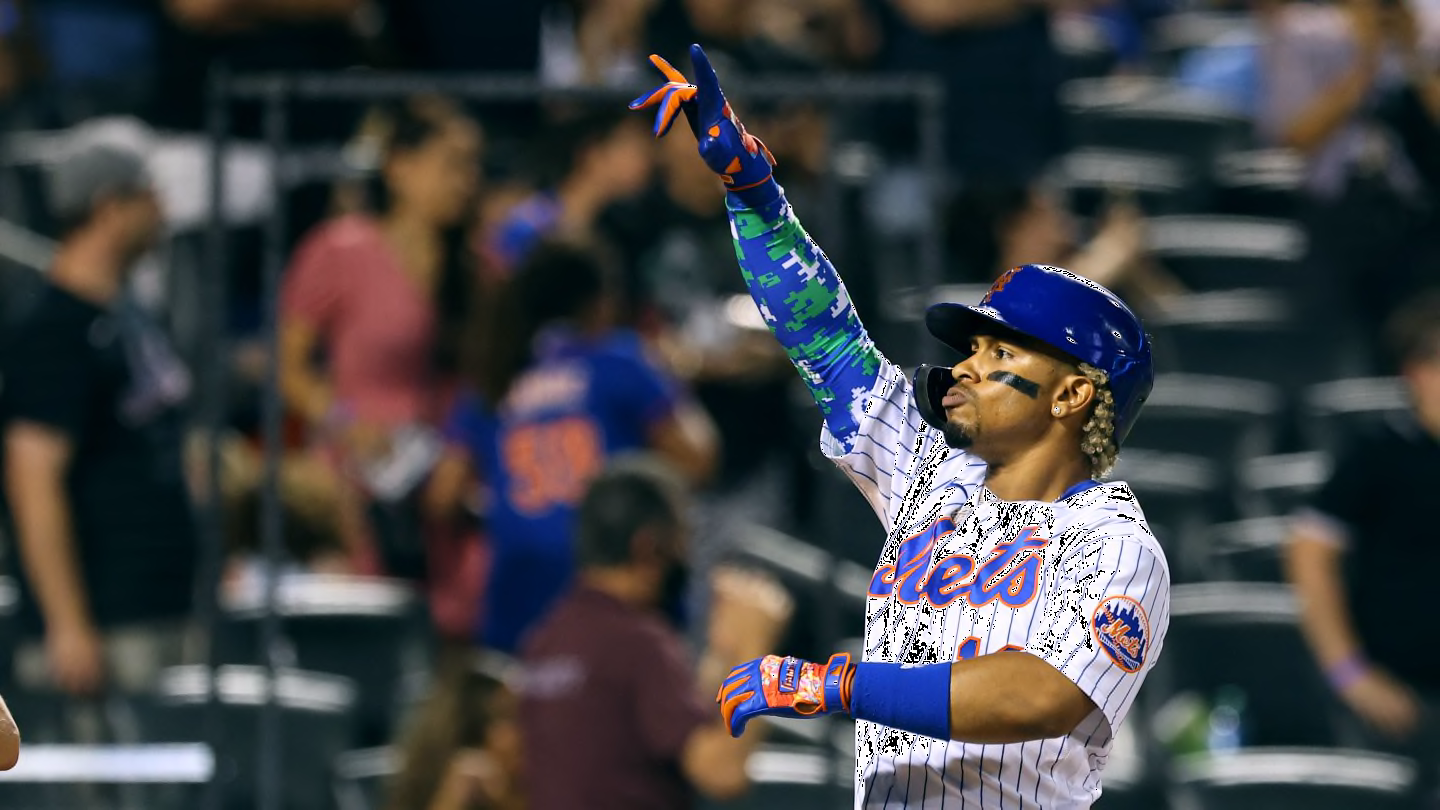
New York is a loud place. But there is a specific kind of loud that only happens when the 7 train and the 4 train collide. You know the vibe. It’s that late-June humidity or a breezy July night where half the stadium is wearing pinstripes and the other half is rocking orange and blue. If you grew up here, or even if you just moved to Queens or the Bronx last week, you realize pretty quickly that NY Mets vs Yankees isn't just another series on the MLB calendar. It’s a referendum on your personality.
It’s about bragging rights. Pure and simple.
The thing about the Subway Series is that it shouldn't actually matter as much as it does. For decades, these teams barely saw each other. Then 1997 happened. Interleague play arrived, and suddenly, the "what if" became a "when." We’ve seen walk-offs, we’ve seen Roger Clemens throw a broken bat at Mike Piazza—which, honestly, is still one of the weirdest things to ever happen on a baseball diamond—and we’ve seen the 2000 World Series. People forget how tense the city was during that October. You couldn't walk into a bodega without hearing someone arguing about Derek Jeter versus Edgardo Alfonzo.
The Wealth Gap and the Chip on the Shoulder
There is a massive narrative shift happening right now. For years, the Yankees were the "Evil Empire." They had the rings, the money, and that corporate, clean-shaven "Yankee Way" that George Steinbrenner turned into a global brand. The Mets? They were the scrappy underdogs. The "lovable losers" who occasionally caught lightning in a bottle like in '69 or '86.
But look at the books today. Steve Cohen changed the math.
When you look at the NY Mets vs Yankees matchup in the 2020s, the financial gap has basically evaporated. In fact, Cohen’s Mets have often outspent the Hal Steinbrenner-led Yankees. This flips the script. Now, you have two giants. It’s no longer David vs. Goliath; it’s Goliath vs. a slightly different, more neurotic Goliath.
The Yankees still lean on that history. You walk into Yankee Stadium, and the monuments are staring at you. It feels like a museum where a baseball game happens to be breaking out. Citi Field feels different. It’s a party. It’s more "New York" in a gritty, loud, "we’re all in this together" kind of way. Fans of the Bronx Bombers expect to win. It’s their birthright. Mets fans? We hope to win, and we’re constantly waiting for the other shoe to drop. That psychological difference is what makes the head-to-head games so volatile.
The Pitching Lab vs. The Power House
Let's talk about the actual baseball. It’s easy to get lost in the jerseys, but the tactical side of this rivalry is fascinating. The Yankees have leaned heavily into their "pitching warehouse" philosophy, turning discarded relievers into high-velocity monsters. Meanwhile, the Mets have spent the last few seasons trying to buy or build a rotation that can withstand the pressure of a New York October.
When these two teams meet, the stats usually go out the window. You’ll see a guy hitting .210 for the Yankees suddenly turn into Babe Ruth because he’s facing a Mets lefty. Or you’ll see the Mets' bullpen, which might be struggling for weeks, suddenly find a way to shut down Aaron Judge in a high-leverage spot. It makes no sense. That’s baseball.
Historic Flashpoints: More Than Just a Game
If you want to understand the heat behind NY Mets vs Yankees, you have to look at the moments that stayed in the dirt long after the players retired.
- The 2000 World Series: The only time it mattered for all the marbles. Luis Sojo’s hit up the middle in Game 5 still haunts Queens.
- The 14-inning Marathon: Remember 2015? That game felt like it lasted three days.
- The Home Run Race: Watching Pete Alonso and Aaron Judge trade blows for the city’s home run crown is the modern version of the old "Who's better?" debates.
Actually, the Judge vs. Alonso debate is a perfect microcosm. Judge is the towering, stoic face of the Bronx. Alonso is "Polar Bear" Pete—high energy, wears his heart on his sleeve, occasionally says things that make you tilt your head. They represent their fanbases perfectly.
One thing people get wrong is thinking this is a "friendly" rivalry. It isn’t. Not really. It’s not the Red Sox and Yankees—there isn't that deep, centuries-old hatred fueled by "The Curse." It’s more like a sibling rivalry where the older brother (the Yankees) keeps pointing at his trophies and the younger brother (the Mets) just wants to punch him in the mouth to prove he’s grown up.
Why the Schedule Matters Now
With the new balanced schedule in MLB, we actually see less of the Subway Series than we used to in some years, which makes the games we do get feel even more vital. Every win is a chance to rule the back page of the Post or the Daily News.
In 2024 and 2025, we saw how much a single series can shift the vibes of a season. A Mets sweep in the Bronx can save a dying season, giving the fans enough fuel to keep showing up through August. Conversely, when the Yankees dominate at Citi Field, it feels like an invasion.
There’s also the Francisco Lindor factor. He’s the highest-paid shortstop in the city, but he’s constantly compared to the ghosts of Jeter and the current reality of Anthony Volpe. Lindor’s performance in NY Mets vs Yankees games is often used by critics as a barometer for whether he can "handle" New York. It’s unfair, sure. But that’s the tax you pay for playing in this zip code.
The Fan Experience: A Tale of Two Boroughs
If you’re planning to go to one of these games, prepare for the commute. Taking the train is part of the ritual. The 7 train after a Mets win is a literal choir of "Let's Go Mets" chants. The D or the 4 after a Yankee win is more of a dignified, "We did what we were supposed to do" atmosphere.
Food-wise? Citi Field wins. No contest. Sorry, Yankee fans, but the pastrami at Citi Field is elite. The Yankees have the history and the chicken buckets, but the Mets have turned their stadium into a culinary destination. It’s a weird thing to care about, but when you’re three hours into a pitching duel, a good sandwich matters.
The Future: A Two-Team Town?
For a long time, New York was a Yankee town. The Mets were an afterthought. But the culture is shifting. With the Mets being aggressive in free agency and the Yankees trying to navigate a post-Judge era (whenever that comes), the power balance is the most level it’s been since the mid-80s.
We are entering an era where both teams might actually be good at the same time for a sustained period. That’s rare. Usually, one is up and the other is down. When both are firing? The city feels electric.
So, what do you actually do with this information? If you’re betting, ignore the season averages. Look at the specific pitcher matchups and how they handle high-pressure environments. Some guys crumble under the bright lights of a NY derby; others thrive on it.
Actionable Insights for the Next Series
- Watch the Bullpens: In a NY Mets vs Yankees matchup, the game is almost always won in the 7th or 8th inning. These teams know each other's tendencies too well, leading to late-game chess matches.
- Check the Wind: Citi Field can be a pitcher's park, while the "Short Porch" in right field at Yankee Stadium is a left-handed hitter's dream. Juan Soto and Brandon Nimmo are players to watch here.
- Go Mid-Week: Some of the best Subway Series games happen on Tuesday or Wednesday nights. The crowd is more "local," the tickets are slightly cheaper, and the tension is just as high.
- Follow the Beat Writers: If you want the real scoop, follow guys like Anthony DiComo or Bryan Hoch. They see the clubhouse dynamics that don't show up on the TV broadcast.
The reality is that baseball needs this rivalry. It needs the noise, the black jerseys, the pinstripes, and the inevitable argument at a bar in Murray Hill about who the "real" New York team is. Whether the Mets are rebuilding or the Yankees are chasing Title 28, when they meet, it’s the only thing that matters in the five boroughs.
Stop looking at the standings. Just watch the game. It’s going to be loud, it’s probably going to be long, and someone’s going to leave very, very upset. That’s the beauty of it.
If you’re looking to catch the next chapter of this rivalry, keep an eye on the June and July windows. Those are typically the "prime" Subway Series dates. Make sure you book your transit or parking way in advance because the Grand Central Parkway and the Major Deegan turn into parking lots three hours before first pitch. Also, if you’re wearing the "wrong" jersey in the "wrong" stadium, expect some light-hearted (or not-so-light-hearted) ribbing. It’s all part of the tax for living in the baseball capital of the world.