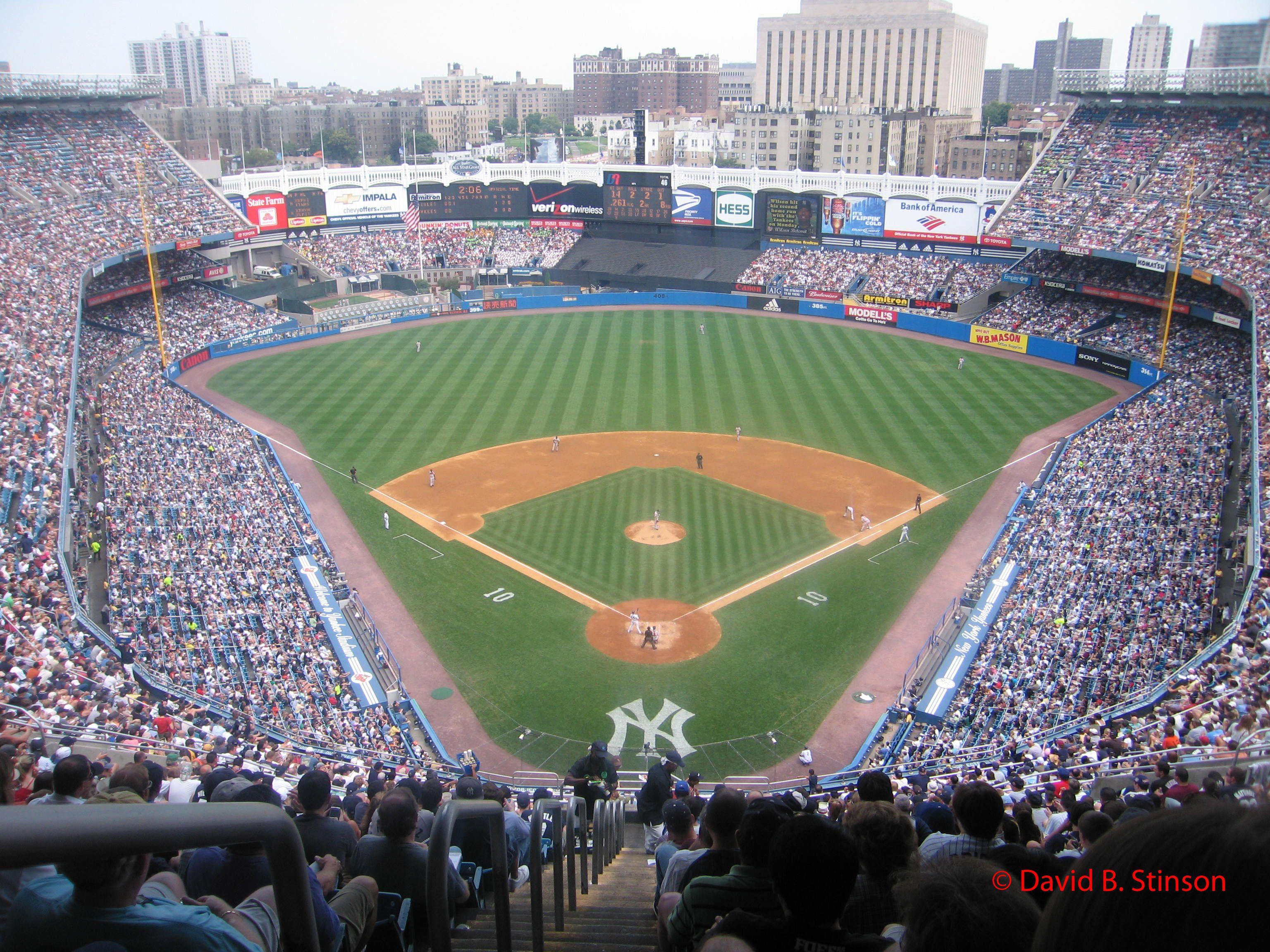
Walking into the stadium on 161st Street today feels like stepping into a cathedral that’s been scrubbed with a very expensive toothbrush. It’s gleaming. It’s massive. Honestly, it’s a bit intimidating. But if you talk to anyone who sat in the upper deck of the original "House That Ruth Built" during a playoff game in the late 90s, they’ll tell you something is missing. They usually mention the "vibration."
The old stadium used to literally shake. When the crowd got going, the concrete would bounce under your feet. It felt alive, maybe even a little dangerous.
Comparing old vs new Yankee Stadium isn't just about comparing two buildings. It’s about a shift in how we watch baseball. We moved from a grit-and-concrete monument to a $1.5 billion luxury experience that feels more like a five-star hotel that happens to have a diamond in the middle. Most people think the "old" stadium was the one from 1923, but that's the first thing everyone gets wrong.
The Identity Crisis of the Old Stadium
The "old" Yankee Stadium most of us remember—the one that closed in 2008—wasn't actually the building Babe Ruth opened in 1923. Not really.
The original 1923 structure was a triple-decked behemoth with massive steel pillars blocking your view. If you bought a cheap ticket, you spent half the game leaning left or right to see around a green pole. By the early 70s, the place was literally falling apart. Pieces of concrete were falling from the ceiling. It was grim.
The city basically gutted the place between 1974 and 1975. They tore out the pillars, added the famous cantilevered upper deck, and replaced the wooden seats with plastic ones. They even moved the monuments.
So, when fans got misty-eyed in 2008, they were mourning a 1976 renovation of a 1923 original. It’s like your favorite old hammer where you’ve replaced the handle three times and the head twice. Is it still the same hammer? To a Yankees fan, the answer was always yes because the ghosts didn't move.
Old vs New Yankee Stadium: The Architectural "Fake Out"
When the new stadium opened in 2009, the architects at Populous did something clever. They realized fans hated the 1970s "concrete bowl" look. They wanted the 1923 look back.
The new Yankee Stadium features an exterior made of 11,000 pieces of Indiana limestone. It’s the same quarry used for the Empire State Building. It looks regal. It has those tall, arched windows that the original had before the 70s renovation covered them up.
Inside, they brought back the frieze. You know, that white lattice-work that circles the top of the stadium? In the old park, the original copper frieze was actually painted white and then later moved to the outfield wall. In the new park, it’s back where it belongs, ringed around the roof.
But here is the catch. The new stadium is 63% larger in terms of "footprint," yet it holds fewer people.
- Old Stadium Capacity (Final): ~57,000
- New Stadium Capacity: ~46,500 (with room for about 52,000 including standing room)
Where did all that extra space go?
It went to the "Great Hall"—that massive семь-story concourse filled with 20-foot tall banners of Derek Jeter and Lou Gehrig. It went to the luxury suites. It went to the Hard Rock Cafe and the steakhouse. The new stadium is built for people who want to walk around and buy things, while the old stadium was built for people to sit down and scream.
The Hitter’s Haven and the Wind Tunnel
One of the biggest controversies during the 2009 inaugural season was the "short porch" in right field. Fans noticed balls were flying out of the park at a ridiculous rate.
Technically, the dimensions of the old vs new Yankee Stadium are supposed to be identical. The wall in right field is still 314 feet away. But there’s a nuance that experts like AccuWeather and various ball-tracking physicists pointed out early on.
The old stadium had a different "bowl" shape. The new stadium has a flatter, more open design. This changed the way wind moved through the park. In the old stadium, the wind would often swirl or push back. In the new one, it often creates a jet stream toward right field.
Also, the height of the wall matters. The new stadium's fence is slightly lower in certain spots. If you’re a left-handed pull hitter, the new Yankee Stadium is basically a video game on "easy" mode.
The Soul Gap: Why it Feels Different
If you ask a bleacher creature about the difference, they won't talk about limestone or wind tunnels. They’ll talk about the "moat."
In the new stadium, there is a literal physical barrier—a suite level and a walkway—that separates the most expensive "Legends Field" seats from the rest of the fans. In the old park, the transition between the expensive seats and the regular seats was just a railing. Now, it’s a class divide.
It changed the acoustics. The old stadium was steep. The fans were right on top of the players. In the new stadium, the seats are pushed back further to allow for those wider concourses and cupholders. You get more legroom (about 33-39 inches compared to the old 29 inches), but you lose that feeling of being part of a wall of noise.
What Happened to the History?
The Yankees didn't just leave the history across the street. They moved it, but they "museum-ified" it.
- Monument Park: In the old stadium, this was a cramped area behind the fence. In the new stadium, it’s a spacious, paved plaza. It’s much easier to see, but some purists argue it feels a bit like a gift shop line.
- The Frieze: The new one is steel coated in zinc. The old one was copper.
- The Dirt: When the new stadium was built, they actually took some of the dirt from the old field and mixed it into the new one. They wanted the "DNA" of the old park to be there.
- The Site: The old stadium site is now "Heritage Field," a public park with ballfields for kids. The layout of the main diamond at Heritage Field actually sits exactly where the original Yankee Stadium diamond was.
Actionable Insights for Your Next Visit
If you’re heading to the Bronx, don't just compare old vs new Yankee Stadium based on nostalgia. Use the new stadium's features to your advantage:
- Arrival Time: Get there 2 hours early. The "Great Hall" and the Yankees Museum (near Section 200) are actually worth the time. They have the "Ball Wall" with hundreds of signed baseballs from every Yankee in history.
- The View: If you want the "old stadium" vibe, sit in the 400 level. It’s the highest point and gives you that steep, dizzying perspective that feels closest to the 1920s architecture.
- The Food: Forget the standard dog. Go to Lobel’s behind Section 134 for the steak sandwich. The old stadium didn't have anything that tasted this good.
- Heritage Field: Before the game, walk across the street. Stand on the "old" home plate at Heritage Field. Look at the new stadium from there. You’ll see how the limestone exterior was designed to perfectly mirror what Babe Ruth saw when he showed up for work in 1923.
The old stadium was a place where you went to see a game. The new stadium is a place where you go to "be a Yankees fan." It’s more comfortable, more expensive, and significantly cleaner. You might miss the shaking concrete, but your knees will definitely thank you for the extra four inches of legroom.