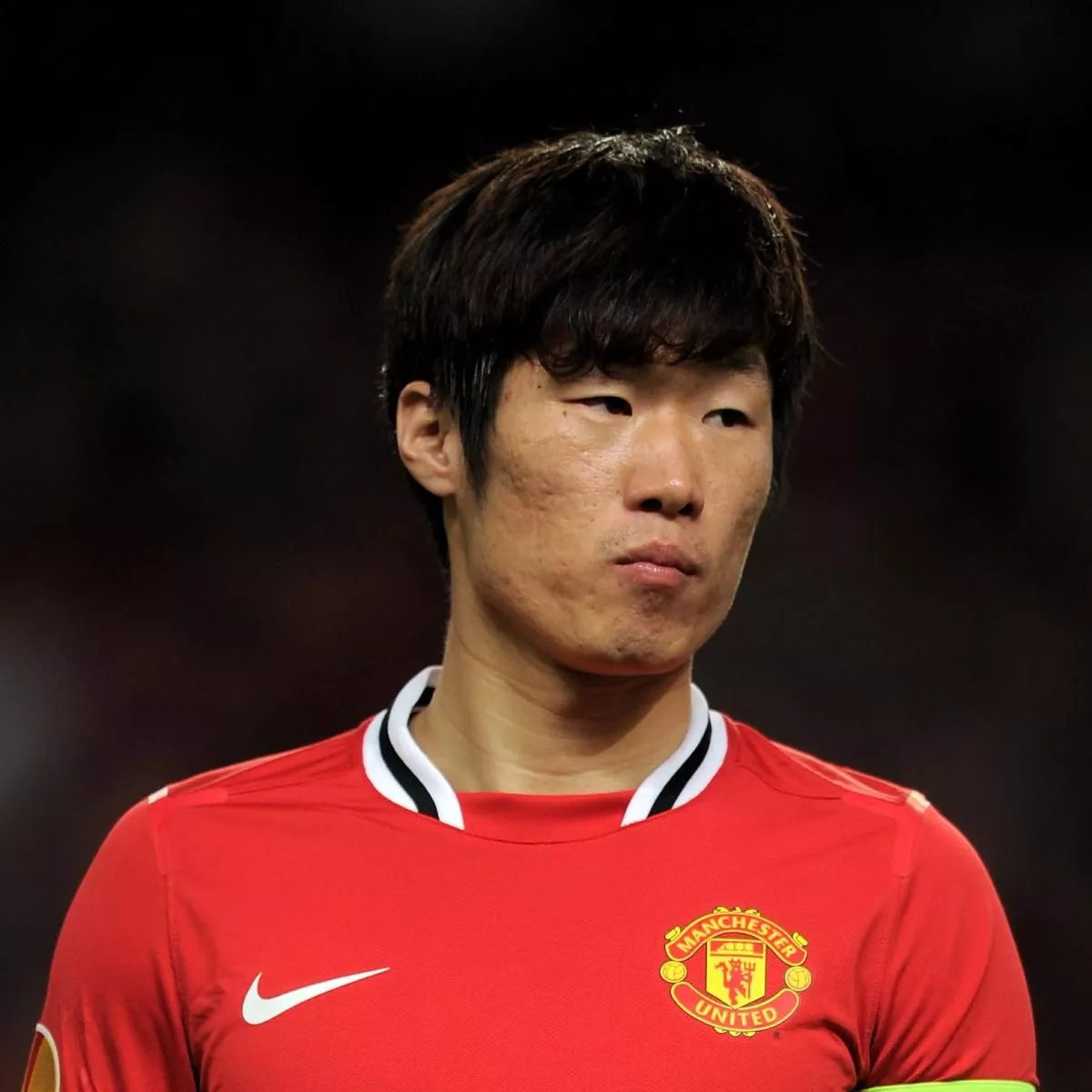
If you ask a casual fan about Park Ji-sung at Manchester United, they’ll probably mention "Three Lungs" or that one time he basically followed Andrea Pirlo into the locker room. It’s the standard narrative. But honestly, if you think Park was just a guy who ran a lot, you’ve missed the entire point of why Sir Alex Ferguson trusted him in every high-stakes game for seven years.
He wasn't just a "tactical" inclusion. He was a nightmare.
Paul Scholes once admitted that Park was the worst person to deal with in training because he would just stare at you, not say a word, and then spend the next hour making sure you didn't touch the ball. That’s the real Park Ji-sung. A player who combined an elite footballing IQ with a physical engine that shouldn't have been legal.
The Pirlo Masterclass and the Tactical Soul of United
We have to talk about that 2010 Champions League tie against AC Milan. Sir Alex Ferguson gave Park one instruction: "Your job is Pirlo. That’s all."
Pirlo later wrote in his autobiography that Park was "the first nuclear-powered South Korean in history." It sounds like a compliment now, but back then, Pirlo was genuinely annoyed. He felt Ferguson had "blemished" his own reputation by using a "guard dog" to stop him.
But here’s the thing: marking Pirlo out of a game isn't just about running. It’s about knowing exactly when to step up and when to shadow. Park limited Pirlo to just 21 passes in the second leg. For a midfield maestro, that’s basically being erased from existence.
United won 7-2 on aggregate. It wasn't a fluke.
Why Ferguson Regretted 2008
Most players would throw a tantrum if they were left out of a Champions League final squad after playing every minute of the semi-finals. Not Park. In 2008, when United beat Chelsea in Moscow, Park wasn't even on the bench.
Ferguson has since called this one of the hardest decisions of his entire career. He’s even gone as far as to say he regrets it to this day.
"My problem in the 2008 final... I left Ji-sung Park out completely. He’d played such a great role. No player deserves to be left out of the final." — Sir Alex Ferguson
Park found out he wasn't playing when he walked into the dressing room and saw his shirt wasn't there. He was devastated. His family had flown in. The whole of South Korea was watching. Yet, he stayed, he celebrated with the team, and he came back the next year to become the first Asian player to actually play in a Champions League final in 2009.
Beyond the "Three Lungs" Nickname
Everyone calls him Three Lungs. It’s a great nickname, but it kind of does him a disservice. It makes him sound like a marathon runner who happened to find a pair of cleats.
In reality, his off-the-ball movement was world-class. If you watch his goals—like the header against Liverpool in 2010 or the late winner against Wolves—he wasn't just "there." He anticipated where the space would be three passes before it happened.
The Big Game Specialist
Check the stats. Park didn't score 20 goals a season, but he scored when it mattered.
- Arsenal: He was their absolute kryptonite. He scored five goals against them, including a crucial strike in the 2009 Champions League semi-final.
- Chelsea: Scored the winner in the 2011 Champions League quarter-final.
- Liverpool: That diving header in 2010 is still played on every United highlight reel.
He was the ultimate "big game" player. While superstars might struggle under the suffocating pressure of a European night, Park thrived in the chaos. He didn't need the spotlight; he just needed a job to do.
The Cultural Impact Nobody Talks About
When United signed Park from PSV Eindhoven in 2005 for £4 million, critics called it a "commercial signing." They thought he was there to sell shirts in Seoul.
Yeah, okay.
By the time he left in 2012, he had four Premier League titles, a Champions League winner's medal, and three League Cups. He didn't just sell shirts; he redefined what an Asian player could achieve in Europe. He paved the way for Son Heung-min and the next generation of talent who realized they didn't have to be "niche" players. They could be the heart of the biggest clubs in the world.
Rio Ferdinand recently said that while this might be "Son's era," Park remains the most influential figure for him. He steadied the balance of a team that had Ronaldo, Rooney, and Tevez all wanting to attack at once.
What Park Ji-Sung Is Doing Now (2026)
If you’re wondering why you don’t see him yelling on a touchline as a manager, it’s because he’s incredibly self-aware.
In late 2025, Park openly discussed why he isn't pursuing a managerial career. He basically said he’s too "direct" and doesn't like the "curved conversations" you have to have with players. He’s not interested in the "hairdryer treatment" style of leadership.
Instead, he’s been focusing on:
- Administrative Roles: Working as a technical director and advisor, specifically with Jeonbuk Hyundai Motors.
- Ambassadorial Work: He’s still a massive face for Manchester United globally.
- Sustainability: He’s heavily involved in the "Goal of the Century" project, focusing on environmental issues through football.
He’s still the same guy—working hard in the background, making sure the "team" (whatever that team happens to be now) functions perfectly without needing the credit.
How to Appreciate Park's Legacy Today
If you want to understand his value, don't look at his G/A (Goals and Assists) stats on a spreadsheet.
Go back and watch the 2010 Milan game. Watch how he occupies the same six inches of grass as Pirlo for 90 minutes. Or watch his performance against Arsenal in the 2009 semi-final. You’ll see a player who understood the game better than almost anyone else on the pitch.
Next Steps for Fans: If you’re looking to dive deeper into the tactical side of that era, look for Sir Alex Ferguson’s autobiography or Andrea Pirlo’s I Think Therefore I Play. Both offer a glimpse into just how much of a "tactical weapon" Park really was. You can also follow his current work with the JS Foundation, which focuses on developing youth football and sports ethics in Asia.
Park Ji-sung wasn't a squad player. He was the player who made the squad work.