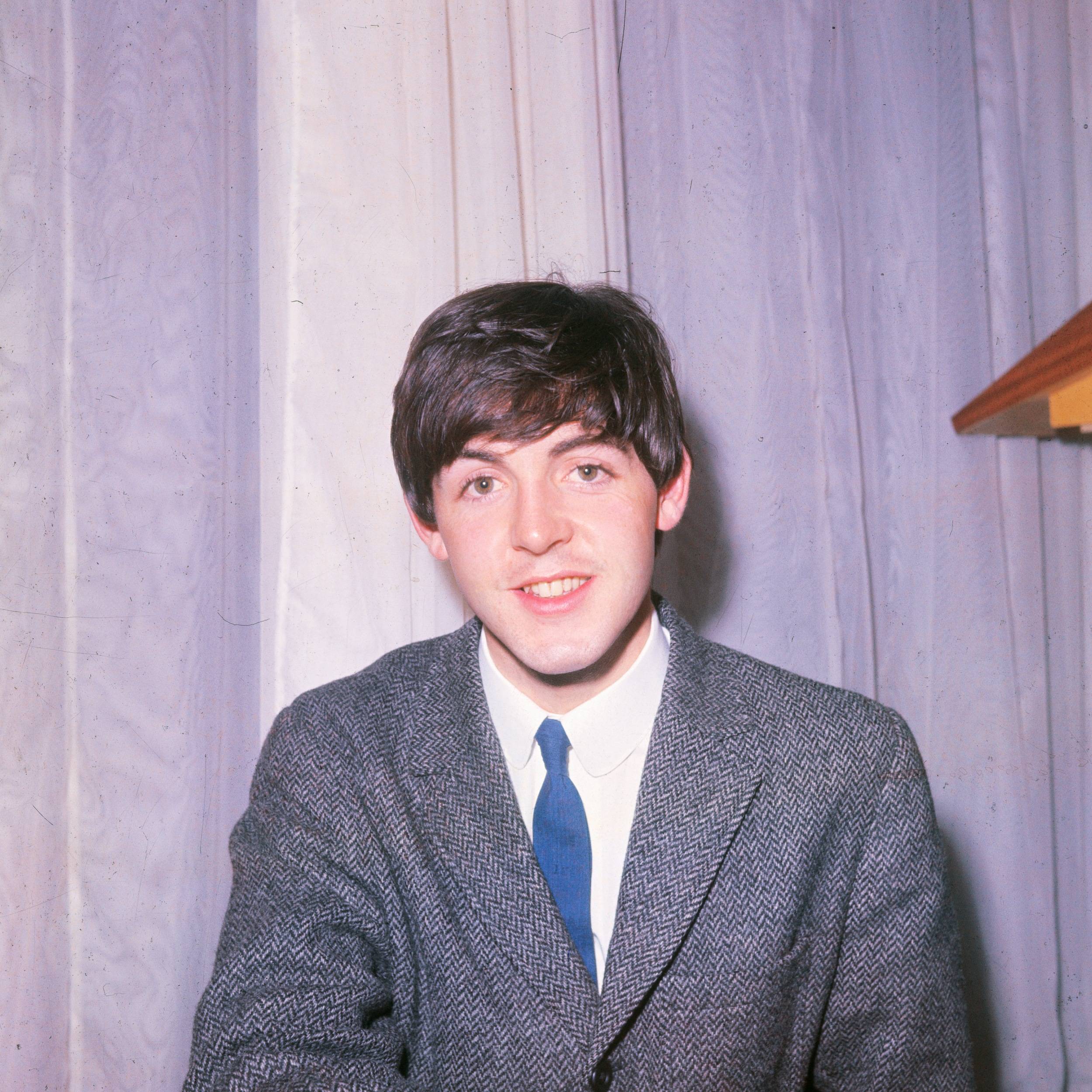
When people talk about the Beatles today, they usually drift toward the myths. John was the rebel. George was the mystic. Ringo was the beat. And Paul? Well, Paul was the "cute" one. But if you actually look at the trajectory of Paul McCartney in the 60s, that label is almost insulting. It misses the point of who he actually was: a relentless, avant-garde workaholic who dragged the band into the future, often against their will.
The 1960s weren't just a decade for him; they were a total transformation. He went from a kid in Liverpool trying to mimic Little Richard’s scream to a man composing "Eleanor Rigby" and "Hey Jude." Honestly, without his specific brand of melodic obsession, the 60s wouldn't sound like the 60s.
The Architect of the Studio Years
By 1966, the Beatles were done with touring. They were tired of the screaming, the bad monitors, and the fear. This is where the story of Paul McCartney in the 60s gets really interesting. While the other guys were retreating to their country estates in the "stockbroker belt," Paul stayed in London. He was living in Marylebone, hanging out at the Indica Gallery, and soaking up the London underground scene.
He was the one bringing tape loops to the Revolver sessions. You know that weird, seagull-like screeching in "Tomorrow Never Knows"? That wasn’t John, even though John wrote the song. That was Paul. He’d been experimenting at home with a Brenell tape recorder, removing the erase head and creating saturated loops of sound. He was deep into Stockhausen and Luciano Berio while everyone else thought he was just the guy writing "Yesterday."
He was also the guy who pushed for the Sgt. Pepper concept. He saw the band as a fictional entity, a way to escape the pressure of being "The Beatles." It was a brilliant, albeit slightly controlling, move. Paul basically became the unofficial musical director. If you listen to the basslines on Sgt. Pepper, they aren't just rhythm. They’re lead instruments. He was playing a Rickenbacker 4001S by then, and the melodic complexity he was pulling off—like on "With a Little Help from My Friends"—changed how people played the instrument forever.
The Myth of the "Soft" Beatle
There’s this annoying narrative that Lennon was the rocker and McCartney was the balladeer. Total nonsense.
Look at "Helter Skelter." That’s Paul trying to out-noise The Who. He literally wanted to make the loudest, dirtiest track possible. Then you’ve got "I'm Down" or the raw vocal on "Long Tall Sally." The guy had pipes that could shred. But he also had the discipline to write "Blackbird" or "Penny Lane." That’s the duality. He was obsessed with the craft of songwriting in a way that felt almost academic, yet he could scream like a banshee when the track called for it.
He also had a weirdly competitive streak. He knew what Brian Wilson was doing with the Beach Boys. When Pet Sounds came out, Paul was floored. He used that jealousy—or maybe call it "creative friction"—to fuel the sessions for "God Only Knows" inspired tracks. He wanted to be the best. Period.
Why 1967 Changed Everything
After Brian Epstein died in August 1967, the band was rudderless. Honestly, they were a mess. John was retreating into LSD and his own personal headspace. George was becoming more disillusioned with the "mop-top" legacy. Paul was the one who stepped up. He essentially forced them to make Magical Mystery Tour.
Critics hated the film. They absolutely trashed it. But the music? "Strawberry Fields Forever" (which he helped arrange) and "I Am the Walrus" were peaks of the era. Paul’s own "The Fool on the Hill" showed a growing maturity in his lyrics that people often overlook because they’re blinded by his knack for a catchy hook. He was exploring loneliness and the "outsider" perspective long before it was cool to be "indie."
The Bass Player Who Changed the Rules
Before Paul, the bass player stood in the back and stayed out of the way. McCartney refused to do that. He was originally a guitarist anyway, only taking over the bass because Stuart Sutcliffe quit and nobody else wanted the "fat" instrument.
The Evolution of the McCartney Sound
- The Hofner Era: Lightweight, "violin" shaped, and perfect for the early moptop stage. It had a thumpy, percussive sound.
- The Rickenbacker Shift: During the mid-60s, he moved to the Rick. It gave him more sustain and a clearer tone, allowing him to play those counter-melodies you hear on Rubber Soul.
- The Fender Jazz: By the end of the decade, specifically on The White Album and Abbey Road, he was using a Fender Jazz Bass, which gave him a punchy, modern growl.
The Breakdown and the End of an Era
By 1968 and 1969, the tension was thick enough to choke you. The "Get Back" sessions (which eventually became the Let It Be film and album) were a nightmare. Paul was trying to lead, but the others felt he was nagging. To be fair, he probably was. He was the one who wanted to get back to their roots, playing live with no overdubs.
He was also dealing with his own life changes. Meeting Linda Eastman changed his trajectory. While the world saw her as the woman who "broke up the Beatles" (a lie, by the way—the band was already fracturing under the weight of Yoko, business disputes, and simple burnout), she was actually his lifeline. She gave him the confidence to imagine a life after the biggest band in history.
The final masterpiece, Abbey Road, was Paul’s last great push for unity. The "Long Medley" on side two? That was his brainchild. He took a bunch of unfinished fragments from himself and John and stitched them together into a symphonic suite. It was a glorious way to go out. Even then, amidst the lawsuits and the bickering over Allen Klein, he was thinking about the art.
What Most People Get Wrong About McCartney
Many fans think Paul was the "safe" Beatle. They think he was the one who wanted to keep the peace and make radio hits. But in the 60s, Paul was the most connected to the avant-garde. He was the one attending "happenings." He was the one funding the International Times. He was the one who encouraged the others to experiment with orchestral arrangements and non-linear song structures.
If John was the soul of the band, Paul was the heart and the hands. He was the one in the studio at 3:00 AM making sure the snare sound was just right. He was a perfectionist. Sometimes that made him hard to work with, but it also meant that the quality control of the Beatles' output remained insanely high until the very last second.
How to Listen to Paul’s 60s Work Differently
If you want to really understand his impact, don't just listen to the hits. Do this instead:
- Isolate the bass: Listen to "Something." It’s a George Harrison song, but Paul’s bassline is a work of art in itself. It’s busy, yet it never steps on the vocal.
- Focus on the harmonies: Paul’s ability to find the "high" part in a three-part harmony is what gave the Beatles that shimmering, angelic sound. Listen to "Paperback Writer" closely.
- Look for the "gritty" Paul: Listen to "Why Don't We Do It in the Road?" or "Helter Skelter." It’s a reminder that he was a rock singer first and foremost.
- Track the "Art" influence: Research his involvement in the Indica Gallery. It explains so much about why the Beatles' music became so visual and psychedelic from 1966 onwards.
Paul McCartney’s 60s journey was about a man realizing he had the power to reshape popular culture, and then actually doing it. He didn't just write "silly love songs"—that came later, and even those were more complex than people give them credit for. In the 60s, he was a revolutionary in a suit.
Actionable Next Steps for Fans
- Visit the British Library Sound Archive: If you’re ever in London, they have incredible resources on the 60s underground scene Paul was a part of.
- Read "Many Years From Now" by Barry Miles: This is the closest thing to an official McCartney autobiography covering this period. It’s based on hundreds of hours of interviews and corrects many of the Lennon-centric myths.
- Watch the "Get Back" Documentary: Specifically, watch the scene where Paul "summons" the song "Get Back" out of thin air while Ringo and George watch. It’s the single best piece of evidence for his creative genius.
- Listen to the Esher Demos: These raw acoustic versions of White Album tracks show Paul’s songwriting process in its purest form before the studio polish was added.