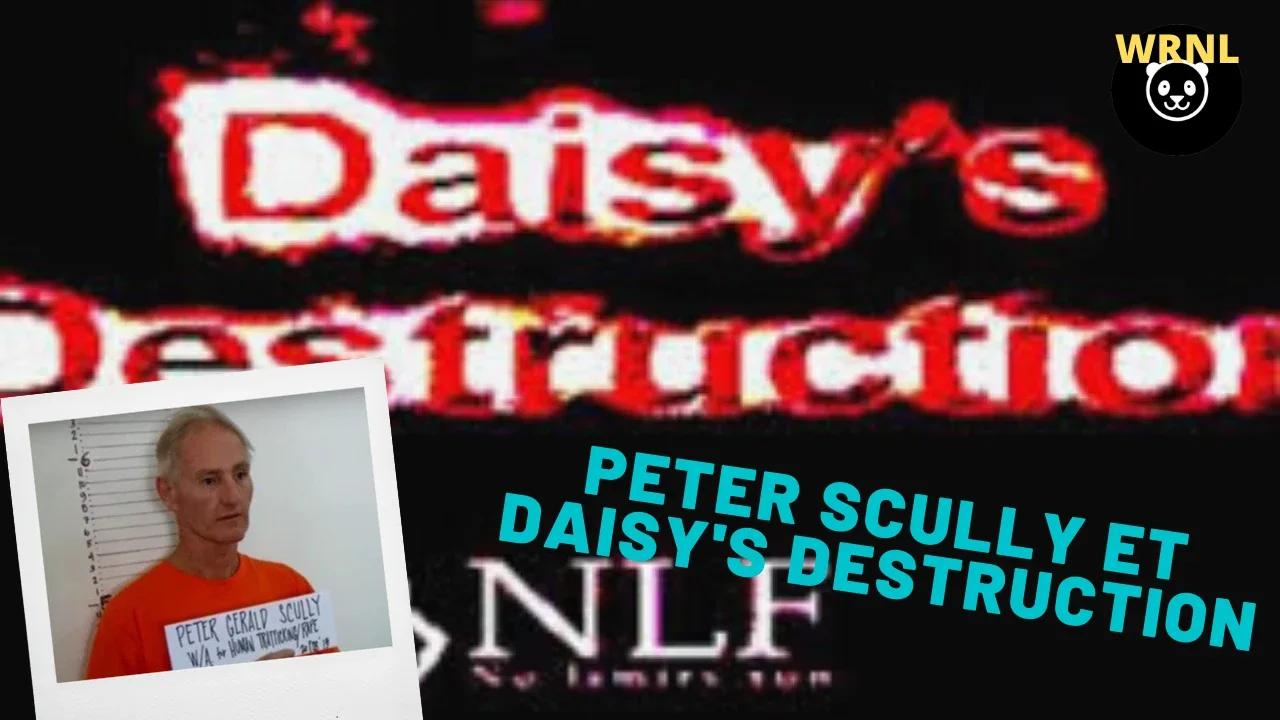
If you’ve spent much time reading about the darker corners of the internet, you’ve likely stumbled across a name that makes even seasoned investigators shudder: Peter Scully. Honestly, it’s a name that carries a heavy, dark weight. He wasn't just some petty criminal or a standard "bad guy" you see on the nightly news. He was a man who basically turned the exploitation of children into a high-priced digital business, operating from the shadows of the Philippines for years.
The world eventually found out who Peter Scully was in 2015. That’s when the NBI (National Bureau of Investigation) in the Philippines, working with international agencies like the Australian Federal Police and Interpol, finally cornered him. But the arrest was just the beginning. The details that followed were so depraved they sparked a national debate in the Philippines about bringing back the death penalty specifically for him.
The Man from Melbourne: From Fraud to the Dark Web
Peter Gerard Scully didn't start his criminal career in a jungle hideout. He was born in Melbourne, Australia, in 1963. For a long time, he lived what looked like a relatively normal life in the suburb of Narre Warren. He had a wife. He had two kids. He even ran a real estate scheme called "The Key Result."
But the "Key Result" was a sham. It was a property scheme that targeted low-income earners who couldn't get traditional bank loans. He promised them homeownership but instead left them in debt. By the time the Australian Securities & Investments Commission (ASIC) started looking into his 117 counts of fraud and deception, Scully had already vanished. He fled to the Philippines in 2011 to escape a $2.6 million debt and a potential prison sentence.
Once he landed in Southeast Asia, his crimes took a much more sinister turn. He didn't just hide; he set up shop. He built a lucrative network on the dark web, specifically a site called "No Limits Fun" (NLF). There, he produced and sold "hurtcore" videos—a term that refers to the most extreme forms of child abuse and torture imaginable.
The Horrors of Daisy’s Destruction
You can't talk about who Peter Scully is without mentioning "Daisy’s Destruction." It is widely considered one of the most horrific pieces of media ever to exist. It wasn't just a video; it was a commercial product sold to high-paying "clients" in the US, Germany, and Brazil for up to $10,000 a copy.
The video featured three young girls. Investigators later identified them as Liza, Daisy, and Cindy. The abuse was systematic. Scully wasn't alone in this, either. He worked with his Filipino girlfriends, including Liezyl Margallo and Carme Ann Alvarez. Margallo, in particular, was encouraged by Scully to carry out some of the most severe physical violence against the children.
One of the most chilling aspects of the case came to light during the investigation into Cindy’s disappearance. According to Margallo, Scully recorded himself raping and torturing the 12-year-old before making her dig her own grave. He then strangled her to death with a rope. When the police finally raided a house Scully had rented in Surigao City, they found a body buried under the kitchen floor. It was Cindy.
Why the Prosecution Wanted the Death Penalty
The legal proceedings against Scully were long and complicated. He faced 75 different charges. In a country like the Philippines, where the Catholic Church has massive influence, the death penalty had been abolished in 2006. But the sheer depravity of Scully's "No Limits Fun" operation changed the conversation.
Prosecutors like Jaime Umpa were vocal. They didn't just want a life sentence; they wanted him dead. They argued that Scully represented a "heinous" level of criminality that the current law wasn't equipped to punish properly. Despite the public outcry and the support of then-President Rodrigo Duterte for the death penalty, the law didn't change in time to apply to Scully.
Instead, the justice system hit him with a series of massive sentences that ensure he will never walk free.
The Sentences: Life Plus 129 Years
Justice moved slowly, but it was thorough. In June 2018, Scully received his first conviction: life imprisonment for human trafficking and five counts of rape. But that was just for the first "batch" of cases.
The legal hammer really dropped in November 2022. After years of litigation, Scully entered into a plea bargain for the remaining 60 charges. A court in Cagayan de Oro sentenced him to an additional 129 years in prison. His girlfriend, Lovely Margallo, didn't fare much better, receiving 126 years.
As of early 2026, Peter Scully remains incarcerated at the Davao Prison and Penal Farm in Panabo. He’s complained about the conditions. His sister has complained too. Honestly, given what he put those children through, those complaints haven't found much sympathy with the public.
What This Case Changed for Global Safety
The Peter Scully case was a wake-up call for international law enforcement. It showed that the dark web wasn't just a place for drug deals or stolen credit cards; it was a marketplace for human suffering.
- Better Collaboration: The Dutch National Child Exploitation Team was actually the first to flag the "Daisy" video. Their tip led to the international manhunt that eventually involved the AFP and the NBI. It proved that child exploitation is a borderless crime that requires a borderless response.
- Focus on "Hurtcore": Before Scully, many people didn't realize the scale of the "pay-per-view" abuse industry. Law enforcement agencies have since pivoted to aggressively target the servers and administrators of these niche dark web sites.
- Victim Support in the Philippines: The case highlighted how poverty and high internet connectivity in the Philippines made children vulnerable. Since his arrest, there has been a more concerted effort by the Philippine government to monitor "cybersex dens" and provide resources for survivors.
The girls from the "Daisy" videos have had a long road to recovery. Daisy and Liza were found alive, though they carry permanent physical and psychological scars. The Philippine Supreme Court recently upheld Scully’s life sentence in March 2025, reaffirming that the "essence of trafficking" is the recruitment of humans for exploitation, regardless of whether the perpetrator claims they were doing it for their own "lust" or for money.
If you are looking to stay informed or help in the fight against child exploitation, the best thing you can do is support organizations like the International Centre for Missing & Exploited Children (ICMEC) or the NCMEC in the United States. Reporting suspicious content to local authorities or through official "cyber-tip" portals is the most direct way to prevent the next Peter Scully from operating in the shadows.