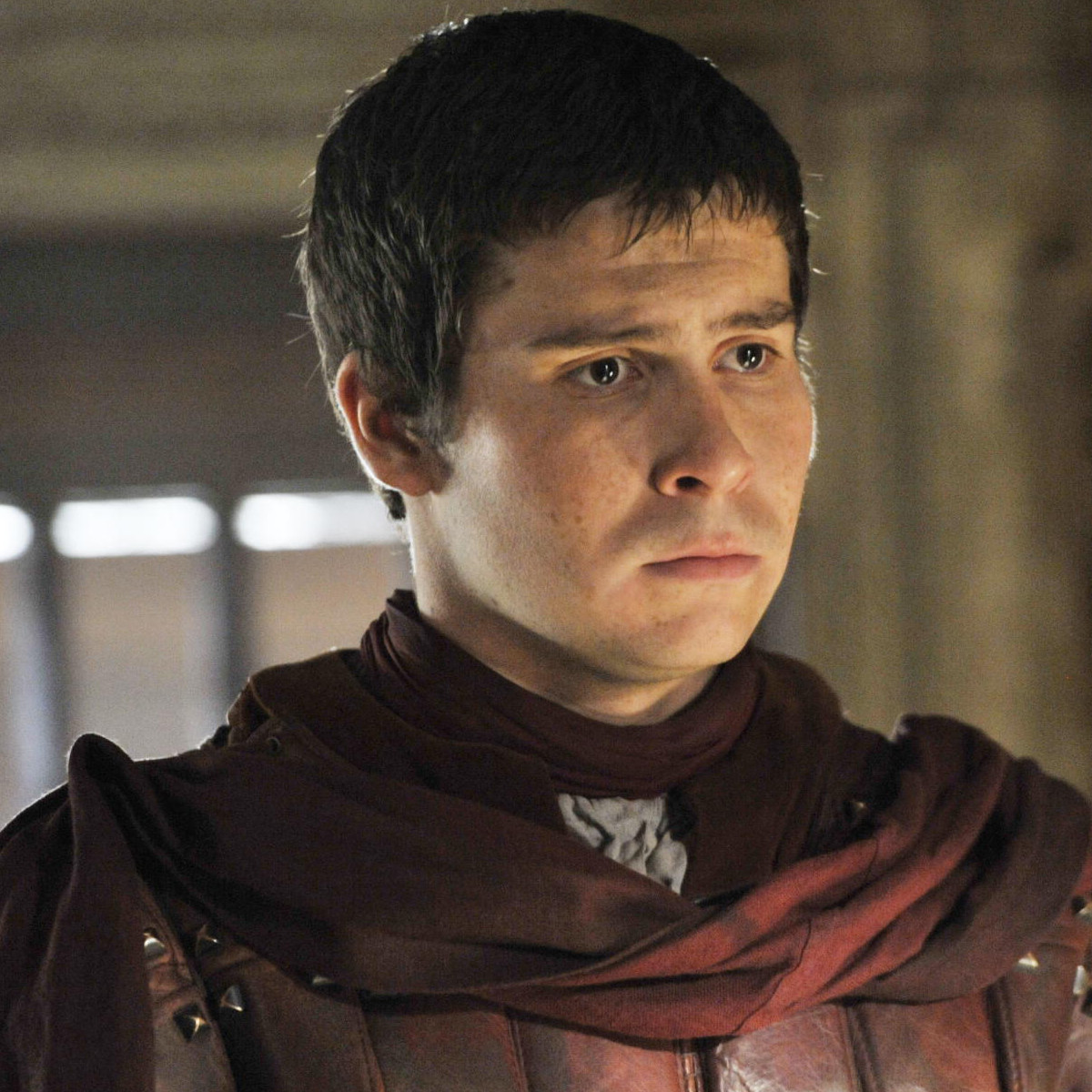
Some characters in the world of Westeros are monsters on a grand scale. You have Joffrey, who was a petulant sadist, and Tywin, who dismantled entire houses with a flick of his quill. But then there’s Polliver. He wasn’t a king. He wasn't a high-born lord with a family crest that struck fear into the hearts of the smallfolk. Honestly, he was just a man-at-arms. A grunt. A guy doing a job. Yet, years after the show ended, the name Polliver still triggers a specific kind of visceral hatred in the Game of Thrones fandom.
Why? Because Polliver represented the banality of evil. He wasn't trying to sit on the Iron Throne. He just wanted your boots and your life, and he’d take both without blinking.
The Man Who Stole Needle
We first met Polliver in Season 2, though his impact on the story of Arya Stark stretches far beyond his screen time. Played by actor Andy Kellegher, he was a man-at-arms for Ser Gregor Clegane—the Mountain. That alone tells you everything you need to know about his moral compass. You don’t work for the Mountain if you have a soul.
When Polliver and his group captured Arya, Gendry, and Hot Pie at the God's Eye, it wasn't a grand battle. It was a mugging. He didn't just take them prisoner; he systematically stripped them of their dignity. He killed Lommy. That’s the moment most fans remember. Lommy was injured, couldn't walk, and Polliver just drove a blade through his throat because he was "carry-on luggage."
Then he took Needle.
Arya’s sword wasn't just metal. It was Jon Snow. It was Winterfell. It was her identity. When Polliver slid that blade into his own belt, he didn't realize he was signing his death warrant in the most poetic way possible. He looked at a little girl and saw nothing. That was his first mistake. His second was thinking he was untouchable because he wore the Lannister lion on his chest.
Why Polliver Matters More Than You Think
In a show filled with dragons and ice zombies, the human cruelty of the War of the Five Kings often gets lost. Polliver is the reminder. He is the personification of what happens to a country when the rule of law vanishes and the "men with swords" take over.
George R.R. Martin often writes about the "broken men" of Westeros. Polliver isn't exactly a broken man in the way Septon Meribald describes in the books—men who are driven mad by fear—but he is a product of that same environment. He thrives in the chaos. He represents the secondary tier of villainy. If Joffrey is the one who orders the execution, Polliver is the guy who laughs while he’s doing it.
The Inn at the Crossroads
The confrontation in Season 4, Episode 1, "Two Swords," is arguably one of the best-written scenes in the entire series. It’s the moment Arya and Sandor Clegane (The Hound) walk into an inn and find Polliver and his cronies.
The tension is thick. You can almost smell the cheap ale and the looming violence. Polliver tries to be "chummy" with the Hound. He’s arrogant. He thinks he’s part of the winning team because the Lannisters won the Red Wedding. He’s eating a chicken, acting like he owns the world.
"Something wrong with your leg?" he asks the Hound.
It’s a casual taunt. He doesn't know he’s talking to a man who is currently starving, angry, and has absolutely nothing left to lose. Polliver's dialogue in this scene is a masterclass in smugness. He talks about the "fine work" they did at the Twins. He boasts about the atrocities. He’s a bully who thinks the world has finally rewarded bullies.
Then the fighting starts.
The Death of Polliver: A Lesson in Karma
The fight in the inn is messy. It’s not a choreographed dance. It’s a desperate, ugly struggle. The Hound does most of the heavy lifting—taking on multiple men at once—but the finale belongs to Arya.
The way Polliver dies is a direct mirror of how he treated Lommy. It’s one of the few times in Game of Thrones where justice feels truly, 100% earned without a bitter aftertaste.
- Arya wounds him.
- She stands over him while he’s paralyzed on the floor.
- She repeats his own words back to him.
"Fine little blade. Maybe I'll pick my teeth with it."
The look on Polliver's face isn't just fear; it's a lack of recognition. He doesn't even remember the girl he stole the sword from. To him, she was just another nameless victim in a long line of victims. To her, he was a name she whispered every night before she went to sleep. When she slides Needle through his neck—slowly, deliberately—it’s the first name she crosses off her list.
Comparing Show Polliver to Book Polliver
It’s worth noting that the show combined several characters to make Polliver more impactful. In the books, specifically A Storm of Swords, the man who takes Needle is actually the Tickler. Polliver is there, but he’s more of a background player.
The showrunners made a smart move here. By consolidating the cruelty of the Mountain's men into one recognizable face, they made the payoff at the inn much more personal for the audience. In the books, Arya kills the Tickler in a frantic, stabbing frenzy while screaming the questions he used to torture prisoners. In the show, the kill is cold. It’s calculated. It marks the transition of Arya from a victim to a survivor—and eventually, an assassin.
The Legacy of a Low-Level Villain
What can we learn from a character like Polliver?
First, he proves that you don't need a high budget or a CGI dragon to create a memorable antagonist. You just need a character who violates the basic human unspoken rules of "fairness." Killing a child who can't walk? That’s how you get an audience to hate you forever.
Second, Polliver’s presence in the narrative serves to bridge the gap between the high politics of King's Landing and the gritty reality of the Riverlands. He shows us the cost of war. He is the "collateral damage" that fights back.
Key Takeaways from the Polliver Arc
If you're re-watching the series or diving into the lore, keep these points in mind:
- The Power of Memory: Polliver's downfall happened because he underestimated the memory of those he oppressed. He forgot Arya; she never forgot him.
- The Symbolism of Needle: The sword represents more than just combat; it’s a tether to the North. Polliver holding it was a visual representation of the Lannister occupation of the Stark soul.
- The Hound’s Role: Polliver serves as a foil to Sandor Clegane. Both are violent men, but the Hound has a code—however twisted it may be. Polliver has none.
Turning Interest into Actionable Insights
If you’re a writer, a dungeon master for a D&D campaign, or just a fan of storytelling, there’s a lot to be gleaned from how Polliver was utilized.
Don't make every villain a dark lord. Sometimes, the most effective "bad guy" is the one who is just slightly more powerful than the protagonist and uses that power to be a nuisance. The "low-level" villain makes the world feel inhabited. They create personal stakes that "saving the world" often lacks.
For fans of the series, revisiting the Polliver episodes (specifically Season 2, Episode 3 and Season 4, Episode 1) provides a perfect microcosm of the show's evolution. You see the shift from Arya as a hunted animal to Arya as the hunter.
To dig deeper into the world of the Mountain's men and the horrors of the Riverlands, look into the histories of characters like Raff the Sweetling or The Tickler in the A Song of Ice and Fire novels. They provide an even darker look at the psychological toll of the war.
Understanding Polliver is about understanding that in Westeros, the biggest threats aren't always the ones sitting on thrones—they're the ones standing in your way at a roadside inn, holding a stolen sword and a plate of chicken.