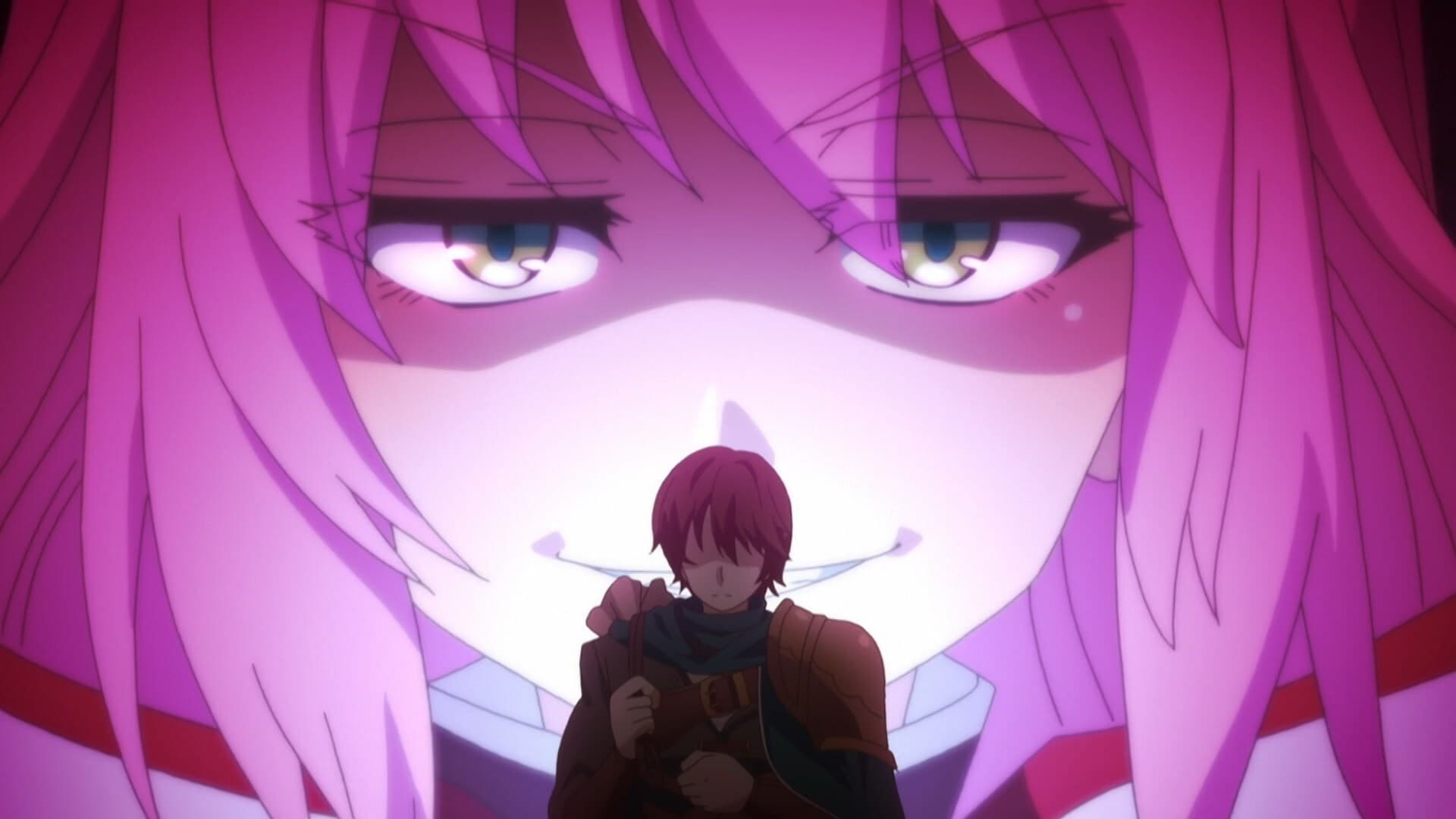
Let's be real. If you’ve spent any time in anime circles over the last few years, you’ve heard of Redo of a Healer. It’s the kind of show that makes people physically recoil or dive into a thousand-word defense on a forum. It isn't just "another" fantasy show. Honestly, it’s a lightning rod. Whether you call it Kaifuku Juyoushi no Yarinaoshi or just "that one healer show," it fundamentally changed how we talk about boundaries in mainstream streaming.
It’s messy. It’s dark.
The story follows Keyaru, a healing mage who gets absolutely wrecked by his "heroic" teammates. They drug him, abuse him, and treat him like a tool because his healing powers come with a catch: he feels all the pain of the person he’s fixing. After years of literal hell, he finds a way to reset the world's clock. He goes back four years. Now, he’s got all his memories and a massive chip on his shoulder. He isn't out to save the world this time; he’s out to break the people who broke him.
The Viral Storm and Why Redo of a Healer Broke the Internet
When the anime adaptation by TNK dropped in early 2021, the internet basically melted. You had platforms like Sentai Filmworks’ HIDIVE picking it up in the West, but even then, it came with massive warnings. It was a weird moment for the industry. Most "revenge" stories in the Isekai or fantasy genre involve a guy getting kicked out of a party and then getting a cool sword. Redo of a Healer took that trope, doused it in gasoline, and lit a match.
It’s about the "uncut" vs "TV" versions.
In Japan, the show aired in three different tiers of censorship. You had the "Broadcast" version, the "Redo" version, and the "Complete Recovery" version. This wasn't just about gore. It was about the explicit sexual violence that serves as the core of Keyaru’s "vengeance." For many viewers, it crossed a line that shouldn't be crossed in entertainment. For others, it was an honest, albeit extreme, look at the cycle of trauma.
Critics like those at Anime News Network were pretty much unanimous in their discomfort. They pointed out that while the "revenge" hook is a classic literary device—think The Count of Monte Cristo—this execution felt gratuitous. But here’s the kicker: it was a commercial juggernaut. The light novels by Rui Tsukiyo had already sold millions of copies. The anime just pushed that visibility into the stratosphere. People couldn't stop talking about it, even if they were talking about how much they hated it.
Keyaru: A Protagonist Who Isn't a Hero
Most people expect a protagonist to be likable. Or at least redeemable. Keyaru isn't really either. He’s a victim who becomes a victimizer. He uses his "Heal" ability in ways that are technically clever but morally bankrupt. He can "heal" someone’s memories away, essentially brainwashing them. He can "heal" their physical form to change their appearance.
It's a power fantasy, but a deeply cynical one.
The characters he targets, like Princess Flare, are objectively terrible people in the context of the story. She’s a sociopath who tortured him. So, when Keyaru gets his revenge, the show asks the audience a really uncomfortable question: does being a victim give you the right to commit the same atrocities back? The show doesn't really offer a "moral" answer. It just shows you the carnage.
Interestingly, Rui Tsukiyo has mentioned in interviews that the series was born out of a desire to write something that satisfied the "revenge" itch that was popular on the Shōsetsuka ni Narō website. He knew exactly what he was doing. He wasn't trying to write a deep philosophical treatise on forgiveness. He was writing a visceral, dark fantasy about a man who refuses to forgive.
The Impact on Streaming Standards
Before Redo of a Healer, there was a sort of unspoken "soft limit" for what mainstream anime streamers would carry. Sure, you had Goblin Slayer and its controversial first episode, but that settled into a standard dark fantasy pretty quickly. Redo didn't settle. It stayed at a ten for the entire run.
Because of this show, we saw a shift:
- Streamers became much more explicit with content warnings.
- "Boutique" streaming services like HIDIVE found a niche in carrying the "uncensored" content that Crunchyroll wouldn't touch.
- The discourse around "revenge porn" and "dark fantasy" became a central pillar of seasonal anime discussions.
Production Value vs. Subject Matter
If you strip away the controversy, the actual production by Studio TNK is surprisingly competent. That’s actually part of the problem for many critics. If the show looked like garbage, it would be easy to dismiss as "edge-lord" trash. But the animation is fluid, the character designs by Junji Goto are polished, and the voice acting—especially by Yuya Hozumi—is genuinely chilling.
The music, composed by Kenji Fujisawa, adds this eerie, epic scale to Keyaru’s madness. It feels like a high-budget fantasy epic, which creates this bizarre cognitive dissonance when you're watching scenes that are fundamentally repulsive. It’s a polished piece of media that uses its budget to push boundaries that many think shouldn't be pushed.
Why Do People Still Watch It?
It's easy to dismiss the audience as just people looking for "hentai-adjacent" content. But that’s a bit of a simplification. There’s a psychological pull to the pure, unadulterated revenge trope. In a world where we often feel like bad people get away with everything, seeing a character systematically dismantle their oppressors—no matter how cruelly—taps into a very primal, very dark part of the human psyche.
It’s the "John Wick" effect, but with all the safety rails removed.
Also, the world-building is surprisingly tight. The magic system based on "healing" being the most powerful and versatile school of magic is a cool twist. Most RPG-based anime treat healers as the "support" class that stands in the back. Keyaru proves that if you can manipulate biological matter at the cellular level, you’re basically a god.
Navigating the Future of the Franchise
Is there going to be a Season 2? That’s the million-dollar question. As of 2026, the rumors are always swirling. The light novels are still ongoing and still selling. The demand is clearly there in certain markets, especially in parts of Asia and through international streaming. However, the production committee has to weigh the massive profit against the inevitable PR firestorm.
Wait.
There's also the "spin-off" factor. There's a manga spin-off called Redo of a Healer: Great Journey and even a spin-off that’s a bit more comedic. It shows that the creators know they have a "brand" now, even if that brand is the most controversial name in anime.
What You Should Know Before Diving In
If you’re thinking about watching it, you need to know exactly what you’re getting into. This isn't Rising of the Shield Hero. It’s not even Berserk. It is a graphic depiction of sexual violence, torture, and psychological manipulation.
- Check the version. If you're watching the broadcast version, half the screen will be blacked out or blurred. It’s almost unwatchable because so much context is lost.
- Understand the context. It’s a "Dark Fantasy Revenge" story. It operates on the logic of an "eye for an eye," but the eye is taken out with a rusty spoon.
- Separate fiction from reality. The show has been criticized for its "problematic" themes. It’s important to approach it as a piece of transgressive fiction rather than a blueprint for morality.
Honestly, the best way to consume Redo of a Healer—if you have the stomach for it—is to look at it as a case study in how far the anime industry can push the "revenge" subgenre. It’s a fascinating, if horrifying, look at the extremes of human imagination.
Moving Forward with the Series
If you've already finished the anime and want more, your best bet is the light novels. They provide much more internal monologue for Keyaru, which makes his descent into madness feel a bit more "earned" even if it doesn't make him any more likable. The manga adaptation is also quite detailed, though it’s just as graphic as the show.
For those who want the "vibe" without the extreme content, shows like The Kingdoms of Ruin or Arifureta offer a similar "wronged protagonist" setup with a slightly lower level of depravity.
Actionable Insights:
- Verify Ratings: Always check the age rating on your local streaming platform; this series is strictly 18+ in almost every territory.
- Research the Author: Look into Rui Tsukiyo’s other works, like The World's Finest Assassin, to see how he handles similar themes with a bit more restraint.
- Join the Discourse: If you're interested in the "why" behind the show, look for essays on the "Narou" web novel culture in Japan, which explains why these hyper-edgy stories get greenlit in the first place.
- Mind Your Mental Health: Seriously. If themes of sexual assault or torture are triggers for you, skip this one. No "plot" is worth the mental toll if you aren't prepared for it.
The legacy of this series isn't going anywhere. It’s cemented its place in anime history as the show that went "there." Whether that’s a good thing or a bad thing is entirely up to your own personal limits.