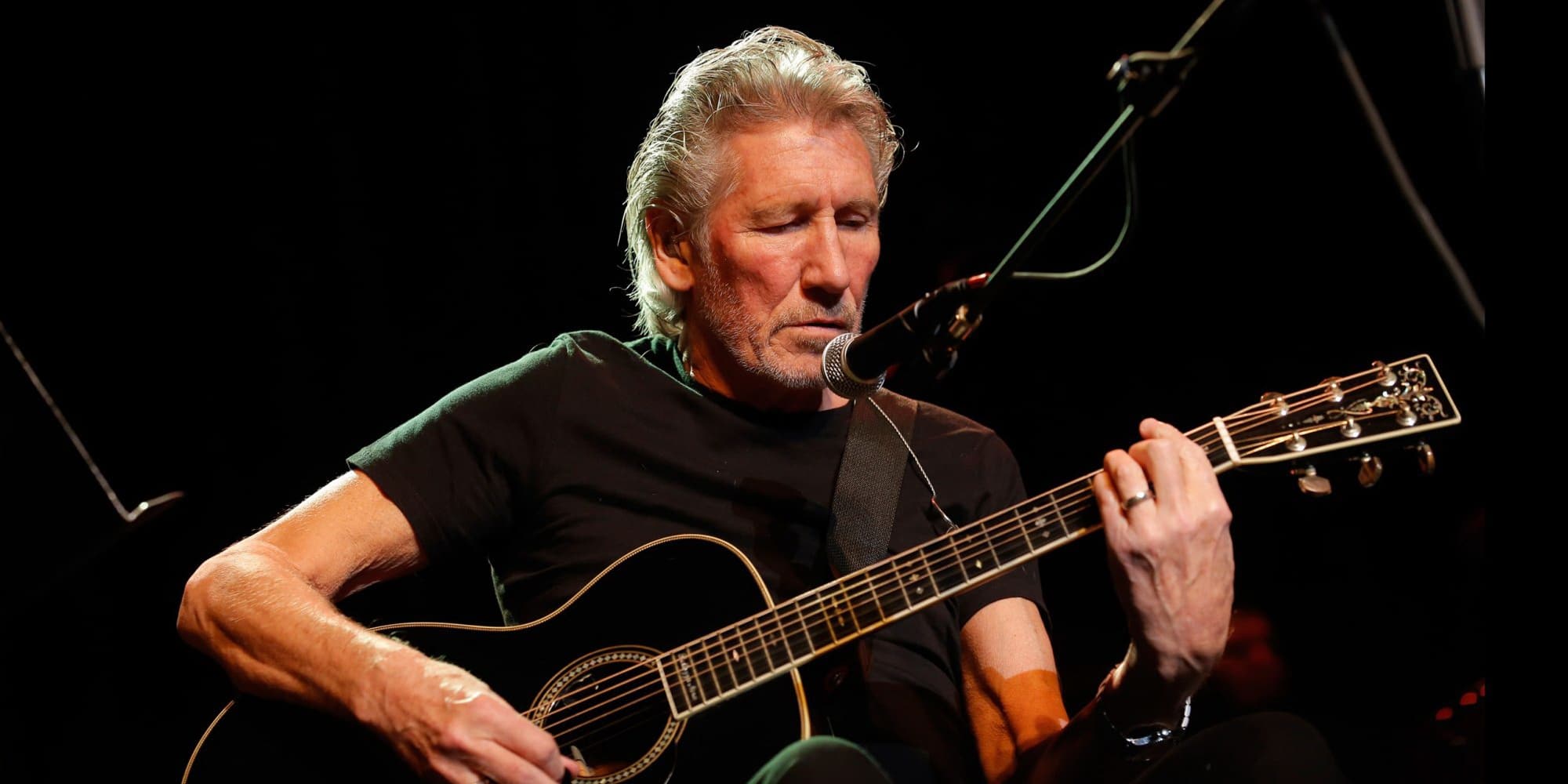
When you talk about the creative engine behind The Dark Side of the Moon, you aren’t just talking about psychedelic rock. You’re talking about a massive, global business empire that’s been churning for over half a century. Roger Waters net worth is a topic that comes up a lot, usually followed by some debate about his politics or his latest fallout with David Gilmour. But if you strip away the noise and look at the ledgers, the numbers are staggering.
As of early 2026, Roger Waters’ net worth is estimated to be roughly $310 million.
Now, that number isn't just a static pile of cash sitting in a bank account in London. It’s a complex web of royalties, massive real estate holdings, and the remnants of one of the most successful touring careers in the history of music. Honestly, though, the biggest shift in his financial landscape happened very recently. For years, the Pink Floyd catalog was the "white whale" of the music industry. Everyone wanted it. Nobody could agree on how to sell it.
The $400 Million Sony Deal and the End of the "Mud Bath"
For the longest time, Pink Floyd’s internal bickering was a literal barrier to wealth. David Gilmour famously described the process of managing the band’s assets as a "mud bath." In late 2024, the stalemate finally broke.
Sony Music stepped in with a check for $400 million.
This deal was massive, but it was also specific. It covered the band's recorded music rights, their name, and their likeness. It did not include the publishing rights. That’s a crucial distinction for Waters. Because he wrote the vast majority of the lyrics and a huge chunk of the music during the band’s peak years, he still controls his songwriting royalties.
Basically, every time "Comfortably Numb" or "Money" gets played on the radio or used in a movie, Waters is still getting paid directly. The Sony deal just gave the label the right to the actual recordings and the ability to sell Pink Floyd-branded socks or lunchboxes without asking the band members for permission every five minutes.
It’s been reported that Waters' controversial political stances actually devalued the deal. Some industry insiders suggest the catalog could have fetched $500 million if there hadn't been so much public friction. Still, a $400 million payout split among the members and the estates of Richard Wright and Syd Barrett is nothing to sneeze at.
Touring: Where the Real Money Lives
While the catalog sale provided a massive injection of liquidity, Roger Waters has always made his real bank on the road. He’s a touring machine.
Take a look at these numbers:
- The Wall Live (2010-2013): This tour grossed over $458 million. At the time, it was the highest-grossing tour ever for a solo artist.
- Us + Them Tour (2017-2018): Another monster, bringing in roughly $250 million.
- This Is Not a Drill (2022-2023): Even with all the headlines and venue cancellations in places like Frankfurt, the tour was a financial success. In New York City alone, two nights at Madison Square Garden pulled in over $8.6 million.
Waters understands the scale. He doesn't just play shows; he builds immersive, stadium-sized political statements that fans are willing to pay $200 a ticket to see. Even at 82 years old, his ability to generate cash through live performance is largely unmatched by his peers.
Why Waters is Worth More Than His Bandmates
It sounds kind of harsh, but Waters is significantly wealthier than Nick Mason or David Gilmour. Most estimates put Gilmour and Mason in the $150 million to $180 million range.
Why the gap? It comes down to credits.
In the music business, the songwriter is king. Since Waters was the primary lyricist and a dominant composer for The Wall, Animals, and Wish You Were Here, his "slice of the pie" for every stream and sale is much larger. He basically out-earned them through sheer volume of intellectual property ownership long before any catalog sales were on the table.
Real Estate and Personal Assets
You don’t reach a nine-figure net worth without playing the property game. Waters has owned some serious real estate over the decades.
- New York City: He has long maintained a presence in Manhattan, including a multi-million dollar townhouse.
- The Hamptons: Like any high-tier celebrity, he’s had stakes in the Bridgehampton area, which is essentially a playground for the ultra-wealthy.
- The UK: He still keeps significant ties to his home country, with various properties in London and the surrounding countryside.
He’s also been through five marriages. Divorce at this level of wealth is usually a massive financial drain, yet Waters has managed to keep his net worth climbing. It’s a testament to the "evergreen" nature of Pink Floyd’s music. People never stop buying The Dark Side of the Moon. It has spent over 900 weeks on the Billboard 200. That’s not just a record; it’s an annuity.
The Nuance of the "Controversy Discount"
We have to talk about the "Waters Tax." In 2023 and 2024, his public statements led to a lot of friction. BMG famously dropped him as a solo artist. This kind of thing usually tanks a celebrity's value, but Waters is a unique case.
His fan base is global and incredibly loyal. While he might lose a label deal or a specific venue, the core value of his work—the songs themselves—is almost bulletproof. If you own the rights to "Another Brick in the Wall," you are essentially recession-proof.
Actionable Insights for Fans and Investors
If you’re looking at Roger Waters net worth as a case study in music business, here are the takeaways:
- Ownership is everything. Waters’ wealth isn't from his bass playing; it’s from his pen. Writing the lyrics gave him the leverage to dominate the band's finances for fifty years.
- Recorded rights vs. Publishing. The Sony deal proves that you can sell the "old" assets (the recordings) while keeping the "forever" assets (the songwriting).
- Touring is the ultimate hedge. Even when streaming rates are low or labels get grumpy, a legacy artist can always go to a stadium and gross $4 million in a single night.
The $310 million figure is likely to stay stable or even grow as the Sony deal's cash is reinvested into other ventures. Whether you love him or hate him, Roger Waters has built a financial fortress that is as impenetrable as the wall he famousy sang about.
To track how these figures change, keep an eye on the annual royalty reports from Pink Floyd Music Ltd and the ongoing performance of legacy rock assets in the private equity space.