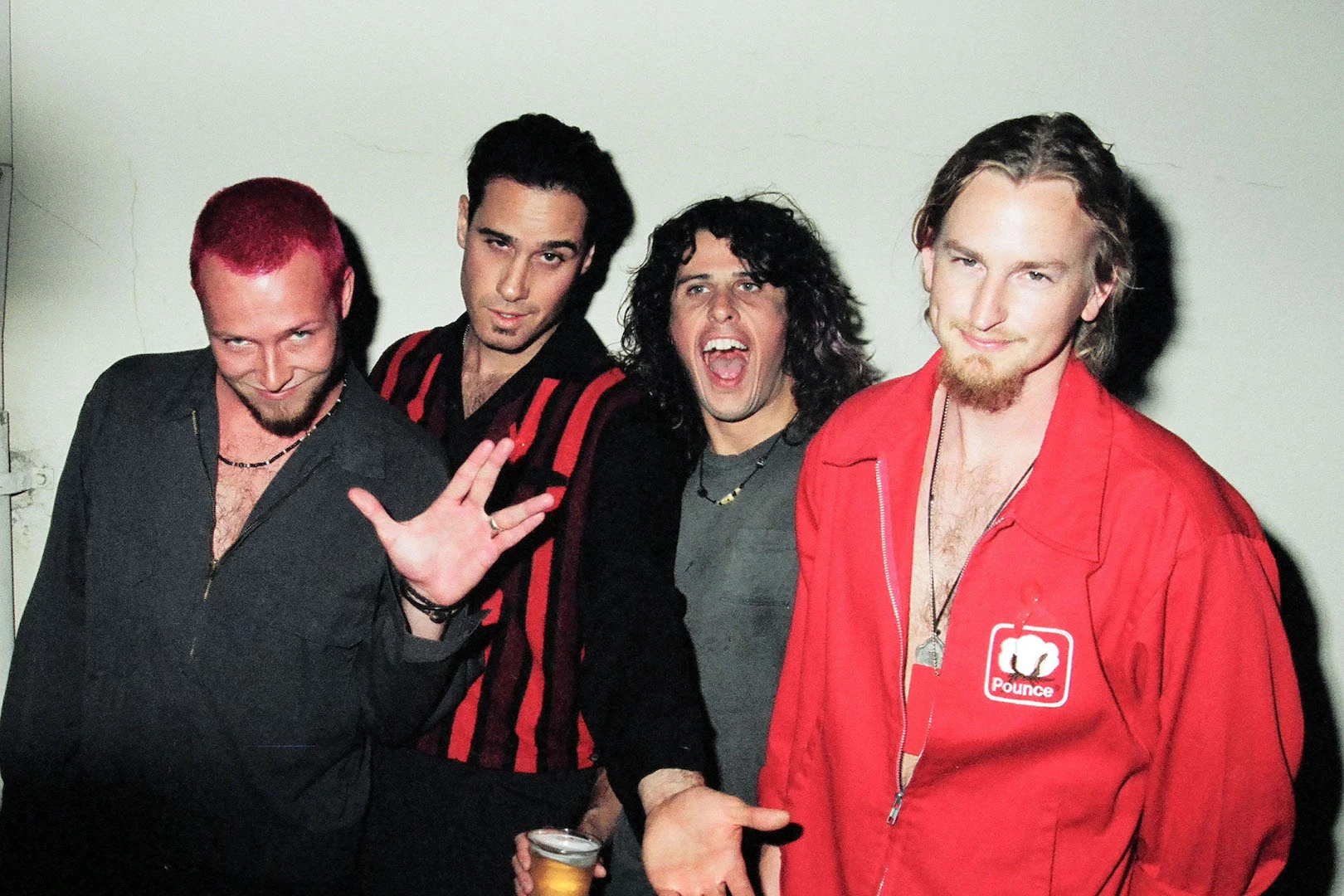
People still argue about it. It’s been over a decade since we lost him, and yet, if you walk into any dive bar with a jukebox, someone is going to play "Interstate Love Song" and start the debate. Was Scott Weiland a generational genius or just a really high-profile chameleon?
Stone Temple Pilots never had it easy with the critics. In 1994, Rolling Stone readers voted them the "Best New Band" while the magazine's own critics simultaneously branded them the "Worst New Band." That’s a hell of a polarizing start. But if you look at the raw numbers—40 million records sold—it’s clear the fans didn't care about the "grunge-lite" labels. They cared about the voice.
Scott Weiland was the engine. He wasn't just a singer; he was a walking, breathing art installation that occasionally fell apart in public.
The Chameleon Myth vs. The Reality
One of the biggest knocks against Scott Weiland in the early days was that he was "ripping off" the Seattle sound. Critics pointed at "Plush" and said he was doing an Eddie Vedder impression. They listened to "Sex Type Thing" and claimed he was channeling Layne Staley.
Honestly? That’s lazy.
While it’s true that Core leaned into the heavy, sludge-filled textures of 1992, Weiland’s evolution proved he was something much weirder and more interesting than a grunge clone. By the time Tiny Music... Songs from the Vatican Gift Shop dropped in '96, he was channeling David Bowie and Iggy Pop. He swapped the flannel for feather boas and megaphones.
He didn't just change his clothes; he changed his entire vocal resonance. He could hit a baritone growl that felt like it was coming from the floorboards, then pivot to a nasal, psychedelic croon that sounded like a transmission from a 1960s pop radio. He was a baritone, technically, with a range that spanned roughly from $E\flat 2$ to $B5$. That’s a lot of real estate for one throat.
Why the DeLeo Brothers Mattered
You can't talk about Scott Weiland without the DeLeo brothers. Dean and Robert DeLeo were—and are—musically sophisticated in a way that most "grunge" bands weren't. They were obsessed with bossa nova, jazz chords, and Led Zeppelin-esque arrangements.
Robert DeLeo famously wrote the main riff for "Interstate Love Song" on an acoustic guitar while on tour, and it has more in common with country-folk than it does with Mudhoney. Weiland’s ability to find the melody in those complex structures is what made Stone Temple Pilots a hit machine. They weren't just playing three chords and screaming; they were writing sophisticated pop songs disguised as hard rock.
The Cost of the Chaos
We all know the dark side. It’s impossible to ignore. The history of Stone Temple Pilots is a timeline of canceled tours, rehab stints, and court dates.
- 1995: Weiland is arrested for heroin and cocaine possession.
- 1996: The band has to scrap most of the Tiny Music tour.
- 2003: A car crash on his birthday leads back to rehab.
- 2013: The band officially "terminates" him.
It’s easy to look at the headlines and see a "troubled rock star" cliché. But the reality was more of a slow-motion tragedy for the people involved. The DeLeo brothers and Eric Kretz spent years waiting for Scott to be healthy enough to work. When he was "on," he was untouchable. When he was "off," the band was essentially a high-powered Ferrari sitting in a garage without any keys.
There’s a common misconception that the band hated him. If you read the statement they put out after he died in 2015, it’s heartbreaking. They acknowledged the "good and the bad" but called him "gifted beyond words." You don't give someone twenty chances if you don't love them.
The Voice That Still Echoes in 2026
It is now 2026, and we’re seeing a massive resurgence in the "STP sound." Ten years after his passing, a previously unreleased track called "If I Could Fly" was finally unveiled. It’s an acoustic-driven piece from 2000, written right after his son Noah was born.
It’s raw. It’s quiet. It reminds you that under the megaphone and the stage theatrics, Weiland had a staggering amount of heart.
Today, his son Noah Weiland is out there performing his father's material. It’s a strange, full-circle moment for fans who grew up watching Scott slink across the stage like a snake in the 90s. The influence hasn't faded. You hear it in modern rock, you hear it in the way vocalists today prioritize "vibe" over technical perfection.
Real Talk: Was he a "Phony"?
Some old-school purists still use that word. They say he was a product of a label.
But look at the performances. Watch the 1993 MTV Unplugged session. When they play the acoustic version of "Big Empty," the room stops breathing. You can't fake that kind of presence. You can't manufacture the way he occupied a stage.
He was a man who felt like he had to wear masks to survive. Sometimes the mask was a glam rocker, sometimes it was a punk, and sometimes it was a crooner. But the talent behind the mask was always Scott.
How to Listen to the Legacy
If you really want to understand the Scott Weiland and Stone Temple Pilots era, don't just stick to the Greatest Hits. You have to dig into the shifts.
- Start with "Piece of Pie" (1992): This is the raw power. It’s heavy, it’s aggressive, and it shows why they were world-beaters out of the gate.
- Move to "And So I Know" (1996): This is the shocker. It’s a bossa nova track. Scott sounds like he’s singing in a lounge in 1950s Brazil. It proves he wasn't just a "grunge guy."
- Check out "Atlanta" (1999): This is arguably his finest vocal performance. It’s grand, cinematic, and deeply sad. It’s the sound of a man who knows he’s falling apart but still wants to create something beautiful.
The lesson here isn't about the drugs or the arrests. It's about the fact that despite the chaos, the music remained high-quality. Most bands would have folded after the first rehab stint. STP kept swinging for the fences because they knew that what they had with Scott was a once-in-a-lifetime lightning strike.
If you’re looking to dive deeper into the technical side of his work, pay attention to the vocal layering in the Purple era. He and producer Brendan O’Brien used a lot of "doubling" and harmonies that gave the tracks a lush, thick feel that most of their contemporaries lacked.
Actionable Insights for the Modern Fan
If you want to keep the legacy alive or learn from his career, here is what you can actually do:
- Analyze the phrasing: Listen to "Interstate Love Song" and notice how he drags certain vowels. If you're a singer, studying his "behind-the-beat" timing is a masterclass in adding groove to rock music.
- Support the archive: Keep an eye on official releases from the Weiland estate. With the 10th anniversary of his passing having just passed in December 2025, more archival material is likely to surface.
- Look past the labels: Stop categorizing music by "grunge" or "alternative." The best STP songs were just great songs. When you stop trying to fit them into a box, the music opens up.
- Follow the heirs: Noah Weiland’s current tour is a unique way to see the material performed with a direct genetic link to the original energy. It’s not a tribute act; it’s a continuation.
Scott Weiland wasn't a perfect man, but he was a perfect front-man. In a world of "safe" rock stars, he was dangerous, unpredictable, and brilliantly talented. That’s why we’re still talking about him. That’s why the radio won't let him go.