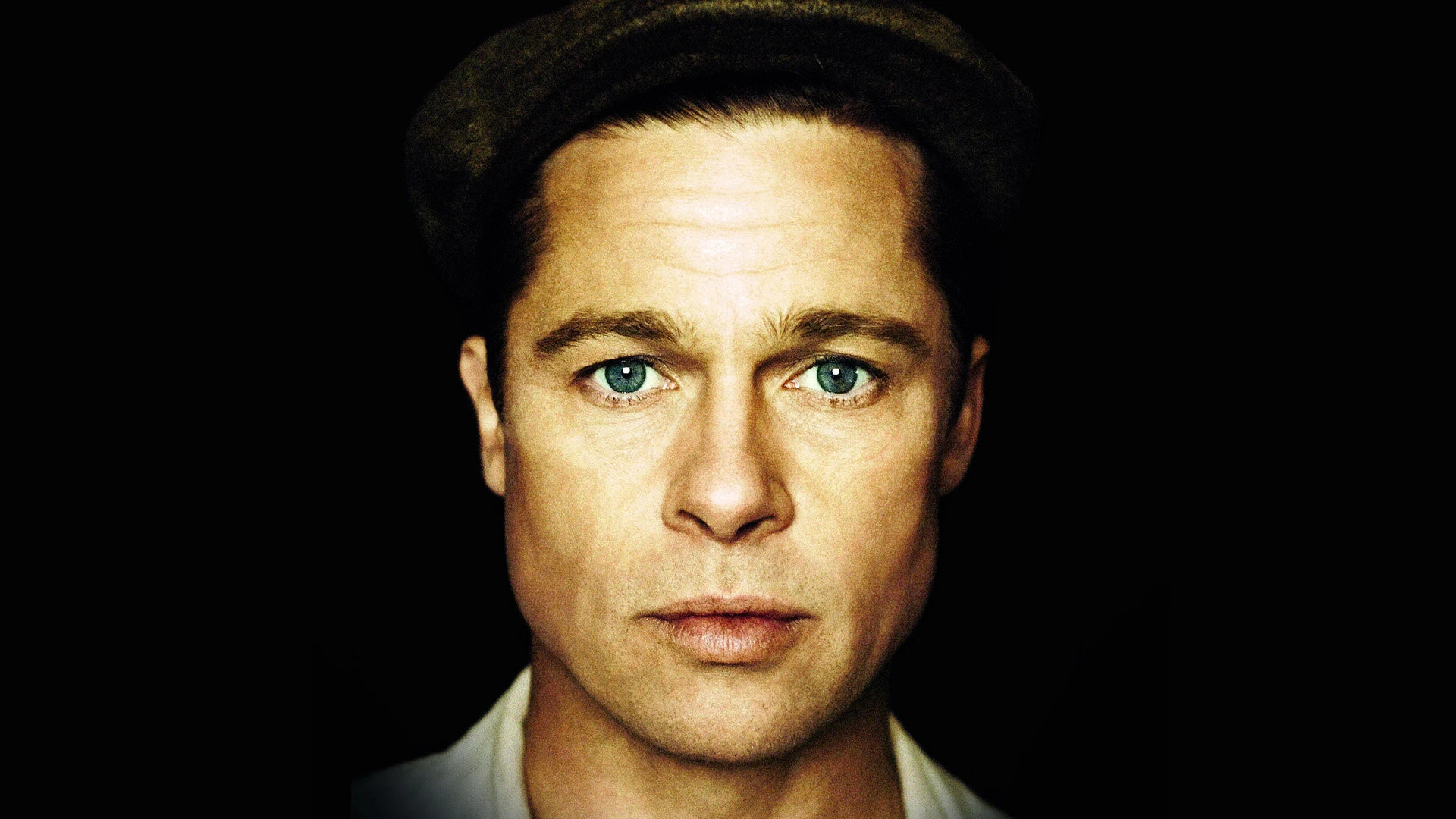
It is a weird feeling. Watching a grown man turn into a toddler. Even weirder when you realize that toddler has the mind of an old man who is slowly losing his grip on a lifetime of memories. David Fincher’s 2008 masterpiece, The Curious Case of Benjamin Button, doesn't just give us a gimmick. It gives us a countdown. By the time we reach Benjamin Button the end, the whimsical "what if" of the premise has curdled into something much more grounded and, honestly, pretty devastating.
People often forget how long that movie is. It’s a sprawling 166 minutes. But those last fifteen minutes? They carry the weight of the entire three hours. We see the biological reversal hit its logical, cruel conclusion. Benjamin isn't just getting smaller; he’s unravelling.
The Biology of Forgetting: What Actually Happens to Benjamin?
In the final act, Benjamin returns to New Orleans. He’s a teenager now, played by a younger actor but carrying the soul of Brad Pitt’s performance. He’s wandering. He’s confused. When he finds Daisy (Cate Blanchett) again, he doesn't fully know who she is. This is where the movie shifts from a fantasy romance into a literal exploration of dementia, just framed through a supernatural lens.
Think about it.
Most people focus on the physical side. They see the de-aging CGI—which, for 2008, was absolutely boundary-breaking—and they marvel at how he looks. But the real horror is the cognitive decline. As Benjamin’s body grows younger, his brain is essentially "un-learning" the world. He is experiencing a form of infantile amnesia in reverse. He’s a child who has lived a century, yet he can’t remember the woman he loved or the daughter he left behind to protect.
Daisy takes him in. It’s a full-circle moment that mirrors how Queenie took in the "old" infant Benjamin at the start of the film. She cares for him as he moves through his "childhood" years. It’s a heavy, silent sequence. There’s a specific shot where a pre-teen Benjamin looks at Daisy with a flicker of recognition, but it’s gone in a second. He’s a stranger in his own history.
Breaking Down Benjamin Button the End: That Final Nursing Home Scene
The actual "end" happens in a nondescript room. It’s 2003. Benjamin is an infant. But he isn't a normal infant. If you look closely at the makeup and the way Fincher lights those scenes, there’s an eerie, ancient quality to his eyes. He looks like a baby, but he breathes with the exhaustion of a man who has seen the world.
Daisy is old now. Very old. She’s holding him.
She mentions in her narration that he looked at her right before he died. He knew. In that split second, the biological clock and the soul’s timeline aligned one last time. He dies in her arms, a newborn who has finished his race. It’s a paradox that shouldn't work emotionally, but because we’ve sat through his entire life—the war, the clockmaker, the affair in Russia—it feels earned.
Why does this ending stick?
Honestly, it’s because it rejects the "happily ever after" trope. Usually, in movies about time or magic, the protagonist finds a way to break the curse. Benjamin doesn't. He just lives it. The end of the movie is a reminder that regardless of which direction you travel, the destination is the same. Static. Nothingness. Dust.
The Symbolism of the Backwards Clock
We have to talk about Mr. Gateau’s clock. The one that started it all. Throughout the film, it hangs in the train station, ticking backward. It was built by a blind man who lost his son in the Great War; he wanted a clock that would turn back time so the boys could come home and live their lives.
At the very end of the movie, the clock is replaced by a digital one. The old, mechanical, backward-ticking clock is moved to a warehouse. As Hurricane Katrina hits—the framing device for the entire story—the warehouse floods.
The clock keeps ticking under the water.
This is the most "Fincher" moment in the whole film. It’s cynical but poetic. It suggests that while Benjamin’s specific journey is over, the relentless, chaotic flow of time doesn't care. The water rises. The old is buried. The digital age takes over. It’s a brutal metaphor for how history is eventually submerged by the present.
What Most People Get Wrong About the Ending
A lot of viewers walk away thinking Benjamin "became a baby and then disappeared." That’s not quite it. He died. Biologically, his heart stopped. He didn't vanish into a "pre-embryo" state or blink out of existence. He suffered the same fate as every other character in the film—Captain Mike, Queenie, Thomas Button. They all died.
The movie is a study of grief.
If you watch the ending closely, the montage of characters we’ve met—the woman who swam the channel, the man who was hit by lightning seven times—reminds us that everyone has a "thing." Benjamin’s "thing" was his direction. But his end was just as final as the man hit by lightning.
Key Takeaways from the Final Act:
- The reversal of roles: Daisy becomes the mother figure to her former lover. It’s a messy, uncomfortable, yet beautiful subversion of their romance.
- The lack of dialogue: The final minutes are largely told through narration and visual cues. Words become useless when Benjamin loses the ability to speak.
- The Katrina connection: The storm isn't just a backdrop. It represents the "cleansing" of the past. As Daisy dies in the hospital and the storm rages, the story of Benjamin Button finally leaves the world of the living and enters the world of legend.
Real-World Impact: How the Ending Aged
In the years since its release, The Curious Case of Benjamin Button has been compared to Forrest Gump (they share the same screenwriter, Eric Roth). But while Gump is about participating in history, Button is about the tragedy of losing it.
Critics in 2008 were divided on the ending. Some felt it was too sentimental. Others, like Roger Ebert, recognized it as a profound meditation on mortality. He gave it four stars, noting that the film is "wonderfully made and very moving." He was right. It’s a technical marvel, but the emotional core is what keeps people searching for "Benjamin Button the end" decades later.
The film deals with what the French call la douleur exquise—the exquisite pain of loving someone you can never truly be with. At no point in their lives were Benjamin and Daisy truly "synced" except for a brief window in the middle. The end is the final divergent point.
Actionable Insights for Fans and Cinephiles
If you’re revisiting the film or trying to process that final sequence, there are a few things you should do to truly appreciate the craftsmanship:
- Watch the "Lightning Man" montage again. It seems like comic relief, but it’s actually the key to the ending. It’s about how we all have a limited number of "strikes" or moments before we’re gone.
- Compare the first and last frames. The film begins with a birth that looks like death and ends with a death that looks like birth. The visual symmetry is intentional.
- Read the original F. Scott Fitzgerald short story. You might be surprised. The movie is a massive departure. In the book, Benjamin is born as a 70-year-old man who can talk and smoke cigars immediately. The ending is much darker and less romantic.
- Listen to Alexandre Desplat’s score. The track "Benjamin and Daisy" during the final scenes uses a recurring motif that slows down as the movie progresses, mimicking a heartbeat that is eventually silenced.
The ending isn't about the gimmick of backward aging. It’s about the fact that Daisy stayed. In a world where everything was literally moving in the wrong direction for Benjamin, she provided the only constant. When you look at it that way, the end isn't a tragedy of science—it’s a testament to the endurance of human connection in the face of certain loss.