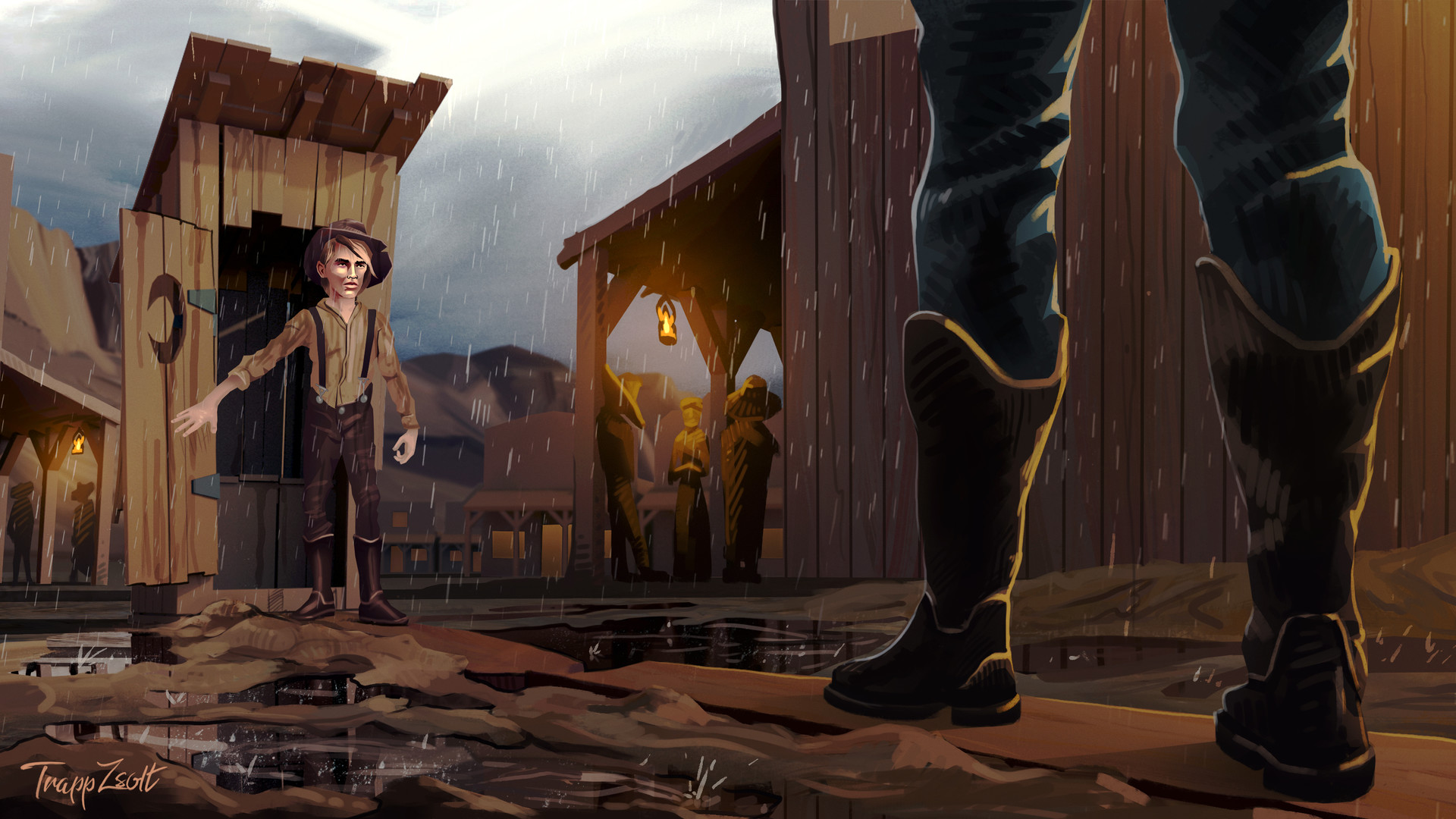
Cormac McCarthy didn’t just make it up. When people read Blood Meridian, they usually assume the scalp-hunting nightmare is just some hyper-violent fever dream of a legendary novelist. It isn't. The Blood Meridian Glanton Gang was a terrifying, historical reality that operated along the U.S.-Mexico border during the mid-19th century. Honestly, the real history is almost harder to stomach than the book.
John Joel Glanton was a real man. He was a Tennessean, a Texas Ranger, and a guy who basically turned mass murder into a business model. You’ve probably heard of the "Judge" too—Judge Holden. While scholars argue about whether the literal seven-foot-tall, hairless philosopher-demon existed, a man named Samuel Chamberlain swore he met him. Chamberlain’s memoir, My Confession: Recollections of a Rogue, serves as the primary historical spine for McCarthy’s masterpiece. Without Chamberlain’s sketches and stories, we might have forgotten that these men actually walked the earth, trading human hair for gold.
Who was John Joel Glanton?
Glanton wasn't some refined outlaw. He was a veteran of the Mexican-American War who found himself in San Antonio with a nasty reputation and a penchant for violence. In 1849, the Mexican government was desperate. They had a "problem" with Apache raids. Their solution? The scalp bounty laws.
They offered cash for the scalps of hostile Indians.
Glanton saw an opening. He gathered a group of drifters, outcasts, and former soldiers—the core of what we now call the Blood Meridian Glanton Gang. They weren't heroes. They were mercenaries. They started out doing what they were hired for, but greed is a funny thing. Eventually, the gang realized that the Mexican authorities couldn't really tell the difference between an Apache scalp and the scalp of a peaceful Mexican civilian.
It was easier to kill the people who were supposed to be their employers.
The gang started "harvesting" anyone they came across. Mexican citizens, peaceful agricultural tribes, travelers—it didn't matter. As long as the hair was dark, it was worth money in Chihuahua or Sonora. This wasn't some noble western adventure. It was a traveling slaughterhouse. McCarthy’s prose captures the grime, but the historical records from the era describe a group of men who had completely severed their ties to any form of human morality.
The Mystery of Judge Holden
Everyone wants to talk about the Judge. In Blood Meridian, he’s an ontological force of nature, a giant who never sleeps and claims he will never die. Was there a real Judge Holden in the Blood Meridian Glanton Gang?
Samuel Chamberlain says yes.
In My Confession, Chamberlain describes Holden as a massive, highly educated man who was an expert in botany, mineralogy, and music. He was also a prolific murderer. Chamberlain wrote that Holden was "the most cool-blooded villain that ever went unhung." While some historians like William H. Goetzmann suggest Chamberlain might have exaggerated—or that Holden was a composite character—the core idea of a sophisticated, intellectual monster leading a pack of feral killers is rooted in primary source material.
Think about that.
A man who could speak multiple languages and play the fiddle beautifully was also allegedly involved in some of the most heinous crimes on the frontier. It’s that duality that makes the gang so disturbing. They weren't just "dumb" criminals. They were led by men who knew exactly what they were doing and chose to do it anyway.
The Yuma Massacre and the End of the Road
The gang's luck eventually ran out at the Yuma crossing on the Colorado River. This is where the story shifts from roving bandits to a full-blown geopolitical mess.
Glanton and his men seized control of a ferry. They didn't just run it; they monopolized it. They killed the locals, harassed travelers, and basically turned the river crossing into a private extortion racket. They even destroyed a rival ferry operated by the local Yuma (Quechan) Indians.
You can't do that forever.
On April 23, 1850, the Quechan tribe fought back. They ambushed the gang while most of them were drunk or asleep. Glanton was killed—reportedly his head was split open with a tomahawk. Most of the gang was wiped out in a single afternoon of brutal retribution.
- The Quechan didn't just kill them; they ensured the gang would never return.
- Only a few survivors, like Samuel Chamberlain, managed to escape and tell the tale.
- The "Judge" disappeared into history, leaving behind a legacy of blood and a few sketches in a veteran's diary.
Why the Glanton Gang Still Matters Today
Most people look at the Old West through a lens of John Wayne movies or romanticized outlaws. The Blood Meridian Glanton Gang shatters that. They represent the "dark side" of Manifest Destiny—the realization that when law and order vanish, the people who thrive are often the ones with the least amount of conscience.
Historian Ralph A. Smith spent years documenting the scalp industry, and his research proves that the gang wasn't an anomaly. There were dozens of these "contractors" operating in Northern Mexico. Glanton was just the most famous because of how brazen and depraved he was.
When you read McCarthy’s work, you aren't just reading a novel. You're reading a distorted, amplified version of a real historical period where human life was literally a commodity. It’s a reminder that history isn't always a progress bar moving toward "better." Sometimes, it’s just a circle of violence in a desert that doesn't care who lives or dies.
How to Fact-Check the History Yourself
If you’re skeptical—and you should be—you don't have to take a novelist's word for it. You can actually look into the archives.
- Read "My Confession" by Samuel Chamberlain. This is the source text. It’s a wild read, full of 19th-century slang and vivid watercolors painted by Chamberlain himself.
- Look up the Chihuahua Scalp Bounties. Search for the "Ley de Quintal" or the 1849 bounty laws. You’ll find the actual prices the government paid for the hair of men, women, and children.
- Research the Yuma Crossing. The National Park Service and various Arizona historical societies have detailed records of the conflict at the ferry and the subsequent military response.
- Check out William H. Goetzmann's essays. He was a Pulitzer Prize-winning historian who did the heavy lifting to verify which parts of the Glanton story were real and which were legend.
The reality of the Blood Meridian Glanton Gang is a dark chapter in North American history. It’s uncomfortable, it’s violent, and it’s deeply cynical. But ignoring it doesn't make it go away. It just means we don't understand the full scope of what happened on the frontier when the world was still being mapped.
To truly understand the history, start by reading the official records of the Arizona Territorial Legislature regarding the Yuma incident. From there, trace the gang’s path through Chihuahua to see how a group of state-sponsored mercenaries became the very monsters they were hired to hunt. Examining the primary source documents from the Mexican archives provides a chilling perspective on how "civilized" governments facilitated this era of professionalized violence.