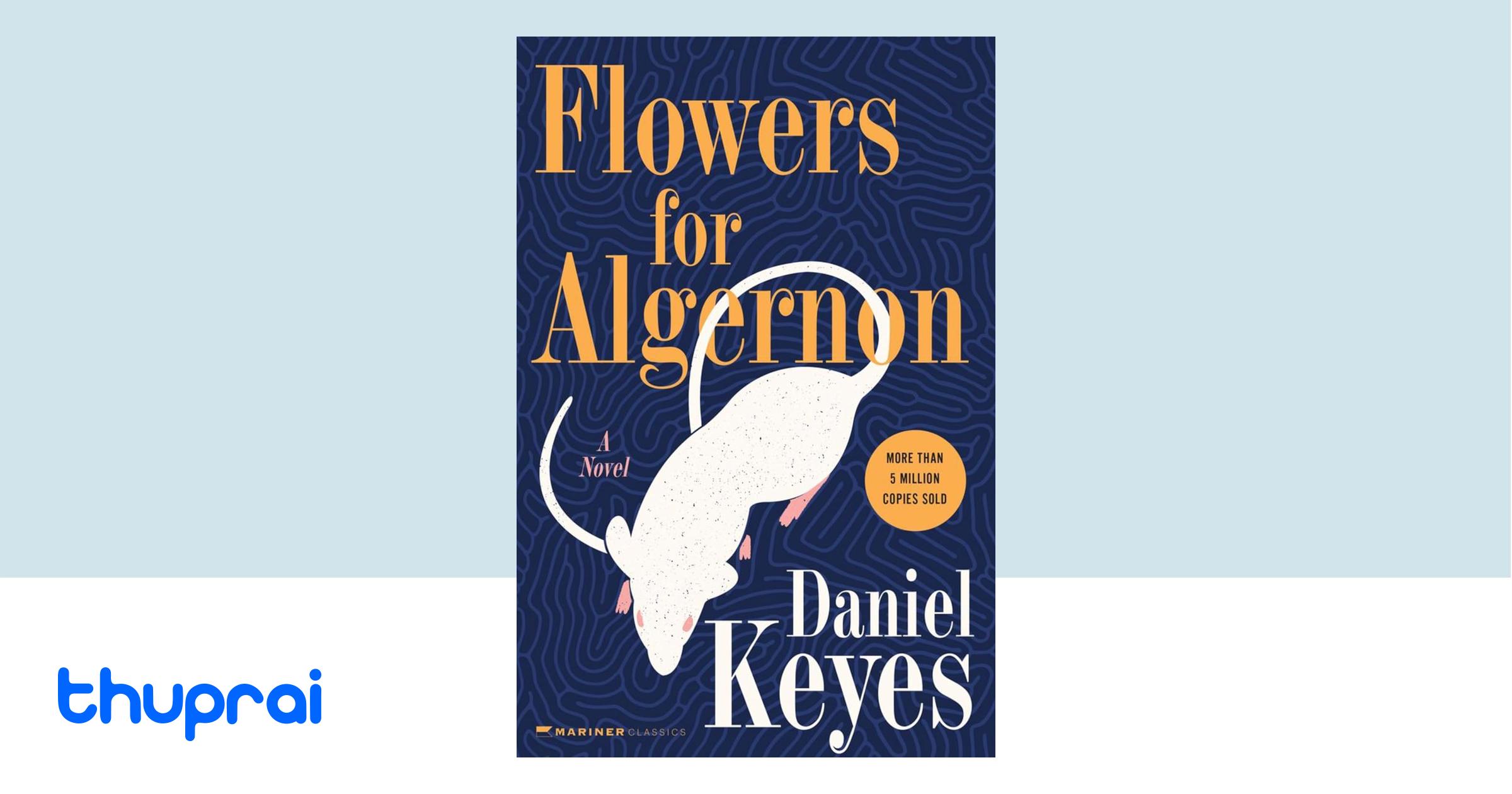
Daniel Keyes wrote a masterpiece. That’s just a fact. When Flowers for Algernon hit shelves as a novel in 1966, after its initial Hugo-winning run as a short story, it basically broke everyone’s heart. Then Hollywood called. But here is where it gets a little messy for some fans because the Flowers for Algernon film isn’t actually called Flowers for Algernon. Most people looking for it today are actually searching for the 1968 movie titled Charly. It stars Cliff Robertson, who, weirdly enough, had to fight tooth and nail to get the role even though he’d already played the character on TV.
It’s a strange bit of cinema history.
The story follows Charly Gordon. He has an IQ of around 68. He works a menial job, gets teased by people he thinks are his friends, and attends night classes to learn how to read. Then comes the surgery. It's an experimental procedure previously tested on a lab mouse named Algernon. It works. It works too well. Charly’s intelligence sky-rockets, eventually surpassing the scientists who "created" him. But the tragedy isn't just in the regression that follows; it's in the isolation of being too smart for a world that never respected you when you were "dumb."
The 1968 Classic and the Cliff Robertson Factor
If you’re talking about the definitive Flowers for Algernon film, you are talking about Charly. Ralph Nelson directed it. It’s very 1960s. You’ve got split screens, psychedelic montages, and a groovy Ravi Shankar score that feels like it belongs in a different movie entirely.
Cliff Robertson is the reason this movie exists in the collective memory. He actually bought the rights to the story himself because he was so attached to the character after playing him in a 1961 episode of The United States Steel Hour titled "The Two Worlds of Charlie Gordon."
Hollywood didn’t want him. They wanted a bigger star. Robertson held his ground. He won the Academy Award for Best Actor for the performance, which is legendary, though it remains controversial. Some critics felt his portrayal of Charly’s initial state was a bit too "theatrical" by modern standards. But when he transitions into the hyper-intelligent, cynical, and sophisticated Charly? That’s where he shines. You can see the weight of the world settling into his eyes. He stops being a person people pity and starts being a person people fear.
The movie deviates from the book in a few ways. The book is epistolary—it’s made of progress reports written by Charly. Film can’t really do that without a constant, annoying voiceover. So, the movie focuses heavily on his relationship with his teacher, Alice Kinnian, played by Claire Bloom. Their romance is the engine of the film, whereas the book spends a lot more time on Charly’s fractured memories of his mother and sister. Honestly, the movie is a bit lighter than the book. The book is devastating. The movie is "merely" heartbreaking.
Why We Keep Remaking This Story
There isn't just one Flowers for Algernon film. While the 1968 version is the most famous, there was a 2000 television movie starring Matthew Modine.
Modine’s take is different. It’s quieter. It feels more like a modern medical drama. It lacks the 60s flair of the Robertson version, which makes it easier for some people to watch, but it also loses some of that raw, experimental energy. It sticks a bit closer to the narrative beats of the novel, but it’s hampered by a lower budget and that distinct "made-for-TV" lighting that plagued the turn of the millennium.
Then you have the international versions. The Japanese have tackled this story multiple times. Algernon ni Hanataba o has been adapted as a drama series in 2002 and again in 2015 starring Yamashita Tomohisa. These versions often lean harder into the "Flower" symbolism and the tragic romance. They explore the social stigma of intellectual disability in a way Western versions sometimes gloss over.
Why do we keep coming back to it?
Because the central premise is a universal nightmare. We are all terrified of losing our minds. Whether it's through aging, injury, or in Charly’s case, the failure of a miracle cure, the idea of "going back into the dark" is a primal fear.
The Controversy of Representation
We have to talk about how these films age.
Watching the Flowers for Algernon film today is a complicated experience. In 1968, the depiction of intellectual disability was... well, it was of its time. Modern audiences often find the "before" segments of Charly’s transformation difficult to watch. There is a fine line between empathy and caricature.
Critics like Roger Ebert noted at the time that Robertson’s performance was "extraordinarily difficult," but today’s disability advocates often point out that these roles almost always go to neurotypical actors looking for an Oscar. It’s a trope often called "cripping up."
However, the film still holds value because it forces the viewer to confront their own biases. When Charly is "slow," the scientists treat him like a lab specimen. When he is a genius, they treat him like a rival or a freak. Nobody treats him like a man. That’s the core of Keyes’ message, and the 1968 film nails that discomfort. You feel dirty watching the bakery workers mock him. You feel even worse when the genius Charly realizes they weren't his friends.
The Science of the Fiction
Is the surgery in the Flowers for Algernon film real?
No. Not exactly. But it’s based on real-world concepts of neuroplasticity and the chemical enhancement of cognitive function. In the 1960s, we were obsessed with the idea that we only used 10% of our brains (a total myth, by the way). The movie plays into the fantasy that there is a "hidden" person inside someone with an intellectual disability just waiting for a chemical key to unlock them.
Today, we look at things like CRISPR or Nootropics. We talk about Elon Musk’s Neuralink. The "Algernon effect"—the idea that an artificial increase in intelligence will inevitably be followed by an equal and opposite decline—is a cautionary tale that tech ethics professors still reference.
If you watch the movie, pay attention to the scene where Charly attends the scientific convention. He realizes the lead researcher’s math is wrong. He realizes he is smarter than the people who "fixed" him. It’s a moment of pure hubris. It’s Frankenstein, but the monster is just a guy who wants to be able to read.
Key Differences Between the Movie and the Book
If you’ve only seen the Flowers for Algernon film, you are missing some of the darkest parts of the story.
- The Family Dynamics: The novel spends a lot of time on Charly’s mother, Rose. She was ashamed of him. She tried to "beat" the disability out of him. The movie largely ignores this to focus on the romance with Alice.
- The Regression: In the book, Charly’s decline is documented through his writing. The spelling gets worse. The punctuation disappears. It’s a slow-motion car crash. On film, they have to rely on Cliff Robertson acting "simpler" again, which is much more jarring and less subtle.
- The Ending: The book ends with Charly sending himself to the Warren State Home so no one he knows has to watch him decline further. He asks someone to "put some flowers on Algernon's grave in the backyard." The movie ends on a playground, with a final shot that is more of a poetic "freeze frame" on his loss of self.
What Most People Get Wrong About Charly
People often think of this as a "sad movie about a mouse."
It’s actually a horror movie about the human condition. The mouse, Algernon, is a mirror. When Algernon stops eating, when Algernon becomes aggressive, when Algernon dies—Charly is looking at his own obituary.
Another misconception is that the movie is a "feel-good" story about overcoming odds. It’s the opposite. It’s a critique of a society that only values people based on their utility and intelligence. Charly Gordon was a kind, happy person before the world tried to "fix" him. The tragedy isn't that he loses his intelligence; it's that he gains the awareness of how cruel the world actually is.
How to Watch it Today
Finding the 1968 Flowers for Algernon film can be a bit of a hunt. It isn't always on the major streaming platforms like Netflix or Max. You often have to find it on niche classic film services or buy a physical copy.
If you’re looking for the 2000 version, it pops up on YouTube or Prime Video fairly often.
But honestly? If you want the full experience, you should watch the 1968 film and then immediately read the book. The film gives you the visual of the era—the loneliness of the city, the coldness of the labs—and the book gives you the internal monologue that no camera can ever truly capture.
Final Steps for the Curious
If you’re interested in exploring the themes of the Flowers for Algernon film further, there are a few specific things you should do to get the full context of this story's impact on culture.
- Compare the "Progress Reports": Read the first and last chapters of Daniel Keyes' novel. Observe how the prose itself degrades. This is something the film tries to mimic through acting, and seeing the source material makes the actor's job look even more impressive.
- Research the "Algernon Effect": Look into how this term is used in psychology and science fiction to describe a temporary peak followed by a permanent decline. It has become a legitimate shorthand in academic circles.
- Watch the "United States Steel Hour" Version: If you can find clips of Cliff Robertson’s original 1961 television performance, compare it to his 1968 Oscar-winning role. It’s a fascinating look at how an actor evolves with a character over seven years.
- Explore the Soundtrack: Listen to Ravi Shankar’s work for the 1968 film. It’s an unconventional choice for a Western drama and adds a layer of "otherness" to Charly’s experience that is genuinely unique in cinema history.
The story of Charly Gordon remains a permanent fixture in our culture because it asks a question we still can't answer: Is it better to be blissfully unaware, or to see the truth and lose it all? The film doesn't give you an easy answer. It just leaves you sitting in the dark, thinking about a mouse and a man who both ran a race they could never really win.