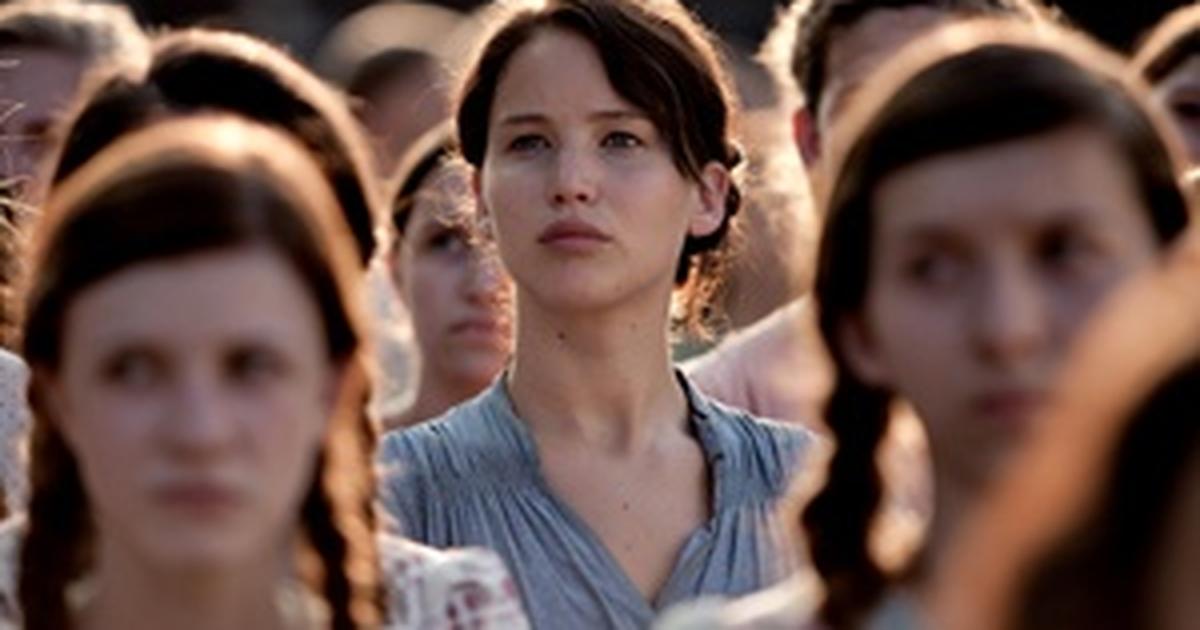
When Jennifer Lawrence showed up to audition for Katniss Everdeen, she wasn't exactly looking like a girl from District 12. She was a blonde-haired, blue-eyed teenager from Kentucky who had just come off an Oscar nomination for Winter’s Bone. But honestly, she looked too healthy. Fans were furious. The internet back in 2011 was a wild place, and people were genuinely convinced that The Hunger Games casting was going to ruin one of the most beloved book series of the decade. They wanted someone who looked like they were actually starving. They wanted a literal waif.
Director Gary Ross didn't care. He saw something in her eyes that nobody else had—this raw, terrifyingly quiet strength.
It’s weird to think about it now. You probably can't even imagine anyone else wearing that mockingjay pin. But the journey to find the residents of Panem was messy, controversial, and surprisingly strategic. It wasn't just about finding good actors; it was about building a franchise that could rival Twilight without falling into the "pretty people in a triangle" trap. Casting director Debra Zane had a massive mountain to climb. She had to find a group of kids who could play "child soldiers" without making it feel like a high school play.
The Katniss Dilemma and the Girls Who Almost Had It
Everyone in Hollywood wanted this role. It was the role of a generation. Shailene Woodley, Hailee Steinfeld, Abigail Breslin, and Saoirse Ronan all reportedly threw their hats in the ring. Can you imagine Saoirse Ronan as Katniss? It would have been a totally different movie—more ethereal, maybe a bit more cerebral.
But Jennifer Lawrence was different. Gary Ross famously said that he only needed to see her audition once to know. He described her as "the most talented person I've ever seen." Still, the backlash was brutal. People called her "too old" because she was 20 playing a 16-year-old. They called her "too white" because the book describes Katniss as having olive skin and dark hair.
The production had to pivot. They dyed her hair dark, they kept her makeup minimal, and they leaned into her physicality. Lawrence did her own stunts, climbing trees and running through the woods of North Carolina until she basically became the character. It’s a classic case of why The Hunger Games casting worked: it prioritized the "vibe" and the internal grit over a literal 1-to-1 physical match with the book's description.
Peeta, Gale, and the "Bread Boy" Controversy
If the Katniss choice was controversial, the casting of Peeta Mellark and Gale Hawthorne was a full-on war zone. Josh Hutcherson and Liam Hemsworth were the winners, but the path there was cluttered with almost-Peetas.
Evan Peters? He auditioned.
Hunter Parrish? Fans campaigned for him for months.
Lucas Till? He was in the running too.
Josh Hutcherson won because of his "Peeta-ness." That’s the only way to describe it. He had this innate kindness that didn't feel fake. During the screen tests, the chemistry between him and Lawrence was undeniable. They felt like two people who had known each other since they were five, which is exactly what the story required. Gale was trickier. Liam Hemsworth was basically an unknown at the time, mostly known as Chris Hemsworth’s younger brother. He was tall, brooding, and looked like he could actually survive in a coal mine.
The irony? In real life, the three of them became a chaotic trio of best friends. There was no brooding. There were just nerf gun fights and inside jokes.
The Supporting Cast: When Talent Trumps Fame
While the kids were the stars, the adults in the room were where the real prestige lived. Think about Woody Harrelson as Haymitch Abernathy. Most people expected a grizzled, older man—maybe someone like John C. Reilly. But Woody brought this twitchy, alcoholic energy that felt dangerous yet heartbreaking.
Then you have Stanley Tucci.
Honestly, Caesar Flickerman might be the best bit of casting in the whole franchise. Tucci took a character that could have been a cartoon and made him a symbol of the Capitol’s soul-sucking vanity. He didn't just play a host; he played a man who was complicit in murder but made it look like a Saturday night variety show.
- Elizabeth Banks as Effie Trinket: She was unrecognizable. Banks actually campaigned for the role, sending the directors ideas on how Effie should move and talk.
- Donald Sutherland as President Snow: He wasn't even offered the part initially. He read the script, loved it, and wrote a letter to Gary Ross about why he should play the villain. He saw it as a political film, not a teen movie.
- Lenny Kravitz as Cinna: This was a wild card. A rock star? As a stylist? But Kravitz played Cinna with such understated warmth that he became the emotional heart of the first film.
Why the Prequel Casting Changed the Game Again
Fast forward to The Ballad of Songbirds and Snakes. The stakes were different. We weren't looking for heroes; we were looking for a villain in the making. Tom Blyth as a young Coriolanus Snow was a masterclass in subtlety. He had to make us root for a man we knew would eventually become a tyrant.
And then there’s Rachel Zegler as Lucy Gray Baird.
If Katniss was the "girl on fire" who didn't want to be there, Lucy Gray was the performer who knew exactly how to work a crowd. The casting here had to be musical. Zegler, coming off West Side Story, brought a folk-country grit to the role that separated her completely from Jennifer Lawrence’s legacy. It was a smart move. They didn't try to find "the next Katniss." They found her opposite.
The Misconceptions About Diversity in Panem
There’s a lot of talk about how the films handled race. In the books, Suzanne Collins is somewhat vague but implies that District 11 is largely populated by people of color. When Amandla Stenberg was cast as Rue, a small but vocal group of "fans" lost their minds. It was an ugly moment in the fandom’s history.
But Amandla was perfect. Her performance was so devastating that it forced the audience to confront the horror of the Games. It wasn't just about a "character" dying; it was about a child being murdered for sport. The casting of the District 11 tributes was a deliberate choice to reflect the systemic oppression themes that Suzanne Collins baked into the novels.
What You Can Learn from the Panem Scouting Process
If you're looking at The Hunger Games casting from a professional or enthusiast lens, there are a few takeaways that apply to any creative project.
First, chemistry is more important than solo talent. You can have the best actors in the world, but if they don't look like they belong in the same universe, the movie fails.
Second, listen to the actors who "get" the subtext. Donald Sutherland got the job because he understood the political allegory. Elizabeth Banks got the job because she understood the tragedy behind the makeup.
Third, don't be afraid to go against the "book look" if the soul of the character is there. Jennifer Lawrence didn't look like Katniss, but she was Katniss.
Actionable Insights for Fans and Creators
If you are following the development of future projects in this universe (like the upcoming Sunrise on the Reaping), here is how to track the casting news effectively:
- Check the "First Look" photos, not just the names. The way a production styles an actor tells you more about their interpretation than a press release.
- Look for theater backgrounds. Many of the best Panem citizens (like Sam Claflin as Finnick) came from strong acting backgrounds where they learned to balance the "theatrical" world of the Capitol with the "grounded" world of the Districts.
- Follow the casting directors. Debra Zane and her team have a specific "eye" for grit. If you see their names on a project, expect actors who can handle intense, physical roles.
The legacy of these films isn't just the box office numbers. It’s the fact that these actors became synonymous with their roles. That is the gold standard of casting. It turns a movie into a cultural touchstone. It makes a fictional world feel like a real place you've visited, even if you never want to go back to the arena.
The process of finding the right faces for Panem was a mix of lucky breaks, intense research, and the bravery to ignore the loudest voices on the internet. It reminds us that sometimes, the person you didn't expect is exactly the person you need to lead a revolution. By the time the credits roll, the hair color and the age don't matter anymore. All that matters is whether you believe they’d survive the night.