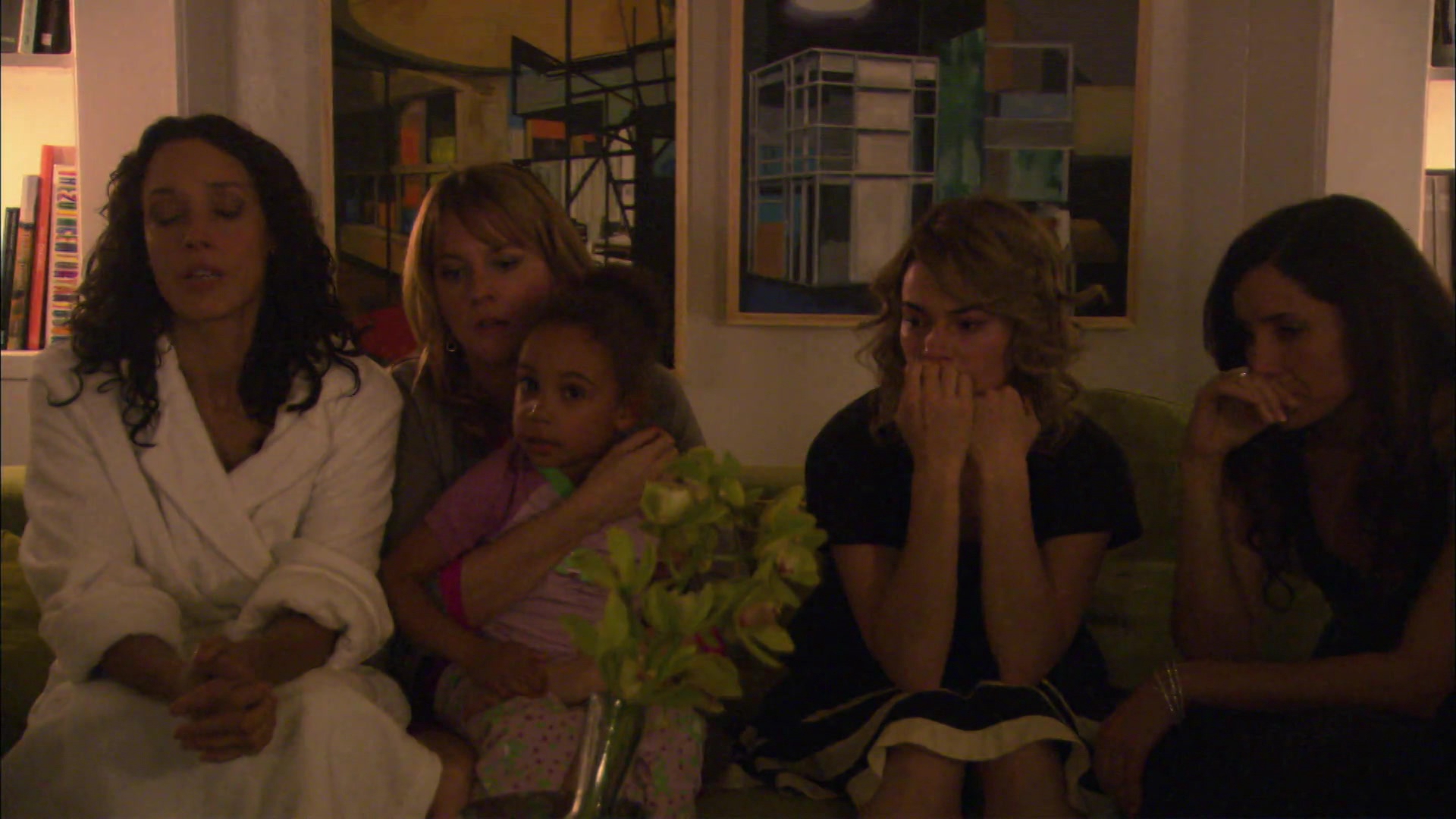
It was the pool heard 'round the world. Honestly, if you were watching television in 2009, you probably remember the sheer, unadulterated chaos of how The L Word season 6 began. We didn’t get a slow burn. We got a corpse. Within the first few minutes of the premiere, "Long Night's Journey Into Day," we see Jenny Schecter’s body being pulled from Bette and Tina’s swimming pool.
It was a bold move. Maybe too bold? Showrunner Ilene Chaiken decided to turn the final outing of a groundbreaking lesbian drama into a "whodunnit" murder mystery. Fans were polarized. Actually, "polarized" is a polite way of saying some people were genuinely livid. The shift from a character-driven soap to a noir-style investigation felt jarring to a lot of us who had spent years following the messy, beautiful lives of these women in West Hollywood.
But here’s the thing about The L Word season 6: despite the weird pacing and the controversial ending, it remains a fascinating time capsule of late-2000s queer culture. It was the end of an era. It was messy. It was stylish. It was, in many ways, exactly what the show had always been—over the top.
Why the Murder Mystery Format Frustrated Fans
Why did Chaiken do it? According to various interviews over the years, the goal was to give every character a reason to hate Jenny. This isn't hard to do, let’s be real. By the time we hit the final season, Jenny Schecter (played with chaotic brilliance by Mia Kirshner) had evolved from the wide-eyed newcomer of season 1 into a full-blown Hollywood villain.
She stole Alice’s treatment idea. She treated her assistants like garbage. She manipulated Shane—the one person who truly loved her. The season was structured as a series of flashbacks leading up to that fatal night at the party. Every episode was designed to give a different character a "motive." Bette had a motive because Jenny knew about her potential infidelity. Alice had a motive because of the stolen script. Even the sweet, granola-eating Helena Peabody had reasons to want Jenny gone.
The problem? It turned the final eight episodes into a game of Clue rather than a proper send-off. We wanted to see Bette and Tina finally find peace. We wanted to see if Shane could ever actually commit. Instead, we spent a lot of time watching Detective Duffy (played by Lucy Lawless) ask questions that never really led anywhere.
The Shane and Jenny Relationship: A Train Wreck We Couldn't Exit
We have to talk about the Shane and Jenny of it all. This was easily the most controversial pairing in the show's history. Putting the show's resident heartthrob with its most hated character felt like a personal attack on the fandom.
It started at the end of season 5 and dominated much of The L Word season 6. Looking back, there’s a strange, dark chemistry there. Mia Kirshner and Katherine Moennig are great actors, so they sold the hell out of it, but the power dynamic was deeply uncomfortable. Jenny was spiraling. She was paranoid, possessive, and increasingly detached from reality. Shane, ever the "fixer," stayed because she felt she was the only one who could keep Jenny grounded.
It was toxic. It was also incredibly realistic in how trauma-bonding works in tight-knit social circles. You’ve probably seen it in your own life—that one couple that everyone knows is doomed, but you just have to watch them implode from the sidelines.
The Bright Spots Amidst the Chaos
It wasn't all grim pool deaths and toxic relationships. Season 6 actually gave us some of the best Bette and Tina (TiBette) moments in the series. After years of cheating, breakups, and custody battles, they finally seemed to figure it out. Their decision to adopt a second child and move to New York felt like a earned "happily ever after."
Jennifer Beals and Laurel Holloman had this effortless shorthand by this point. Watching them navigate the stresses of the adoption process provided a much-needed emotional anchor. While the rest of the house was falling apart, Bette and Tina were finally building something solid.
And then there was the "Lez Girls" fallout. The meta-narrative of the movie-within-the-show reached its peak here. The way the industry treated queer stories—the watering down of the plot, the casting of straight actors to play "palatable" lesbians—was a sharp critique of 2000s Hollywood. It’s funny because The L Word itself was often criticized for the same things. It was self-aware in a way that often went overlooked.
The Finale That Wasn't a Finale
The final episode, "Last Word," is notorious. If you haven't seen it in a decade, let me refresh your memory: it ends with a police line-up. That’s it. No resolution. No arrest. No confession. The screen just fades to black as the characters look into the camera.
For years, this felt like a betrayal. Why build up a murder mystery if you aren't going to solve it?
Ilene Chaiken later revealed that the mystery was never supposed to be solved on the show. There was actually a planned spin-off called The Farm, set in a women's prison, which was supposed to star Famke Janssen and Alice Pieszecki (Leisha Hailey). The pilot was filmed, but Showtime ultimately passed on it. Because the spin-off died, the answer to "Who killed Jenny Schecter?" stayed in limbo for ten years.
It wasn't until the revival, The L Word: Generation Q, premiered in 2019 that we got a definitive answer. In a brief, almost throwaway line of dialogue, it was confirmed that Jenny died by suicide. She drowned in the pool. All that suspense, all those "motives," and it turned out to be the saddest possible ending for a character who had been struggling with her mental health since the pilot.
Technical Legacy and the "Look" of 2009
The aesthetics of The L Word season 6 are wild to revisit. We’re talking about the peak of the "vest over a t-shirt" era. The fashion was heavy on waistcoats, fedoras, and very specific Los Angeles "cool" that has aged... interestingly.
Technically, the show remained a leader in production value for cable dramas. The cinematography in the final season shifted toward a colder, more clinical palette to match the mystery theme. It moved away from the warm, sun-drenched L.A. glow of the earlier seasons. This change in visual tone signaled that the party was over. The stakes had changed.
What Most People Get Wrong About the Final Season
People often say the show "jumped the shark" in season 6. I’d argue it actually stayed true to its core DNA. The L Word was always a soap opera. It was always theatrical. Expecting a grounded, realistic procedural ending was probably a mistake on our part as viewers.
The season wasn't really about a murder; it was about the disintegration of a friend group. When you have a group of friends who have slept with each other, worked together, and lived in each other’s pockets for a decade, things eventually get messy. Jenny was the catalyst for that mess, but she was also the mirror reflecting everyone else's flaws back at them.
Actionable Takeaways for a Rewatch
If you’re planning on diving back into the madness of The L Word season 6, here is how to actually enjoy it without throwing your remote at the TV:
- Watch it as a Satire: If you view the murder mystery as a dark parody of the show's own drama, it’s much more entertaining.
- Focus on the Bette and Tina Arc: Ignore the pool for a second. The way the show handles their growth as a couple is actually some of the best writing in the series.
- Pay Attention to the Guest Stars: This season had some incredible cameos and recurring roles, including Elizabeth Berkley as Bette’s college flame.
- Skip the "The Farm" Context: Don't go looking for the missing pieces in the pilot of the spin-off. Just accept the season as a self-contained piece of experimental, albeit flawed, television.
- The Soundtrack is Still Top-Tier: From Tegan and Sara to Goldfrapp, the music supervision in the final season remained incredible and is worth a dedicated playlist.
Ultimately, the final season of this show remains a cultural landmark. It proved that queer stories could be just as messy, frustrating, and "prestige" as anything else on television. It paved the way for the "Golden Age" of queer TV we’re living in now. Even if the ending left a bitter taste in some people's mouths, you can't deny that we're still talking about it nearly twenty years later. That’s the power of a good (or brilliantly bad) story.
To get the full picture, you really have to look at the season as the end of the "Old Hollywood" queer era before the digital revolution changed how we all communicate and find community. It was the last time a group of friends had to gather in a physical living room to share secrets, rather than just starting a group chat. There's a certain nostalgia in that, even with a body in the pool.