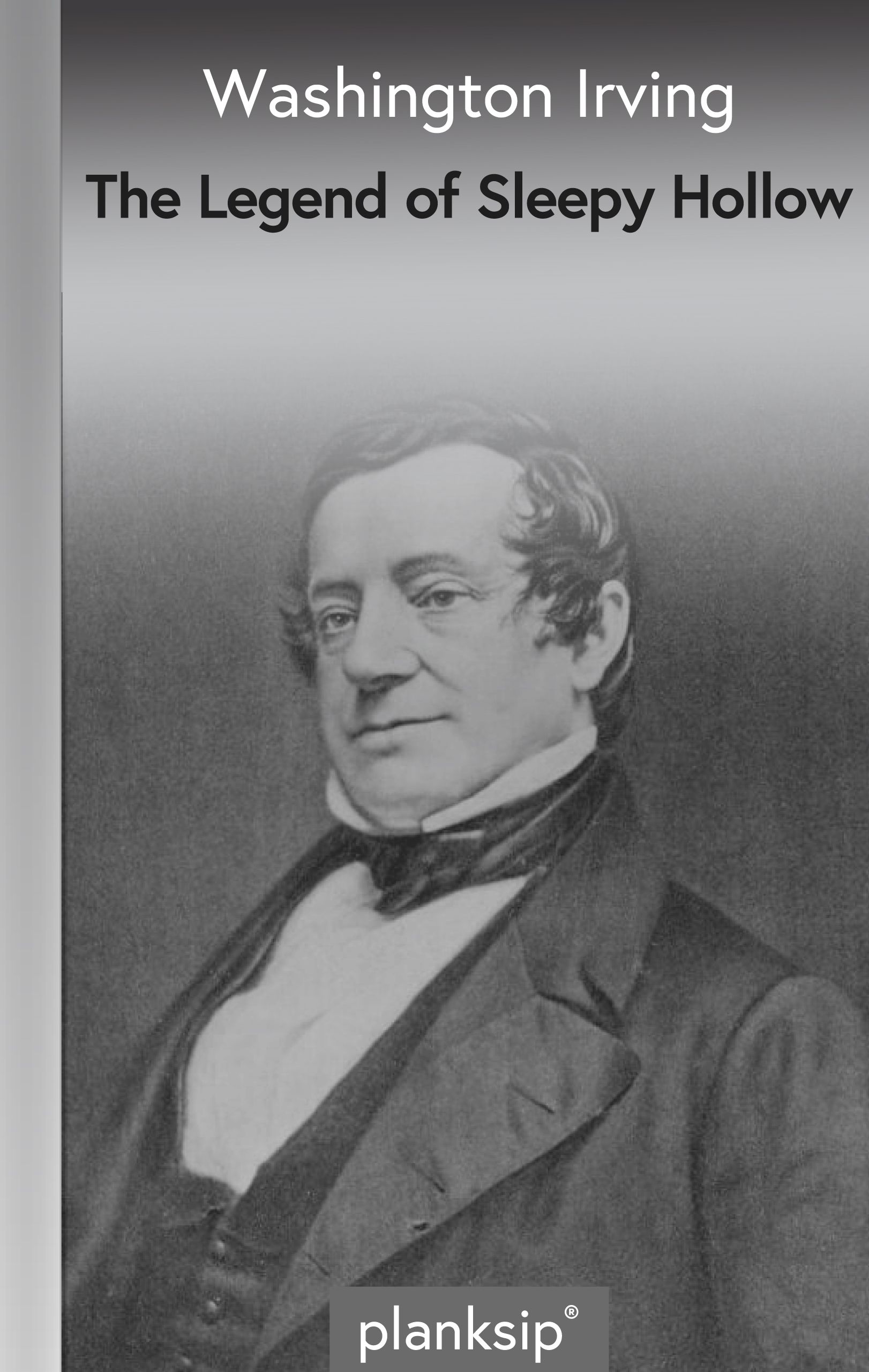
Everyone thinks they know the Headless Horseman. You've probably seen the Disney cartoon with the singing Brom Bones or maybe that moody Johnny Depp movie from the nineties where Ichabod Crane is a weirdly squeamish detective. But honestly? The original The Legend of Sleepy Hollow by Washington Irving is a lot stranger and more cynical than the pop culture versions suggest. It isn't just a spooky campfire tale about a guy losing his head. It’s actually a sharp, biting satire about greed, local superstition, and a very awkward schoolteacher who probably deserved to get chased out of town.
Irving wrote this in 1819 while living in Birmingham, England. He was homesick. He was also broke. By pulling from German folklore and transplanting it into the Hudson Valley, he created the first real American ghost story. But if you read the text closely, you'll realize the "ghost" might just be a guy with a pumpkin and a grudge.
The Real History Behind the Hollow
Sleepy Hollow isn't a made-up place. It’s a real glen near Tarrytown, New York. When Irving was a teenager, he visited the area to escape a yellow fever outbreak in New York City. The atmosphere stuck with him. He met the locals. He heard the stories. The "Hessian" mentioned in the book was a real historical fixture. During the American Revolution, Hessian troopers were German mercenaries hired by the British. They were notoriously brutal. One specific trooper actually had his head carried away by a cannonball during the Battle of White Plains in 1776.
Local legend says his body was buried in the churchyard of the Old Dutch Church of Sleepy Hollow. Irving took that kernel of truth and ran with it.
Ichabod Crane: Not Your Typical Hero
Forget the idea of Ichabod as a brave protagonist. In the book, he’s described as looking like a "weathercock," tall, lank, and basically a human scarecrow. He’s a schoolmaster, but he’s also a massive glutton. He doesn't want Katrina Van Tassel because he loves her; he wants her because her father owns a massive farm. Irving spends pages—literally pages—describing the food Ichabod imagines eating: roasted pigs with apples in their mouths, succulent ducks, and oceans of gravy.
He’s an outsider. A "Yankee" from Connecticut coming into a tight-knit Dutch community.
Katrina is the real player here. Most scholars, including those at the Historic Hudson Valley, point out that Katrina likely used Ichabod to make her actual boyfriend, Brom Bones, jealous. She was the wealthiest girl in town. She knew exactly what she was doing. When Ichabod leaves the party at the end of the story, he’s just been rejected. He’s vulnerable. He’s terrified. And that’s when the Horseman strikes.
Why The Legend of Sleepy Hollow by Washington Irving Refuses to Die
It’s about the "spirit of place." Irving describes Sleepy Hollow as a "sequestered glen" where time stands still. Even today, if you visit the Old Dutch Church in Westchester County, you can feel that heaviness in the air. People love the idea that some places are just... haunted. Not necessarily by ghosts, but by history.
The genius of the writing is the ambiguity. Irving never explicitly says the ghost is real. In fact, he drops heavy hints that Brom Bones—the town’s local alpha male and prankster—is the one under the cloak. Brom is a master horseman. Brom knows the local lore. And Brom "looked exceedingly knowing" whenever the story of Ichabod’s disappearance was told.
But for the reader? We want the ghost. We want the supernatural.
The Psychology of Fear in the Hudson Valley
Why does Ichabod believe so easily? Because he’s a consumer of horror. He spends his afternoons reading Cotton Mather’s History of New England Witchcraft. He fills his head with stories of omens and spirits. By the time he’s riding his horse, Gunpowder, through the dark woods at midnight, he’s already primed for a breakdown.
Irving is making fun of him. He’s making fun of people who believe every ghost story they hear, yet he writes the chase scene so well that we get sucked in too. The tension at the "Kelley’s Bridge" section is a masterclass in pacing. The silence. The sudden thud of hooves. The sight of a giant silhouette without a head. It works because it taps into a primal fear of being followed in the dark.
Hidden Details You Probably Missed
Most people forget that Ichabod Crane wasn't killed. At least, not according to the "postscript" of the story. While the locals believe he was spirited away by the Horseman, a traveler later brings news to Tarrytown. He says Ichabod moved to another part of the country, became a lawyer, and eventually a judge.
He ran away because he was embarrassed.
Imagine being the town intellectual and getting "gholst-ed" by a guy with a squash. He couldn't show his face again. Brom Bones married Katrina, lived a happy life, and likely kept the secret of the pumpkin until his dying day.
- The Name: Ichabod Crane was a real person. He was a Colonel in the Army that Irving met in 1814. The real Crane was apparently quite annoyed that his name was used for such a ridiculous character.
- The Bridge: The original log bridge where the Horseman supposedly vanished is long gone. It has been replaced by a modern bridge on Route 9, which is way less creepy but still a major tourist stop.
- The Book: It wasn't originally a book. It was part of The Sketch Book of Geoffrey Crayon, Gent., a collection of essays and stories.
Making the Most of the Legend Today
If you want to actually experience the vibe of The Legend of Sleepy Hollow by Washington Irving, you have to look beyond the cheap Halloween decorations. Read the original text. Look for the way Irving describes the Hudson River—the "broad expansion of the Tappan Zee." It’s a travelogue disguised as a horror story.
Actionable Ways to Explore the Lore
Go to the source. If you're looking to dive deeper into American Gothic literature or just want a weekend trip that feels like 1819, here is what you actually do:
- Visit Sunnyside: This was Washington Irving’s home in Tarrytown. It’s a bizarre, beautiful cottage that he designed himself. It looks like something out of a fairy tale.
- Read the Original Sketch Book: Don't just read the "Legend." Read Rip Van Winkle too. They are companion pieces about the loss of identity in a changing America.
- Check the Church Records: The Old Dutch Church of Sleepy Hollow has records dating back to the 1600s. Walking the graveyard is a lesson in genealogy, not just ghost hunting. You’ll see the names that Irving borrowed for his characters.
- Analyze the Satire: Next time you watch a movie version, ask yourself: is Ichabod a victim or a jerk? Usually, he's a bit of both. That's what makes the story "human quality" writing. It’s nuanced.
The Legend of Sleepy Hollow by Washington Irving survives because it isn't just about a headless ghost. It’s about the stories we tell ourselves to explain away our failures, the way small towns hold onto their secrets, and the lingering shadows of a war that New Yorkers were still trying to forget in the 19th century. Whether the Horseman was a ghost or just a jealous neighbor with a vegetable, the fear he represents is very real.
To truly understand the impact of this work, examine how it transitioned from a European folk motif into a uniquely American archetype. Study the geography of the Hudson Valley; the winding roads and heavy mists near the Pocantico River still mirror the descriptions penned over two hundred years ago. By visiting the historical sites maintained by the local historical societies, you can bridge the gap between Irving's fiction and the tangible history that inspired it.