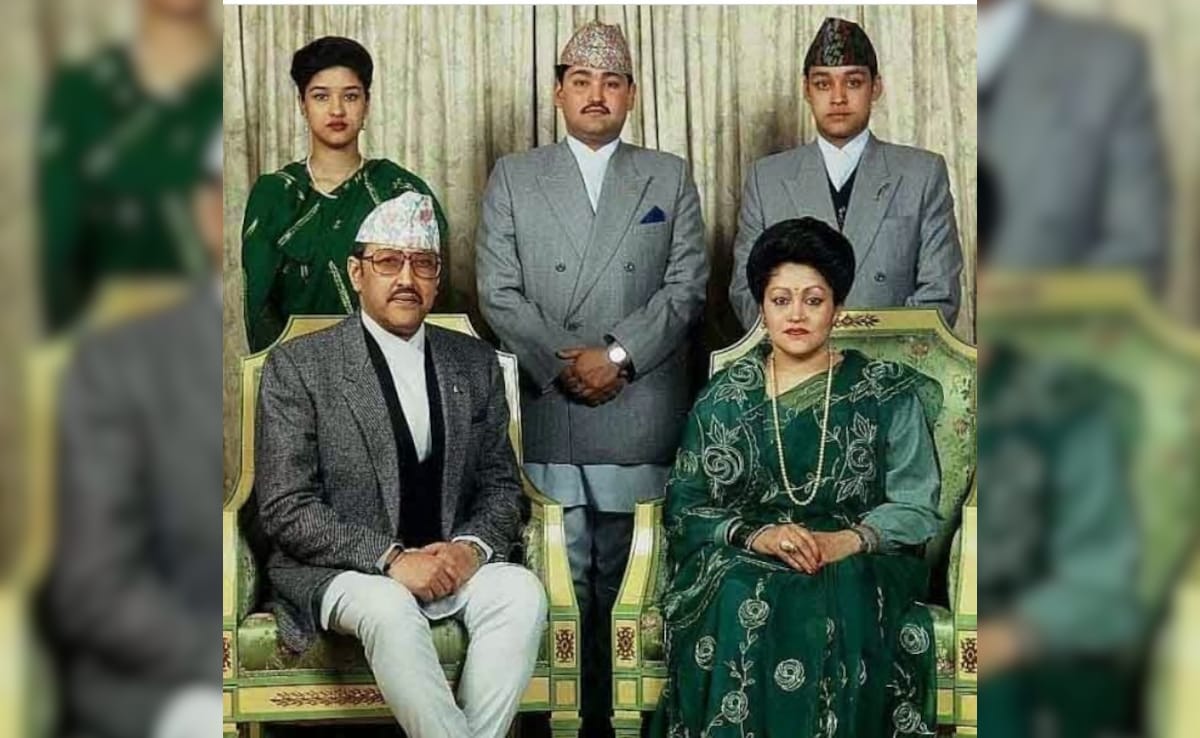
It sounds like a bad movie plot. A crown prince, fueled by love and whiskey, guns down his entire family at a Friday night dinner party before turning the weapon on himself. But for Nepal, the massacre of royal family of nepal wasn't a script. It was a Friday night on June 1, 2001, that basically deleted the country’s sense of security and eventually ended a 240-year-old monarchy.
People still argue about it. You’ll find folks in the tea shops of Kathmandu who swear it was a conspiracy involving foreign intelligence agencies, while the official report paints a much grimmer, more personal picture of a family feud gone nuclear.
Honestly, the sheer speed of the event is what’s most jarring. In the span of a few minutes, King Birendra, Queen Aishwarya, and seven other royals were dead. The king was popular. He was seen as a father figure, a stabilizing force in a country that was already dealing with a bloody Maoist insurgency. When he died, the soul of the nation sort of broke.
The Official Story: A Prince Out of Control
The official investigation, led by Chief Justice Keshav Prasad Upadhaya and Speaker of the House Taranath Ranabhat, concluded that Crown Prince Dipendra was the sole gunman. Why? Well, it mostly came down to a marriage dispute. Dipendra wanted to marry Devyani Rana. She was from a high-ranking family, but Queen Aishwarya reportedly hated the match due to long-standing clan rivalries and astrological warnings.
Dipendra was known for having a bit of a temper, especially when he’d been drinking. That night at the Narayanhiti Palace, he apparently went over the edge. Witnesses—mostly surviving family members like the King's son-in-law Gorakh Shamsher Rana—described a prince who was stumbling drunk on Famous Grouse whiskey and smoking "black spice" (reportedly a mix of hashish and an unidentified substance).
After being carried to his room, he changed into combat fatigues. He grabbed an arsenal: an M16, an MP5 submachine gun, and a Glock.
He walked back into the billiards room. He didn't say a word. He just started firing. He shot his father first. Then he went after the others. It wasn't some surgical strike; it was a chaotic spray of bullets that hit anyone in the way. Princess Sruti, Prince Nirajan, and eventually the Queen, who chased him into the garden.
He did it. He killed them all.
Then he shot himself in the head. But here’s the weird part that fueled years of conspiracy theories: because he didn’t die instantly, and because he was the heir, he was actually crowned King of Nepal while in a coma in the hospital. He "reigned" for three days before dying, making him the only king in history to rule while technically being a mass murderer in a vegetative state.
Why the Conspiracy Theories Won't Die
You can’t just kill a "Living Vishnu"—which is how many Nepalis saw the King—and expect everyone to believe the official report. The massacre of royal family of nepal felt too convenient for some people.
First, there was Prince Gyanendra. He was the King’s brother and the man who eventually took the throne. He happened to be away in Pokhara that night. His wife and children were at the dinner, and while they were injured, they survived. To a skeptical public, Gyanendra looked like the big winner.
Then there were the physical "glitches" in the story:
- Dipendra was right-handed, but the fatal wound was on the left side of his head.
- Witnesses claimed to see people in "Dipendra masks" during the shooting.
- The palace building where it happened, Tribhuvan Sadan, was demolished almost immediately after the investigation. Why destroy the crime scene?
Dr. Tulsi Giri, a former Prime Minister, and various Maoist leaders like Prachanda (Pushpa Kamal Dahal) played into these doubts. They suggested the CIA or India's RAW were involved to destabilize the country. It’s a lot more comforting to believe in a grand international plot than to accept that the future of your country was destroyed by a drunk, heartbroken young man with an assault rifle.
The Aftermath: The Beginning of the End
Nepal was never the same after that night. King Gyanendra, who took over, didn't have his brother's charisma or political touch. He was seen as authoritarian. By 2005, he’d seized absolute power to "fight the Maoists," which basically united the democratic parties and the rebels against him.
The massacre acted as a catalyst. If Birendra had lived, the monarchy might have survived as a ceremonial role, like in the UK. Instead, the suspicion surrounding the massacre of royal family of nepal stripped the institution of its "divine" protection. By 2008, the monarchy was abolished, and Nepal became a republic.
Key Facts of the Massacre
- Date: June 1, 2001
- Location: Narayanhiti Palace, Kathmandu
- Total Deaths: 10 (including the shooter)
- The Victim List: King Birendra, Queen Aishwarya, Prince Nirajan, Princess Shruti, Prince Dhirendra, Princess Jayanti, Princess Shanti, Princess Sharada, Kumar Khadga.
Digging Deeper into the Weapons and Logistics
The choice of weaponry says a lot. Dipendra was a gun enthusiast. He had a private collection. The investigation found 71 spent cartridges at the scene. That’s a lot of lead in a small room. The M16 was a gift, ironically, to the royal family.
Surviving witness accounts describe the scene as a "bloody mess." There was no security inside the dinner room because of palace protocol—guards stayed outside. This allowed the Prince to cycle through his weapons without anyone intervening.
Is it possible he was framed? Vivek Shah, a former military aide to the palace, wrote a book called Maile Dekheko Darbar (The Palace as I Saw It). He doesn't explicitly say it was a conspiracy, but he highlights the massive security failures that made the massacre possible. The lack of a rapid medical response was also a disaster. It took way too long to get the King to the military hospital.
Lessons from the Tragedy
If you’re looking for a takeaway, it’s about the fragility of power. One family’s internal drama—a mother and son arguing over who he should marry—spilled out and changed the map of South Asia.
For travelers and history buffs visiting Kathmandu today, you can actually visit the Narayanhiti Palace Museum. It’s no longer a home for gods; it’s a cold, concrete building where you can see the bullet holes and the spots where the royals fell. It’s a somber place. It reminds you that history isn't just dates; it's the result of human emotion, ego, and sometimes, total madness.
What you should do next to understand this better:
- Visit the Narayanhiti Palace Museum: If you're in Nepal, go. They have markers showing where each family member was shot. It provides a spatial understanding that no article can.
- Read 'Love and Death in Kathmandu': This book by Amy Willesee and Mark Whittaker is probably the most detailed account of the Dipendra-Devyani romance and the events leading up to the night.
- Watch the Documentary Footage: Search for the 2001 news broadcasts from Nepal. Seeing the sheer scale of the public grief—thousands of men shaving their heads in mourning—shows the psychological impact this had on the nation.
- Research the Maoist Rise: To see the political "domino effect," look into how the Maoists used the vacuum left by King Birendra to gain leverage in the countryside between 2002 and 2006.
The massacre of royal family of nepal remains one of the greatest "what ifs" of the 21st century. If Dipendra hadn't pulled the trigger, Nepal might still have a King, the civil war might have ended differently, and the Narayanhiti Palace might still be a place of mystery rather than a museum with a ticket booth.