You’ve probably been there. You are staring at a Zoom invite or a flight itinerary, squinting at those two-letter abbreviations—PST, MST, PDT, MDT—and wondering if you’re about to be an hour late or an hour early. It’s a mess. Honestly, the difference between Pacific Time and Mountain Time sounds like it should be easy math, but once you throw in Daylight Saving Time and the fact that Arizona basically does whatever it wants, things get weird fast.
Let's get the basic logic out of the way first.
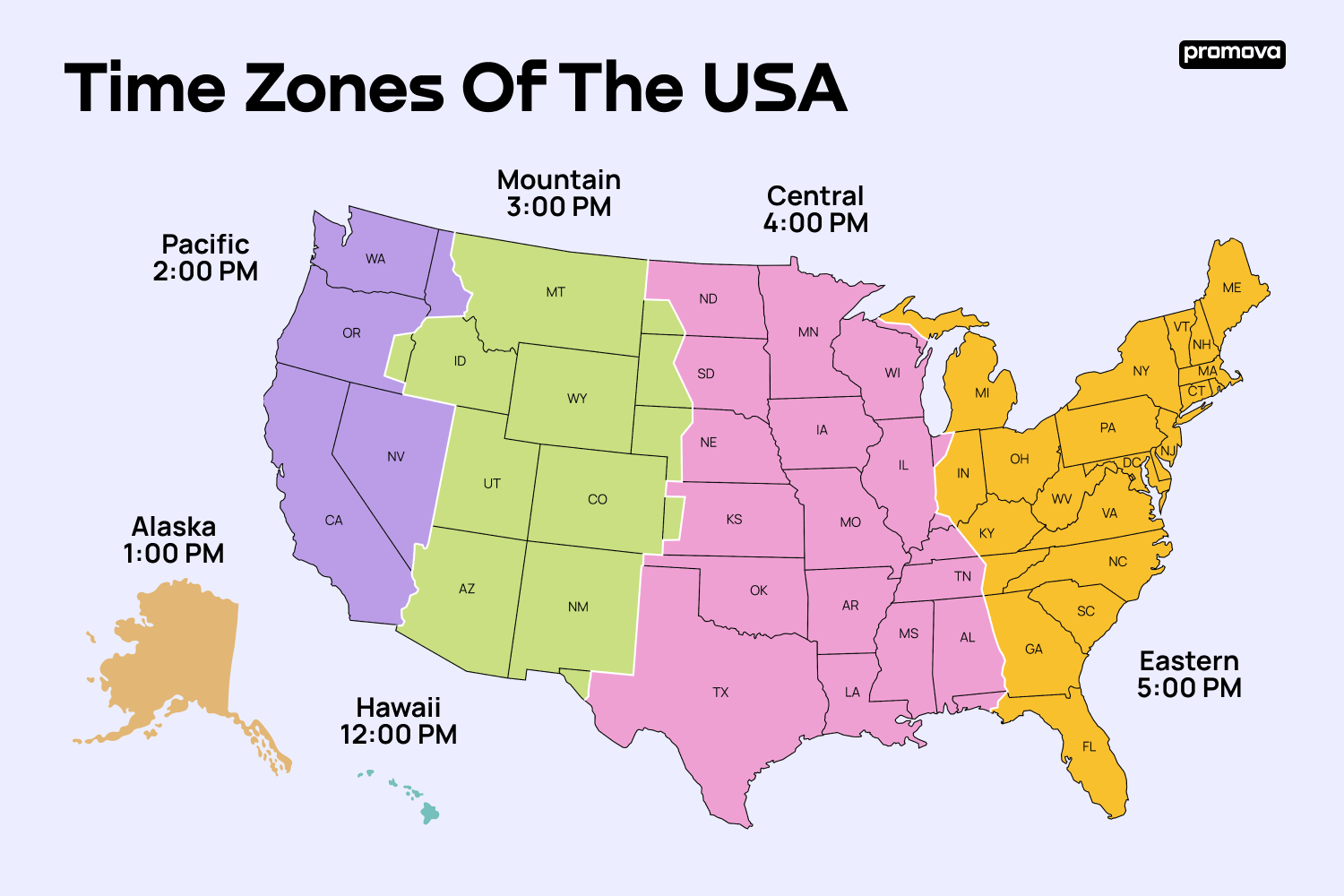
Pacific Time is one hour behind Mountain Time. That is the standard. If it is 2:00 PM in Seattle (Pacific), it is 3:00 PM in Denver (Mountain). It stays that way for the vast majority of the year for the vast majority of people. But "standard" is a tricky word in the world of time zones. We aren't just dealing with geography; we’re dealing with politics, sunlight, and the weird history of how railroads literally forced us to stop using sundials.
How the Pacific Time and Mountain Time Difference Actually Works
The United States is split into slices. Think of it like an orange. Pacific Time is tucked away on the West Coast, covering California, Washington, Oregon, and Nevada. Mountain Time is the next slice over to the east. It’s huge. It stretches from the jagged peaks of the Rockies in Montana all the way down to the desert floors of New Mexico.
Because the Earth rotates from west to east, the sun hits the Mountain zone first. They get the morning light earlier. They start their business day earlier. By the time a barista in San Francisco is pulling the first espresso shot of the day at 6:00 AM, their counterpart in Salt Lake City has already been working for an hour.
The Math Behind the Zones
If you want to get technical, we measure everything against Coordinated Universal Time (UTC).
Pacific Standard Time (PST) is UTC-8.
Mountain Standard Time (MST) is UTC-7.
When we shift into the summer months—Daylight Saving Time—everything moves up an hour, but the gap stays the same. Pacific Daylight Time (PDT) becomes UTC-7, and Mountain Daylight Time (MDT) becomes UTC-6. One hour. Always one hour.
Except for Arizona.
Arizona is the wildcard that ruins everyone's Google Calendar.
The Arizona Problem
Most of Arizona does not observe Daylight Saving Time. They don't move the clocks. In the 1960s, Arizona decided that they already had enough sun and heat; they didn't need an extra hour of it in the evening. So, while the rest of the country is "springing forward," Arizona stays put.
This creates a shifting difference between Pacific Time and Mountain Time.
In the winter, Arizona is on Mountain Standard Time. They are one hour ahead of Los Angeles.
In the summer, when California moves to Daylight Time, Arizona stays on Standard Time. Because California moved "forward" and Arizona stayed still, they end up on the exact same time.
For about half the year, Phoenix and Los Angeles are twins. For the other half, Phoenix is an hour ahead. If you’re a business owner in Scottsdale trying to call a client in San Diego, you have to memorize the calendar or you’ll end up calling them while they’re still eating breakfast.
Wait. It gets more complicated. The Navajo Nation, which covers a huge chunk of Northeast Arizona, does observe Daylight Saving Time. But the Hopi Reservation, which is completely surrounded by the Navajo Nation, does not. You can literally drive across Arizona and change time zones three times in a couple of hours without ever leaving the state. It's a logistical nightmare.
Why Geography Doesn't Always Dictate the Zone
You might think time zones follow straight lines. They don't. They look like jagged teeth on a map. This is because local governments get to decide which zone they want to be in based on who they do business with.
Take Idaho.
Idaho is split. The Panhandle (the skinny part at the top) is on Pacific Time. Why? Because they do more business with Spokane and Seattle than they do with Boise. The southern part of the state, including Boise, is on Mountain Time. If you drive south from Coeur d'Alene to Boise, you lose an hour of your life.
Oregon does the same thing. Almost the entire state is Pacific Time, but a tiny sliver in the east—Malheur County—operates on Mountain Time because it’s closer to the economy of Boise, Idaho.
The Mental Toll of the One-Hour Gap
One hour doesn't seem like much. It’s not like the three-hour jump from New York to LA. But that one-hour difference between Pacific Time and Mountain Time is the "sweet spot" for confusion.
In the television industry, this gap created the "Mountain Time Problem." For decades, networks would broadcast shows "Prime Time" at 8:00 PM Eastern and Pacific. But Mountain Time often got the short end of the stick, sometimes getting tape-delayed broadcasts or seeing live sports at awkward hours. Even today, if you’re a gamer waiting for a midnight release of a new title, you have to be very careful about whether that "midnight" is Eastern, Mountain, or Pacific.
If you are on the West Coast, you are the last to see everything. The news has already happened. The stock market has been open for three hours by the time you're truly productive. If you're in the Mountain zone, you're the bridge. You have to balance the early-rising East Coast with the late-starting West Coast.
Practical Tips for Managing the Difference
If you travel or work across these zones, "eyeballing it" is a recipe for disaster.
- Trust your phone, but verify the location. Most smartphones use cell tower data to flip your clock automatically. However, if you are driving near the border of Idaho and Washington, your phone might "grab" a signal from a tower in the wrong zone.
- The Arizona Rule. Always check the date. If it’s between March and November, Arizona is the same as Pacific. If it’s between November and March, Arizona is Mountain.
- Meeting Invites. Use a "World Clock" tool or simply set your primary calendar to show two time zones. Most modern calendar apps allow a "secondary time zone" column. Use it.
- Travel Buffer. If you’re driving from Salt Lake City to Reno, you’re gaining an hour. It’s the "gift" hour. If you’re going the other way, you’re losing it. Plan your gas stops and food accordingly; nothing is worse than rolling into a small town at what you think is 9:00 PM only to find everything closed because it’s actually 10:00 PM.
Why This Matters for 2026 and Beyond
There is constant talk in state legislatures about getting rid of the clock-switching altogether. States like Washington and Oregon have looked at staying on Daylight Saving Time permanently. But there’s a catch: they need federal approval.
Until the Sunshine Protection Act—or something like it—actually passes and sticks, we are stuck in this rhythmic dance. We will continue to have that one weekend in November where we feel like geniuses for getting an extra hour of sleep, and that one weekend in March where everyone is grumpy and tired.
The difference between Pacific Time and Mountain Time is more than just a line on a map. It’s a reflection of how we’ve tried to organize the chaos of a spinning planet into a neat 9-to-5 schedule. It’s flawed, it’s confusing in the desert, and it’s occasionally annoying. But it's the system we have.
Next Steps for Your Schedule:
Check your digital calendar settings right now. If you work with people in Denver, Phoenix, or Boise, add "Mountain Time" as a secondary time zone in your Google or Outlook settings. This prevents the "Wait, is that your time or my time?" email chain that wastes everyone’s afternoon. If you’re planning a road trip through the Four Corners or the Pacific Northwest, download your maps for offline use—GPS works without service, but your phone’s ability to update its time zone often relies on a data connection. Stay ahead of the clock so the clock doesn't get ahead of you.