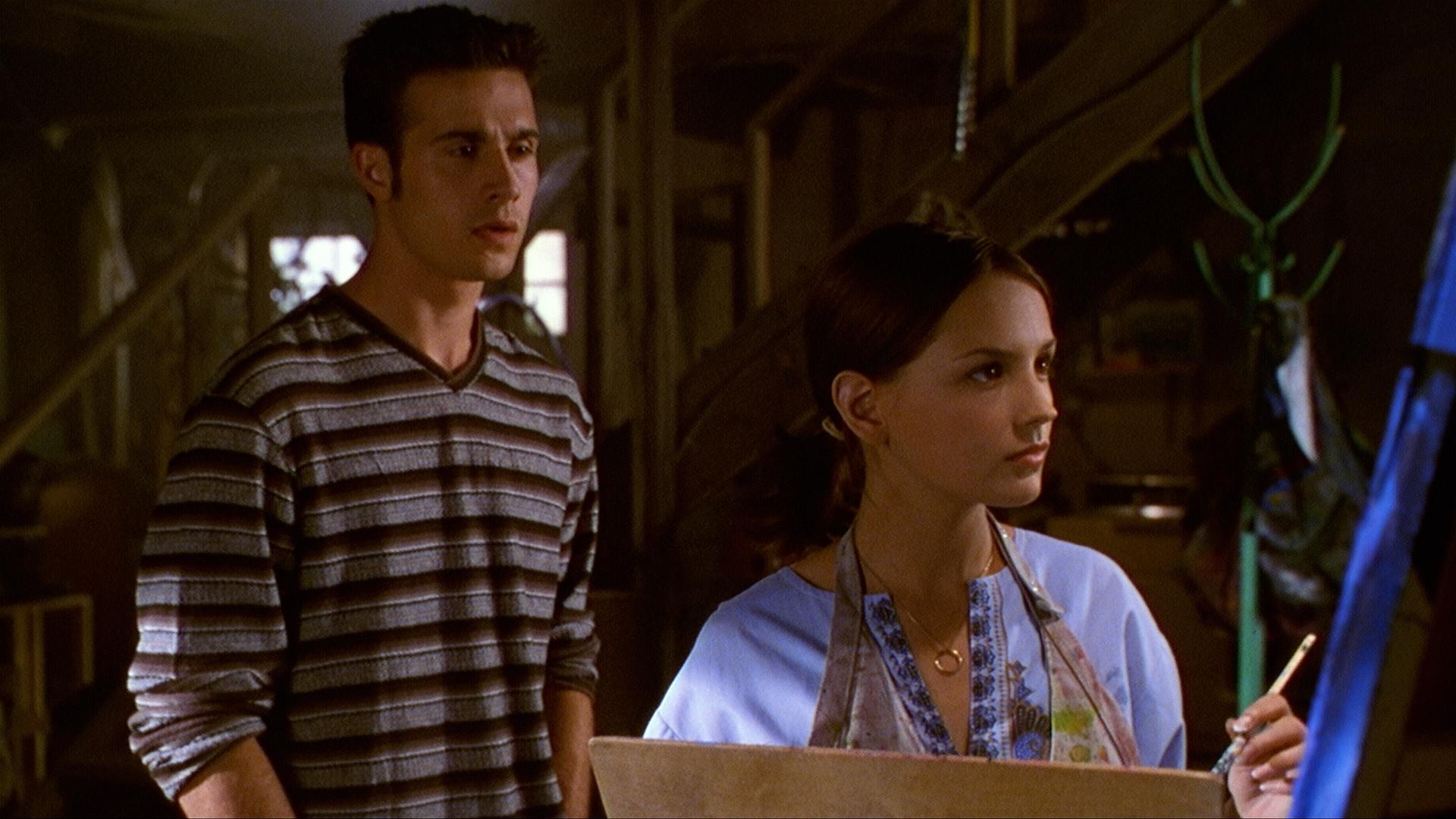
It happened in 1999. Laney Boggs, played by Rachael Leigh Cook, walked down a staircase. The music swelled. Sixpence None the Richer sang about kissing under the milky twilight. Freddie Prinze Jr. looked up, his jaw practically hitting the floor because the girl who was previously "ugly" had—wait for it—taken off her glasses and put on a red dress.
Everyone watching knew it was ridiculous. We still know it’s ridiculous.
That single scene birthed an entire subgenre of comedy. The She's All That parody became a staple of the early 2000s, and honestly, it hasn't really stopped since. From big-budget studio films like Not Another Teen Movie to the chaotic energy of TikTok creators today, the "ugly girl transformation" is the gift that keeps on giving. It’s a trope so thin it’s transparent, yet it defines an entire era of teen cinema.
The Movie That Launched a Thousand Spoofs
To understand why the She's All That parody works, you have to look at the source material. The 1999 film wasn't exactly original to begin with; it was a modern retelling of Pygmalion and My Fair Lady. But it hit at the exact right moment when MTV culture was peaking and teen heartthrobs were the most valuable currency in Hollywood.
The premise is simple. Popular jock Zack Siler makes a bet that he can turn any girl into the Prom Queen. He picks Laney, the "dorky" artist. The movie treats her like a gargoyle because she wears overalls and paint-stained clothes. When the transformation happens, the "miracle" is just a haircut and some contact lenses.
It was begging to be mocked.
By 2001, Not Another Teen Movie arrived. This is the gold standard of the She's All That parody. Chyler Leigh played Janey Briggs, a direct send-up of Laney. The film didn't just poke fun at the plot; it attacked the visual language of the original. Janey wears glasses, a ponytail, and overalls covered in paint. When she takes them off, characters react with genuine shock, even though she looks exactly the same. It’s a bit that highlights the absurdity of Hollywood’s "ugly" standards.
Why the Glasses Trope Never Dies
We love to laugh at this because it’s a shared lie. We all agreed to pretend that beautiful actresses were hideous just because they had a library card or a ponytail.
The She's All That parody persists because it speaks to a universal experience of feeling overlooked. But the parody flips the script. Instead of the "ugly" girl finding validation through a makeover, the parody suggests the world around her is actually insane for not seeing her beauty in the first place.
Think about the "Am I Pretty?" trend on social media or the countless YouTube sketches. They aren't just making fun of a 25-year-old movie. They are making fun of the way media manipulates our perception of beauty. It’s meta-commentary wrapped in a joke about a hair tie.
The Anatomy of a Perfect Spoof
If you’re looking at what makes a She's All That parody actually funny, it usually involves three specific beats.
First, the exaggerated "before" state. In the parodies, the character isn't just nerdy; she's often physically falling apart or carrying around bizarre props. In Not Another Teen Movie, Janey is literally covered in "artistic" grime.
Second, the slow-motion reveal. This is crucial. You need the stairs. You need the breathy pop song. You need the slow pan up from the shoes to the face. The humor comes from the contrast between the cinematic grandiosity and the mundane reality that she just brushed her hair.
Third, the reaction of the male lead. The "Zack Siler" archetype has to be rendered completely speechless by a change that any sane person would find negligible.
It's Not Just Movies Anymore
TikTok has breathed new life into the She's All That parody.
Creators use the original "Kiss Me" audio to recreate the reveal, but usually with a twist. Maybe they look worse after the makeover. Maybe they take off their glasses and realize they can't actually see anything, resulting in them falling down the stairs. It’s a deconstruction of the original's polished perfection.
This digital evolution shows that the trope is baked into our collective consciousness. You don't even have to have seen the 1999 film to understand the joke. The visual shorthand of "nerd becomes prom queen" is a universal language now.
Beyond the Laughter: The Cultural Impact
Is it just a joke, though?
Critics like Molly Ringwald (who was the queen of this trope in the 80s) have occasionally pointed out how these "makeover" movies suggest that you aren't enough as you are. The She's All That parody acts as a cultural release valve for that pressure. By laughing at it, we strip away its power.
Interestingly, He's All That, the 2021 gender-swapped remake starring Addison Rae, tried to play with these themes again. While it wasn't a parody in the traditional sense, the internet's reaction to it certainly was. The film was widely mocked on Twitter and TikTok, effectively becoming a self-generating She's All That parody because the audience was so much more cynical than they were in 1999. We aren't as easily fooled by a makeover montage anymore.
We know the tricks. We know the lighting. We know the red dress is just a prop.
Key Takeaways for the Modern Viewer
If you're diving back into this world, whether for nostalgia or research, keep a few things in mind about how these parodies function in the wild.
- Watch for the "Janey Briggs" Effect: Notice how parodies often make the "hidden beauty" even more obvious than the original did, just to drive home the point that the characters in the movie are blind.
- The Soundtrack is Key: The use of "Kiss Me" or similar late-90s acoustic pop is the ultimate signifier. It sets the tone for the joke immediately.
- Physical Comedy Matters: The best parodies use the loss of glasses as a literal handicap, showing the character bumping into walls because, shockingly, people wear glasses because they need to see.
- Context is Everything: The parody usually works best when it targets the specific "prom bet" plot point, which has become one of the most lampooned tropes in cinematic history.
How to Spot the Influence Today
You can see the DNA of the She's All That parody in modern hits like Easy A or even the more self-aware moments of Euphoria. It’s everywhere.
The next time you see a character walk down a staircase in slow motion, look for the cracks in the facade. The industry knows we're in on the joke. That's why modern teen movies often subvert the makeover entirely—sometimes the girl realizes she liked the glasses better.
Or, more accurately, she realizes she shouldn't have to change at all to win a bet made by a guy who peaked in high school.
To really appreciate the depth of this trope, go back and watch the original 1999 film, then immediately pivot to Not Another Teen Movie. The shift in tone tells you everything you need to know about how our culture’s sense of humor evolved from earnest sincerity to sharp, biting satire.
If you want to track the evolution of teen tropes further, look into the "Manic Pixie Dream Girl" or the "Jock with a Heart of Gold." They all follow a similar trajectory: birth, saturation, and eventual parody. The She's All That parody was just the first to do it with such stylish, four-eyed flair.
Check out the 20th-anniversary interviews with the original cast to see how they feel about the legacy of the film. Most of them are surprisingly good sports about the fact that their most famous work is now a punchline. They get it. It was a moment in time, a capsule of 90s optimism that we’ve since traded for 21st-century irony.
When you see a new parody pop up on your feed, pay attention to the comments. You'll see thousands of people referencing specific lines from a movie that came out before some of them were even born. That’s the true power of a successful parody—it keeps the original alive, even if it’s just to keep making fun of it.
Next Steps for Enthusiasts:
- Watch the "Janey’s Reveal" scene in Not Another Teen Movie (2001) for the definitive parody experience.
- Compare the original Laney Boggs reveal to the gender-swapped version in He's All That (2021) to see how the trope has (and hasn't) aged.
- Explore the #ShesAllThat tag on TikTok to see how Gen Z uses the "Kiss Me" audio to subvert beauty standards today.
- Read up on the history of Pygmalion to understand that the "She's All That parody" is actually a hundred-year-old tradition of mocking the idea that humans can be "fixed" by someone else.