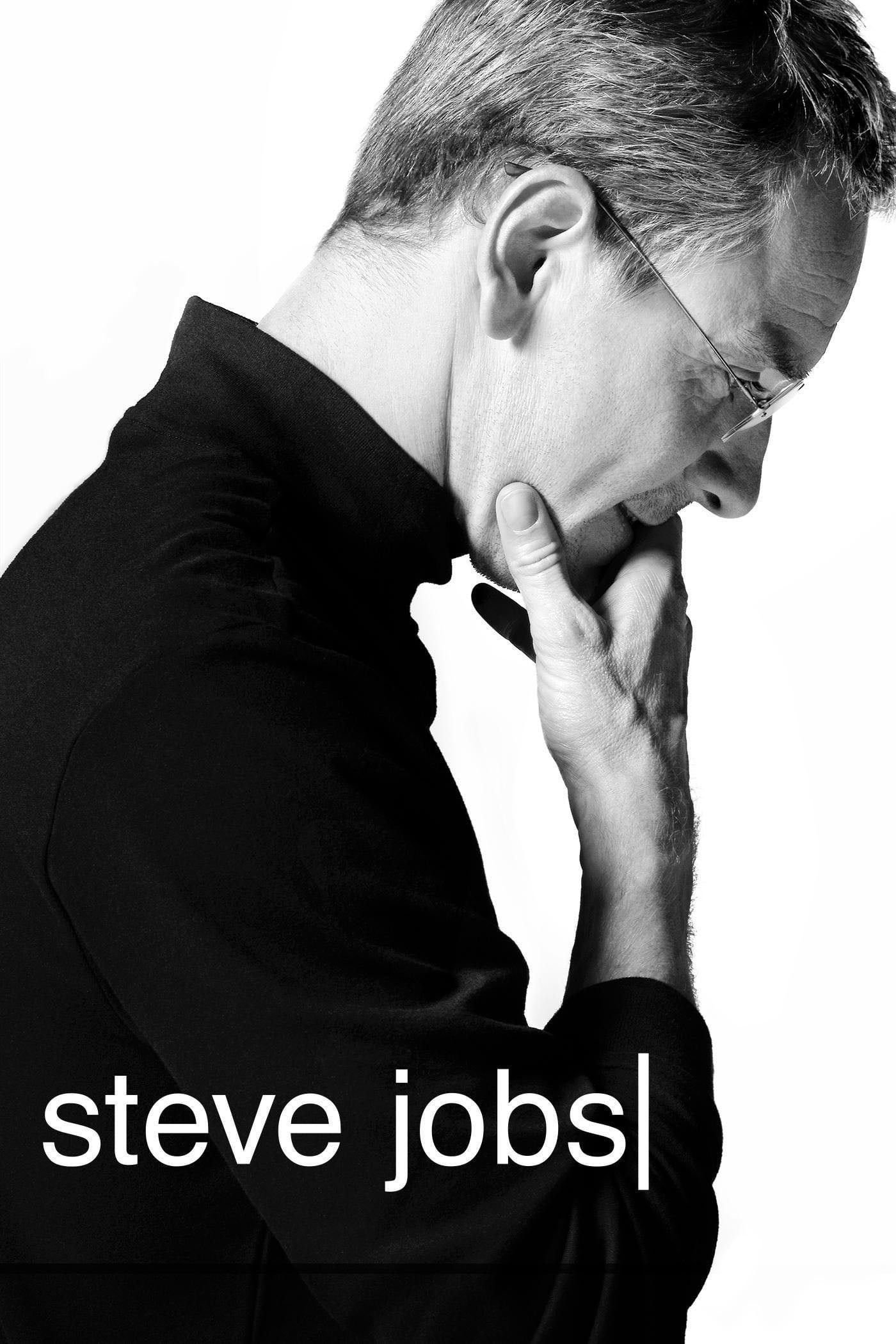
Honestly, if you look at a photo of Michael Fassbender next to the real Steve Jobs from 1984, they don't look all that much alike. Fassbender doesn't have the nose, the specific gait, or that exact skeletal frame. Yet, about twenty minutes into Danny Boyle’s 2015 film Steve Jobs, you kinda stop caring. You’ve probably seen the other biopics—the ones that try to mimic every hair flip and turtleneck fold—but this movie was different. It wasn't a "cradle-to-grave" story. It was a three-act play masquerading as a big-budget movie, and the movie Steve Jobs cast had the impossible task of making Aaron Sorkin’s machine-gun dialogue feel like natural human speech.
It worked. Mostly.
The film focuses on three specific product launches: the Macintosh in 1984, the NeXT Cube in 1988, and the iMac in 1998. Because the whole thing takes place backstage in real-time, the cast had to carry the emotional weight of a decade's worth of baggage in just a few dressing rooms.
The Core Players: Fassbender, Winslet, and the Art of the "Talk Opera"
Michael Fassbender wasn't the first choice. Or the second. Leonardo DiCaprio and Christian Bale both flirted with the role before walking away. When Fassbender stepped in, he admitted he didn't know much about the tech world. He’s a self-described "slow learner" who spent months just trying to internalize the 190-page script. Sorkin’s writing has a very specific rhythm—if you miss a beat or stumble on a syllable, the whole scene falls apart.
Then there’s Kate Winslet. She plays Joanna Hoffman, the marketing chief and the only person who could seemingly stand up to Jobs without getting incinerated. Winslet actually lobbied for the part. She sent a photo of herself in a dark wig and glasses to the producers just to prove she could disappear into the role. She even nailed a subtle Polish-Armenian accent that added this layer of "outsider" perspective to the Apple inner circle. She ended up winning a BAFTA and a Golden Globe for it, which isn't surprising if you watch the way she handles Jobs in the third act. She’s the film's moral compass, basically.
The Supporting Tech Titans
- Seth Rogen as Steve Wozniak: This was a bit of a gamble. People knew Rogen for stoner comedies, not for playing the "conscience" of Silicon Valley. But Rogen’s Wozniak is heartbreaking. He represents the Apple II team, the people Jobs wanted to forget. The real Wozniak actually consulted on the film and said that while he never actually had these dramatic confrontations with Steve at launch events, Rogen captured his essence perfectly.
- Jeff Daniels as John Sculley: Daniels had already worked with Sorkin on The Newsroom, so he knew how to handle the dialogue. He plays Sculley not as a villain, but as a father figure who eventually has to make a cold business decision. Their showdown in the second act—set against a rain-slicked window—is basically a Shakespearean tragedy about betrayal and Pepsi.
- Michael Stuhlbarg as Andy Hertzfeld: Stuhlbarg plays the brilliant, slightly terrified engineer who just wants the computer to say "hello." He’s the punching bag for Jobs’ perfectionism, and his performance gives the movie its most grounded, relatable stakes.
Why the Movie Steve Jobs Cast Faced So Much Heat
The casting wasn't without drama. Silicon Valley isn't exactly a quiet place when it comes to opinions. Laurene Powell Jobs, Steve's widow, reportedly tried to stop the movie from being made. Tim Cook called the flurry of Jobs biopics "opportunistic."
The big "problem" for many was the lack of physical resemblance. But Danny Boyle defended the choice, saying he didn't want "impersonators." He wanted actors who could convey the intensity of a man who believed he was "playing the orchestra" while everyone else was just playing an instrument.
The movie actually used different film stocks for each act to show the passage of time. They shot the 1984 segment on 16mm (grainy and raw), the 1988 segment on 35mm, and the 1998 segment on high-definition digital. This meant the cast had to adapt their performances to the visual texture of the era. Fassbender starts out manic and lithe, then becomes more rigid and "statuesque" as Jobs becomes a global icon.
The Kids are Alright: The Three Lisas
A huge part of the movie's heart is the relationship between Steve and his daughter, Lisa Brennan-Jobs. Because the film spans fourteen years, three different actresses had to play her:
- Makenzie Moss (age 5)
- Ripley Sobo (age 9)
- Perla Haney-Jardine (age 19)
Katherine Waterston plays Chrisann Brennan, Lisa's mother, and her scenes are some of the most uncomfortable in the film. She represents the messy, human reality that Steve tried to "debug" out of his life. The way the three different Lisas interact with Fassbender creates this slow-burn realization that for all his genius, the man was struggling with the most basic human connection.
Was it Accurate? Sorta. Does it Matter?
If you're looking for a documentary, don't watch this. The real John Sculley said the movie doesn't show the "complete" Steve Jobs—the one who could be kind and collaborative. The movie is a "fantasia" on his life. It takes real people and turns them into archetypes.
Wozniak himself said it best: "The movie is not about reality. It's about personalities."
The movie Steve Jobs cast took a dense, wordy, and often mean-spirited script and found the humanity underneath the black turtleneck. It’s a film about the cost of being a visionary and the people who got left in the wake of that ambition.
Actionable Takeaways for Movie Buffs and Techies
If you haven't revisited the film since its 2015 release, here is how to get the most out of a rewatch:
- Watch the background: In the 1988 segment, notice how the cast moves through the empty opera house. It’s staged like a ghost story because, at that point in his career, Jobs was essentially an exile.
- Listen for the rhythm: Sorkin writes in "iambic pentameter-lite." Try to catch the moments where Fassbender and Winslet overlap their lines; it's choreographed like a dance.
- Compare to the Isaacson biography: The movie is based on Walter Isaacson’s book, but it ignores 90% of the facts to focus on the 10% of the emotion. Read the book for the "what" and watch the movie for the "why."
- Check out the "Other" Jobs: Watch the 2013 movie Jobs starring Ashton Kutcher. It’s much more visually accurate to the real history, but it lacks the psychological depth that the 2015 cast brought to the table.
The 2015 film might have underperformed at the box office—it only made about $34 million—but its reputation has only grown. It’s become a case study in how to do a biopic without falling into the "and then this happened" trap. The cast didn't just play historical figures; they played a family that happened to build the most valuable company on earth.