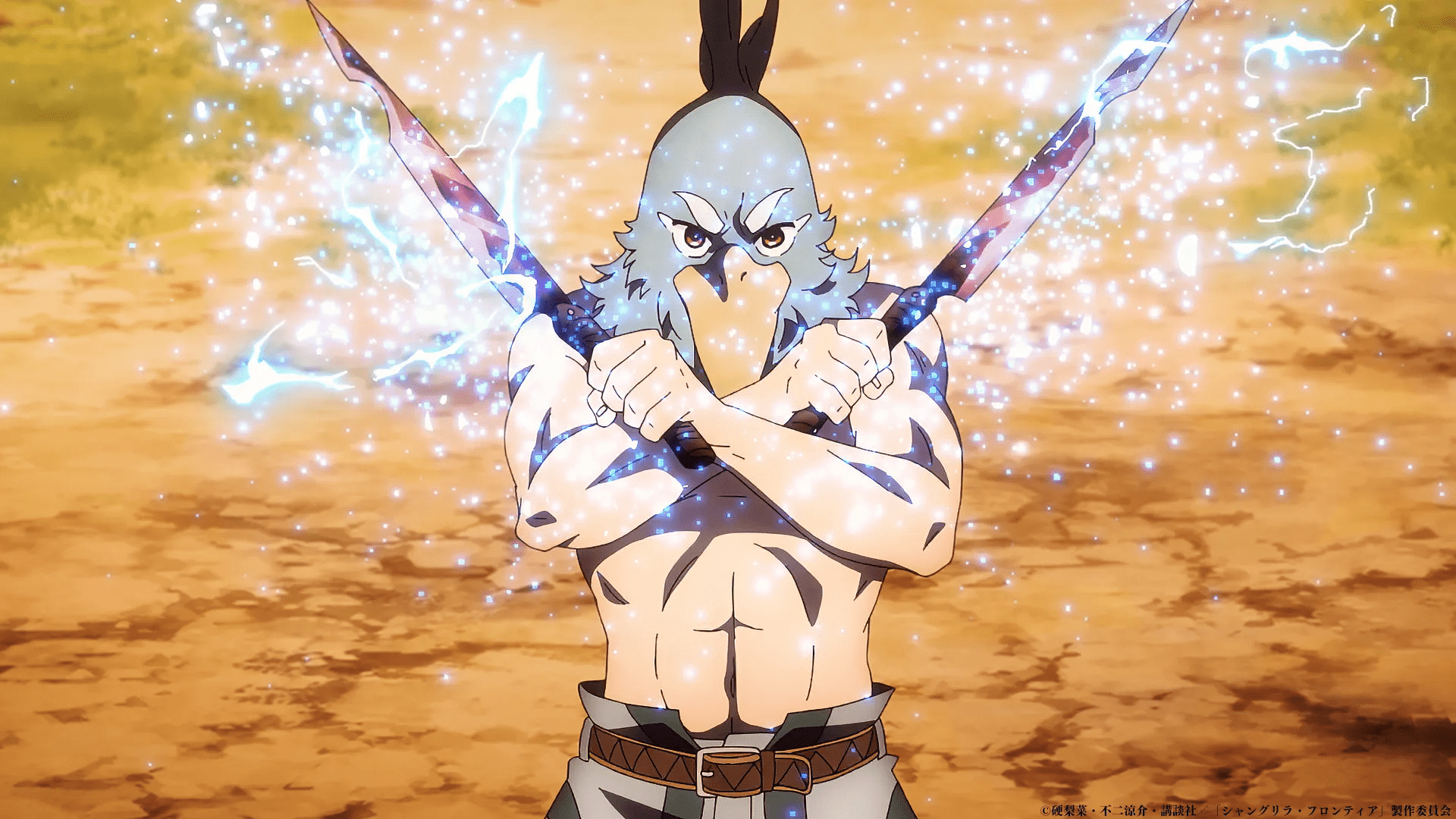
Sunraku is a trash-game hunter. He lives for glitches, broken hitboxes, and games so poorly coded they shouldn't legally be on shelves. But when he steps into the "god-tier" world of Shangri-La Frontier, he runs into something that isn't broken at all. It's just perfectly, brutally designed to kill you.
I'm talking about Weathermon the Tombguard.
Most bosses in VRMMOs follow a script. You learn the telegraphs, you dodge, you chip away at a massive health bar. Weathermon is different. He’s one of the Seven Colossi, the pinnacle of world-building in SLF, and honestly, the fight is less of a battle and more of a 30-minute survival horror segment where one mistake deletes your character's existence.
What Most People Miss About the Weathermon Encounter
You can't just out-level Weathermon. That's the first thing that catches players off guard. In most Shonen-style gaming stories, the protagonist finds some secret stat boost. Not here. In Shangri-La Frontier, Weathermon is a Level 200 wall. Sunraku, Katzo, and Pencilgon go into that fight severely underleveled, and they only survive because Pencilgon is a literal tactical genius who spent years (and a fortune in in-game currency) preparing for this specific suicide mission.
The fight is divided into distinct phases, but unlike your standard raid boss, these phases don't trigger at health milestones. They are timed.
You have to survive ten minutes of a mechanical samurai who can move faster than the game's physics should allow. He uses "Inhibition" skills that prevent healing. He has a horse—Kirin—that is basically a tactical nuke on four legs. If you've ever played Sekiro and felt that soul-crushing dread when a boss deflects your "perfect" hit, you have a tiny idea of what the Tombguard feels like.
The Mechanics of "Weathering" the Storm
The first phase is all about the "Great Slays." These are five distinct, massive area-of-effect attacks. Sunraku has to parry or dodge these perfectly. If a single blade-wave touches him, it's over. The stakes are heightened because Sunraku is wearing basically no armor—just his bird mask and those iconic blue shorts—meaning his defense stat is essentially zero.
He relies entirely on the "Invincible" frames of his skills.
It’s high-wire act gaming. One frame of lag, one muscle twitch, and the party wipes. Katzo, playing a female avatar despite being a pro gamer in real life, has to act as the "tank," but not in the traditional sense. He's a "parry tank." He isn't soaking up damage; he's redirecting the force of a god-like entity using sheer mechanical skill.
Then there's the Kirin.
When Weathermon mounts that mechanical beast, the fight shifts from a duel to a bullet-hell nightmare. The Kirin isn't just decoration. It transforms, it flies, and it forces the players to manage 360 degrees of lethality. Most players would have died in the first thirty seconds. The only reason our trio lasts is because of Pencilgon’s "Scales of Resurrection" items. These are incredibly rare, expensive, and—frankly—a bit of a gamble. They allow for a single-use revival, which is the only way to bypass Weathermon's instant-kill mechanics.
The Secret History of Setsuna and the Tombguard
The lore is where Shangri-La Frontier Weathermon really hits home. This isn't just a robot guarding a grave. Weathermon is a remnant of the "Age of Divinity," a time when humanity had technology that put the current game world to shame.
He is mourning.
Setsuna of the Distant Days, the ghost who gives the quest, was his lover. Or, at least, someone he was sworn to protect. He stayed behind in a decaying body, kept alive by mechanical augmentations, just to guard her memory. Every time he swings that sword, he’s performing a ritual of grief.
- The Armor: It’s not just metal; it’s a life-support system.
- The Sword: A tactical blade called "Haruka" that can cut through the fabric of the game world itself.
- The Motivation: He isn't trying to "win." He's waiting for someone strong enough to finally let him rest.
When Sunraku finally reaches the third phase, the "True Shadow" emerges. This is where the game's realism kicks in. The armor breaks away, revealing the withered, skeletal remains of the man underneath. He becomes faster. He becomes desperate. The music shifts. If you’re watching the anime or reading the manga, this is the moment where the "game" stops feeling like a game and starts feeling like a tragedy.
Why the Victory Felt Earned (And Why It’s Rare)
In modern gaming discourse, people talk about "artificial difficulty." That’s when a boss has a billion HP or one-shots you from off-screen. Weathermon is difficult, but it's earned difficulty.
Sunraku wins because he uses his experience from "crap games." He uses a bug-like exploit involving the "Spirit of the Wood" and the way the game calculates weight and momentum. He doesn't overpower Weathermon. He out-maneuvers the game's engine.
The loot they get afterward—the "Clearance" items—isn't just a stat boost. It’s the key to the entire world’s lore. Defeating a Colossus changes the world state of SLF permanently. It’s a "Unique Scenario." Only one group can ever be the first to do it. That’s why the stakes felt so high. If they failed, they wouldn't just lose the fight; they'd lose the chance to be the ones who changed the world.
Practical Insights for Fans and Players
If you're looking at the Shangri-La Frontier Weathermon arc as a blueprint for how to handle boss design, here is the takeaway. It’s all about the "give and take."
- Preparation is 90% of the fight. Pencilgon didn't just show up; she spent weeks gathering specific items that negate the boss's "Inhibition" field.
- Understand the Phases. In SLF, the transition between Phase 2 (Kirin) and Phase 3 (The Withered Hero) is a test of endurance. You cannot rush it. You have to play the clock.
- Role Specialization. Sunraku is the DPS, Katzo is the distraction, and Pencilgon is the strategist. Without that exact trinity, the Level 200 gap is insurmountable.
The legacy of this fight in the series is massive. It establishes that the "Seven Colossi" are not just bosses—they are the gatekeepers of a story that happened a thousand years ago. Weathermon was the first hurdle. He showed us that in Shangri-La Frontier, the "Godly Game" isn't about being the strongest. It's about being the most stubborn.
To truly appreciate the Weathermon arc, you have to look past the flashy swordplay. Look at the timers. Watch the buff icons in the corner of the screen. Notice how Sunraku's breathing changes. The creators of SLF (both the fictional game and the real-life manga/anime) put an insane amount of detail into the stamina management of this fight. It’s a masterclass in tension.
Next time you're stuck on a boss in an actual game, remember the Tombguard. He didn't have a weakness to fire or a glowing red spot on his back. He had a 30-minute timer and a broken heart. You just had to be good enough to survive him.
Actionable Steps for Further Exploration:
- Analyze the Frame Data: Watch the Phase 1 parry sequence at 0.5x speed to see how the animation cancels actually work; it's a direct reference to high-level fighting game mechanics.
- Track the Lore Drops: Note the specific names Weathermon mentions during his final moments; these names reappear in the "Lycagon" and "Ctarnidd" arcs, linking the Seven Colossi together.
- Review the Inventory: Look up the "Moonlight of the Ruined Capital" items. These aren't just fluff—they explain the atmospheric conditions required to even trigger the Weathermon encounter during the New Moon phase.
The fight is over, the Grave is empty, and the world of Shangri-La Frontier has shifted. The era of the "pioneers" has officially begun.