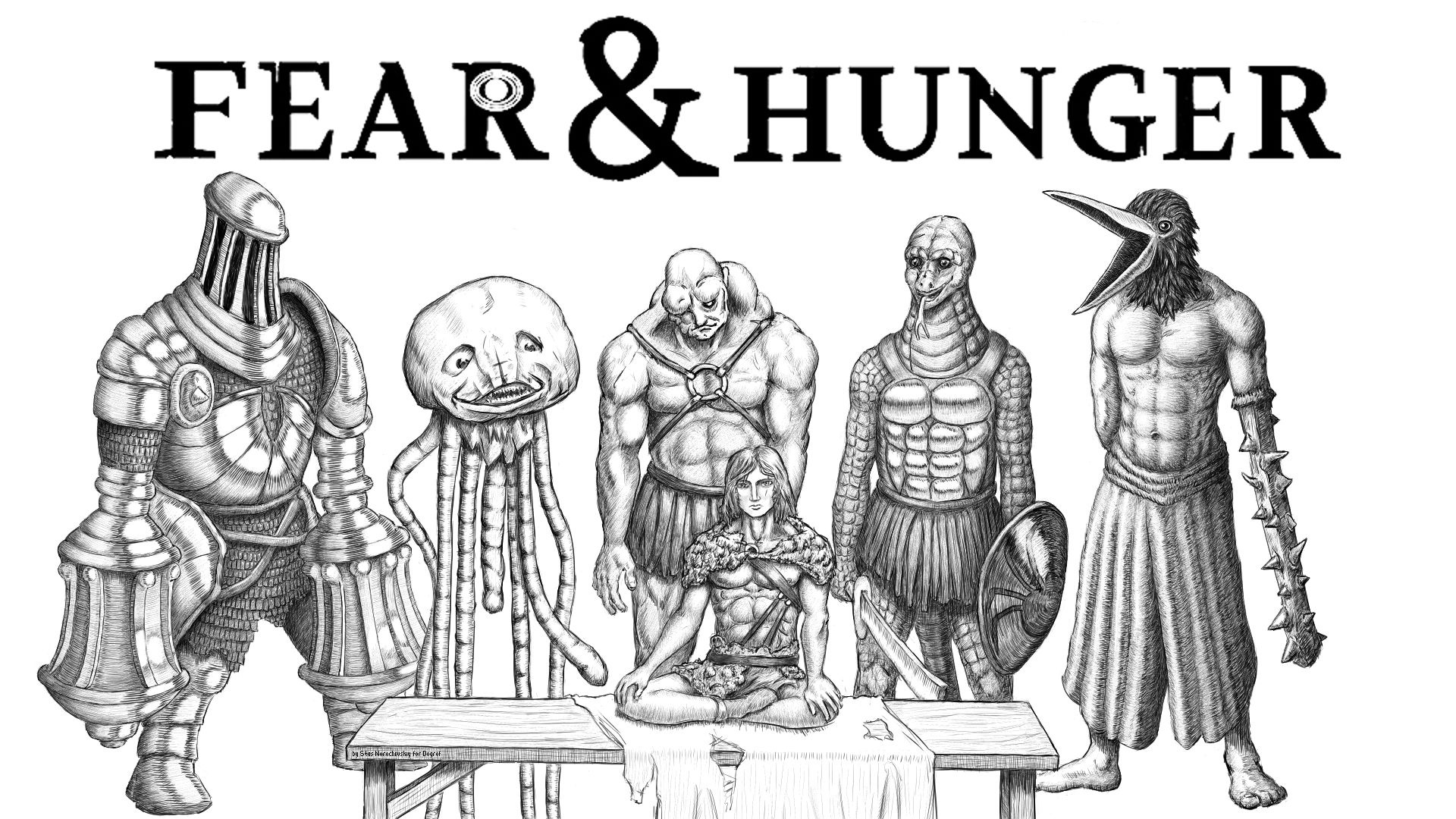
You’re wandering through the dripping, claustrophobic hallways of the Dungeons of Fear and Hunger when you see it—the ritual circle. If you’ve spent any time in Miro Haverinen’s brutal RPG, you know that Sylvian isn't just another name in the lore. She is the Old God of Love and Fertility. But in this universe, "love" doesn't mean a box of chocolates or a nice card. It means something much more visceral, skin-crawling, and often, quite literally, skin-merging.
Fear and Hunger doesn't do "nice" gods.
Sylvian represents the raw, primal urge to create life, but she’s also a terrifying reminder of what happens when that urge is stripped of its humanity. She is a goddess who abandoned humanity long ago, leaving behind only the messy, complicated magic that players have to exploit just to stay alive. Most players first encounter her through the "Marriage of Flesh," a mechanic that is as practical as it is deeply unsettling. It’s the ultimate trade-off: lose your individual identity to gain a bit more HP and a fresh set of limbs.
The Brutal Logic of Sylvian Rituals
Let’s talk about the Marriage of Flesh because honestly, it’s the most iconic part of dealing with Sylvian in the first game. You’re desperate. Your character has lost an arm to a guard, your hunger meter is bottoming out, and your mind is shattering. You find a Bunnymask or a willing party member. You perform the ritual on a ritual circle dedicated to the Goddess of Love.
The result? Two characters become one.
This isn't just a stat boost; it's a complete transformation. Your Max HP jumps, your limb health resets, and you become a "Marriage." From a gameplay perspective, it’s a lifesaver. From a lore perspective, it’s a nightmare. You’ve basically surrendered your soul to a goddess who views humans as nothing more than playthings for her creative whims. If you do it again, you become an Abominable Marriage, a lumpy, screaming mass of flesh that somehow hits harder but looks significantly worse. It’s efficient. It’s gross. It’s Fear and Hunger in a nutshell.
The interesting thing about Sylvian is that her influence isn't just about healing. It's about the "Older Gods" and their relationship with the world of man. Unlike the Newer Gods, who are basically humans with a massive ego and some shiny jewelry, Sylvian is an elemental force. She doesn't care if you're "good." She cares about creation. That’s why her magic—Healing Whispers, Loving Whispers—is so powerful. It’s the only way to regrow limbs in a game that actively tries to chop them off at every turn.
Why the Bunnymasks Exist
You’ve probably seen the Bunnymasks dancing in the thickets or the basement levels. They are the devout followers of Sylvian. While the rest of the dungeon is filled with rot and decay, these guys are... well, they’re having a party. Sort of.
The Bunnymasks represent the hedonistic side of fertility. They’ve given themselves over entirely to the base instincts that Sylvian governs. In a world where everything is trying to eat you, there’s a weird, dark irony in a group of people who just want to procreate and celebrate until the world ends. But don't let the masks fool you. They aren't your friends. If you interrupt their rituals without the right approach, they will end your run just as fast as a Crow Mauler would.
Magic and the Skin Bible
To actually use Sylvian’s power without turning into a Cronenberg monster, you need the Skin Bibles. Specifically, the Skin Bible of Sylvian. These are the "manuals" of the Fear and Hunger universe. Finding one is like finding gold. It teaches you how to draw her sigil—the circle with the flowing lines—at ritual sites.
Once you’ve got that sigil down, you have a few options:
- Healing Whispers: Essential for keeping your party from bleeding out.
- Loving Whispers: The high-tier version. It heals everything. It’s basically the only reason some players make it to the deeper levels of the Gauntlet.
- Demon Seed: This is where things get weird. You can use this on certain corpses to birth a "Demon Kid." It’s a combat pet. It’s also deeply morally questionable, but hey, survival is survival.
There is a distinct lack of "consent" in how Sylvian’s magic works, which is a recurring theme in Haverinen’s writing. The gods of this world are indifferent to human suffering. Sylvian’s "love" is a biological imperative, not an emotional one. This is why her followers often look like they’ve lost their minds—because they have. They’ve traded their intellect for the raw pulse of the goddess.
The Contrast with Gro-goroth
You can’t really understand Sylvian without looking at her counterpart, Gro-goroth. If Sylvian is the Goddess of Life and Creation, Gro-goroth is the God of Destruction and Sacrifice. They are two sides of the same coin. In the lore, they were even "together" in a cosmic sense.
The game forces you to choose between these two extremes. Do you sacrifice your party members to Gro-goroth for destructive blood magic? Or do you merge them together in Sylvian’s name to preserve life? Most players find that a balance is necessary. You use Gro-goroth to kill the horrors, and you use Sylvian to patch yourself back together afterward. It’s a symbiotic relationship of misery.
Sylvian in Termina: The Legacy Lives On
Moving into Fear and Hunger 2: Termina, the role of Sylvian changes slightly. The Old Gods have "left" the world, leaving only traces of their power behind. You don't see Sylvian manifesting as directly as you might in the first game, but her influence is everywhere in Prehevil.
The ritual circles are still there. The Skin Bibles are still there. But now, you have the "Sylvian Soul" through the Hexen table. Characters like Marina or even O'saa can tap into these ancient veins of magic. The Marriage of Flesh is still a thing, though it's much harder to pull off in a way that doesn't ruin your character's ability to use equipment.
In Termina, Sylvian’s presence feels more like a haunting. You see it in the mutated residents of the city. The "stinger" enemies and the warped, fleshy growths throughout the streets are a perversion of her gift. Without the actual goddess there to guide the creation, the life force just... spills out. It creates things that shouldn't exist. It creates life that is pure agony.
The Philosophy of "The Flesh"
Why does this matter? Why do fans obsess over the lore of a goddess who barely appears?
Because Sylvian represents the most human parts of us—our desire for intimacy, our fear of death, our need to create—and twists them into something unrecognizable. It challenges the player. How much of your "humanity" are you willing to give up to survive the night? If you merge two souls into one to beat a boss, did you actually win, or did you just lose two people to create a tool?
The game never gives you a straight answer. It just lets you look at the resulting sprite—a confused, multi-limbed thing—and move on to the next room.
Practical Tips for Handling Sylvian Circles
If you're actually playing the game right now and looking for advice, here’s the reality of dealing with Sylvian rituals. Don't waste your ritual circles. You only get a handful in a run.
- Check your needs first. If you have all your limbs and just need a bit of health, don't use a Sylvian circle. Use a Blue Vial or some bread. Save the circle for when someone loses a leg.
- The Bunnymasks are a resource. In the first game, you can actually interact with the Bunnymasks in the thicket. If you have the right dialogue or items, you can get a "free" heal without spending a soul stone or a circle, but it comes at the cost of your character's sanity.
- Marriage is permanent. In the first Fear and Hunger, once you merge, that's it. You can't go back. You lose the equipment slots of the second character. Make sure the "sacrifice" is a character who isn't vital for their specific skills (like Enki’s alchemy) unless you’re prepared to lose those menus.
- Blood Golems and Sylvian. In Termina, combining Sylvian’s healing magic with Gro-goroth’s Blood Golem is a classic "pro" strategy. You create a tank that bleeds for you, and you keep it alive with Healing Whispers. It’s the most efficient way to cheese some of the harder boss fights in the city.
The Reality of the "Love" Goddess
Honestly, calling Sylvian a goddess of love is a bit of a mistranslation of intent. She is a goddess of biology. There is no romance in the dungeons. There is only the frantic, desperate attempt to keep the cells dividing and the heart beating.
When you find her "trace" in the deeper levels, she doesn't offer words of comfort. She offers a challenge. The Old Gods find humans boring because we are finite. We die. Sylvian’s "gift" to humanity was the ability to change that—to merge, to grow, to birth things that defy the natural order.
Most people get it wrong by thinking she's a "good" deity just because she heals. In the world of Fear and Hunger, "good" doesn't exist. There is only survival and the various flavors of cosmic indifference you encounter along the way. Sylvian’s flavor just happens to be fleshy and warm rather than cold and sharp like Rher or Gro-goroth.
Actionable Insights for Your Next Run
If you want to master the Sylvian path, you need to prioritize finding the Skin Bibles early. Check every bookshelf in the library. Don't fight the Iron Shakespeare until you've checked the side rooms. If you start as the Cleric (Enki) in the first game, you have a head start, but for everyone else, it’s a gamble.
- Focus on the Sigil: Learn the pattern of the Sylvian sigil. Drawing it correctly on a ritual circle is the difference between a full party heal and wasting a rare resource.
- Manage your Affinity: You gain affinity by performing rituals or making specific choices in the introductory scenes. Higher affinity unlocks the better spells in the Hexen. Don't spread yourself too thin; pick a god and stick with them for the first half of the game.
- Watch the Hunger: Healing your body doesn't heal your stomach. A common mistake is using a ritual to fix limbs but then starving to death three rooms later because you traded your food for more ritual daggers.
Sylvian remains one of the most fascinating figures in modern indie horror because she taps into a very specific kind of body horror. She isn't scary because she wants to kill you. She's scary because she wants you to live—forever, in any shape necessary.
Next time you stand before that jagged circle in the dark, think about what you’re actually asking for. You might get your arm back, but you might leave a piece of your soul behind in the process.