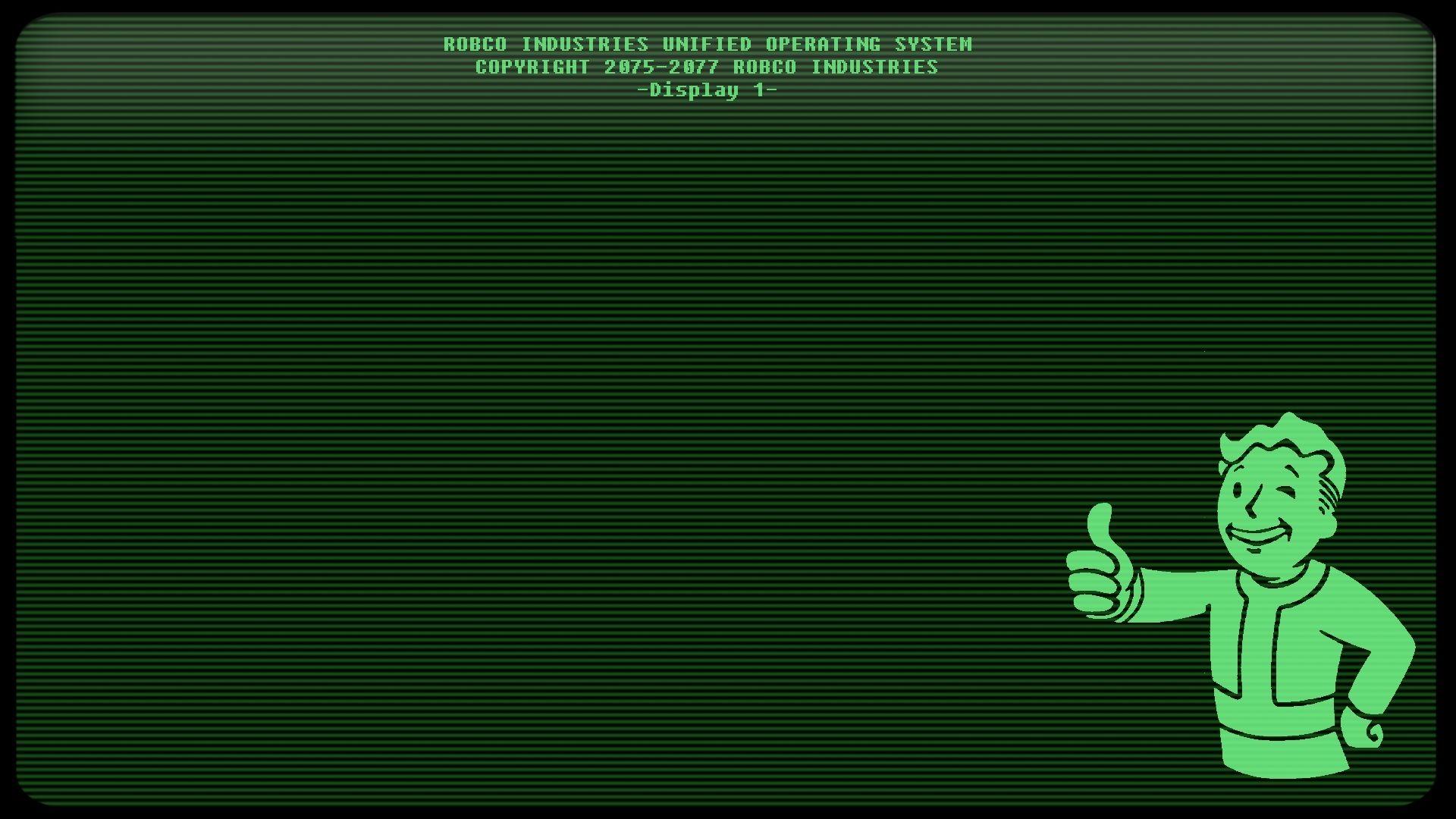
You've seen him everywhere. That blonde, grinning mascot with the blue-and-yellow jumpsuit, winking and holding up a thumb. Most people call him the "Pip-Boy," even though that’s actually the name of the wrist-mounted computer he lives inside. His real name is Vault Boy, and for decades, a very specific, very dark theory has circled the internet about why he’s making that gesture.
Basically, the rumor goes like this: Vault Boy isn't just being a cheerful little guy. He’s actually teaching you how to survive a nuclear blast. The "Rule of Thumb" suggests that if you see a mushroom cloud on the horizon, you should hold your thumb out at arm's length. If the cloud is smaller than your thumb, you're supposedly in the safe zone. If it’s bigger? Well, you're toast.
It’s a cool, gritty piece of lore that fits the Fallout universe perfectly. There’s just one problem. It’s not true. Or at least, it wasn’t true for about 20 years.
Why the Pip-Boy Thumbs Up Theory is Actually False
For the longest time, the creators of the original Fallout games were pretty adamant that the thumbs-up was just a thumbs-up. Brian Fargo, the head of Interplay during the early days, and Tramell Ray Isaac, the artist who actually designed the character, have both gone on record saying there was no secret meaning.
Isaac was once asked about this directly. His response? "The Vault Boy simply has a positive attitude."
The character was designed to be a parody of 1950s "Duck and Cover" optimism—the kind of forced, corporate cheerfulness that hides the fact that the world is ending. He's smiling because Vault-Tec wants you to feel good about your $200,000 underground concrete tube, not because he's a Geiger counter in human form.
The Real-World Physics of the Thumb Rule
Even if the developers had intended it, the science behind the "Rule of Thumb" is sketchy at best. According to experts at places like Altus Air Force Base and various nuclear safety researchers, using your thumb to measure a mushroom cloud is basically useless.
- Speed of Light: Thermal radiation (the heat that burns your skin) travels at the speed of light. By the time you’ve raised your arm and squinted one eye, you’ve already been hit by the thermal pulse.
- Yield and Distance: A 15-kiloton bomb (like the one dropped on Hiroshima) creates a very different cloud than a modern 1-megaton warhead. Your thumb can't tell the difference between a small bomb close by and a massive bomb far away.
- The Wind Problem: Even if you survive the initial blast, the real killer is fallout—the radioactive dust carried by the wind. A mushroom cloud might look "safe" behind your thumb, but if the wind is blowing 20 mph toward you, you're in trouble within the hour.
How the Fallout TV Show Changed Everything
If the creators denied it and the science doesn't work, why is everyone still talking about it? Because the 2024 Fallout TV series on Amazon Prime Video decided to make it official.
In the very first episode, we see Cooper Howard (played by Walton Goggins) teaching his daughter this exact rule. He explains that back in his days in the Marines, they were taught to use the thumb as a gauge. "If the cloud is smaller than your thumb, you run for the hills," he says. "If it's bigger... they told us not to bother running."
This was a brilliant move by the showrunners. They took a popular fan theory—even an incorrect one—and "retconned" it into the lore. It gives the gesture a haunting origin. Suddenly, every time you see that mascot on your Pip-Boy screen, you aren't seeing a happy camper. You're seeing a reminder of the moment Cooper Howard realized his world was over.
Vault Boy vs. Pip-Boy: Clearing Up the Confusion
Let’s get the terminology straight because it drives lore-nerds crazy.
- Vault Boy: This is the character. The blonde guy. The mascot of Vault-Tec.
- Pip-Boy: This is the machine. It stands for "Personal Information Processor."
The confusion comes from the fact that the Vault Boy appears on the Pip-Boy interface to represent your stats, perks, and health. To make things even weirder, the very first Fallout game (1997) actually had a different mascot for the Pip-Boy 2000—a red-haired guy with pointy ears. But by Fallout 2, Vault Boy took over the screen and has stayed there ever since.
Is there a "Hazmat Rule of Thumb" in real life?
Interestingly, there is a real-world "Rule of Thumb" used by emergency responders (EMTs and Hazmat teams), but it has nothing to do with nuclear explosions.
When arriving at the scene of a chemical spill or a hazardous materials accident, responders are taught to stay far enough away that their thumb covers the entire scene. If they can still see the crashed truck or the leaking tank around their thumb, they are too close to the "hot zone" and need to back up. This is a safety measure to prevent inhaling fumes or getting caught in a secondary explosion.
It’s possible that internet users in the early 2010s found this Hazmat rule and projected it onto Fallout. It fits the aesthetic so well that the myth eventually became more "real" than the truth.
Actionable Insights for Fallout Fans
If you're looking to dive deeper into the history of this icon or just want to appreciate the games more, here is what you should actually look for:
- Check the Perks: Look at the Perk icons in Fallout 3, New Vegas, and Fallout 4. The Vault Boy is often shown in various states of injury or mutation, which highlights the "dark humor" the developers originally intended.
- Study the Art Style: The character was inspired by Richie Rich and the Monopoly man. This "big head, small body" style is technically called "rubber hose animation" (or a derivative of it), popular in the 1930s.
- Watch the TV Show Credits: In the third episode of the Amazon series, keep an eye on the billboards. You can actually see the transition where Vault-Tec replaces the real-life Cooper Howard with the cartoon Vault Boy.
The Pip-Boy thumbs up (or rather, the Vault Boy thumbs up) is a rare case where a fan-made myth was so good that the official writers eventually decided to make it true. It’s a testament to how much people love the world-building of the Wasteland. Just remember: if you ever actually see a mushroom cloud, don't waste time with your thumb. Just run.