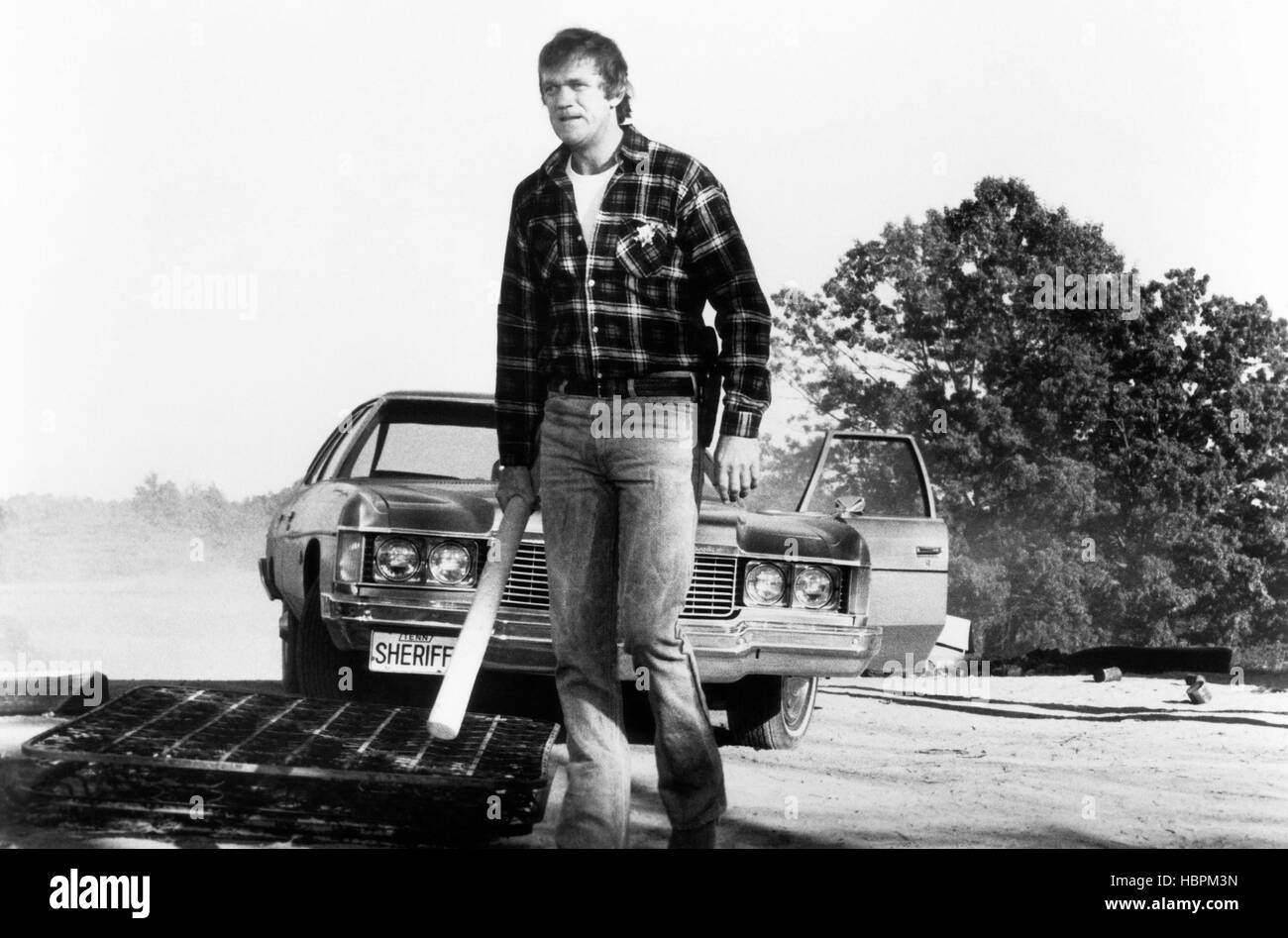
Ever tried to step into shoes that were already too big for the original guy? That’s basically what happened when a six-foot-five Swedish-American actor named Bo Svenson signed on for the impossible. He had to become Buford Pusser.
Now, if you’re a fan of 70s grit, you know the name. The original Walking Tall in 1973 was a massive, unexpected hit. Joe Don Baker played the Tennessee sheriff with a big stick and a short fuse, and people loved it. But when the sequels rolled around, Joe Don was out. Bo Svenson was in.
It’s one of those weird Hollywood handoffs that shouldn't have worked. You’ve got a Swedish-born former Marine taking over for a Southern folk hero. Yet, for many fans, Bo Svenson didn't just play the part; he lived it across two movies and a TV series. Honestly, his take on the character is what kept the franchise alive long enough for us to still be talking about it in 2026.
The Tragedy That Changed Everything
Here is the thing most people forget: Bo Svenson wasn't the first choice for the sequel.
The first choice was the real Buford Pusser.
After the first movie blew up at the box office, Pusser signed a contract to play himself in the second film. It was going to be a meta-moment—a real-life hero portraying his own legend. But in August 1974, just hours after the press conference announcing the movie, Pusser died in a high-speed car crash.
The production was paralyzed. How do you replace a man who was literally supposed to play himself?
Enter Bo Svenson. He didn't look like Joe Don Baker, and he certainly didn't look like the real Buford. But he had this physical presence that was hard to ignore. He was a heavyweight judo champion. He was a Marine. He had a stillness to him that made the "walking tall" mantra feel less like a movie title and more like a personal philosophy.
Walking Tall Bo Svenson vs. Joe Don Baker
If you ask a group of cinephiles who the "real" Buford was, you’re going to get a fight.
Joe Don Baker brought a raw, sweating, explosive energy to the 1973 original. He felt like a guy who was always one second away from a heart attack or a fistfight. Bo Svenson played it differently. In Walking Tall Part II (1975) and Final Chapter: Walking Tall (1977), Svenson’s Buford was more of a weary titan.
He was quieter. He was more deliberate.
Some critics at the time thought Svenson was too stiff. They missed Baker's manic energy. But if you look at the timeline of Buford’s life, Svenson’s performance actually makes more sense. By the time of the sequels, Buford was a man who had lost his wife, his health, and his sense of peace. He wasn't supposed to be the "innocent farm boy" anymore.
What Bo brought to the table:
- Authentic Stature: At 6'5", he actually mirrored the real Pusser’s intimidating height.
- The Southern Accent: Despite being born in Sweden, Svenson had lived in Georgia as a teen. He nailed the rural cadence without making it a caricature.
- Physicality: He did many of his own stunts. When you see him swinging that big wooden club, it looks heavy because it probably was.
The Dixie Mafia and Real-Life Threats
Making these movies wasn't just another day on a Hollywood backlot. They shot on location in Tennessee—specifically in Chester and Madison counties—because the officials in McNairy County (where the real events happened) were still too embarrassed by the "corrupt" reputation the first movie gave them.
Svenson has talked in interviews about how the "Dixie Mafia" was still a very real thing during production. He even mentioned being visited by people who weren't exactly thrilled that he was digging up the past.
Imagine being a Swedish actor trying to do your job while real-life gangsters are watching from the tree line. It adds a layer of tension to his performance in Walking Tall Part II that you can't fake. He wasn't just playing a man under siege; he was working in an environment that was still healing from the actual violence.
The 1981 TV Series: A Final Stand
Most people remember the movies, but Svenson stayed with the role for a short-lived NBC series in 1981.
It only lasted seven episodes.
The problem wasn't Svenson. The problem was that TV in the early 80s couldn't handle the violence that made Walking Tall what it was. You can't have a "big stick" hero if the network sensors won't let him actually hit anyone with it. The show felt neutered. It tried to turn a gritty, R-rated revenge story into a family-friendly procedural.
Still, seeing Bo Svenson back in the tan uniform was a treat for die-hards. It solidified him as the "official" face of the franchise. Even Brian Dennehy tried his hand at the role in a 1978 TV movie (A Real American Hero), but he didn't have the same connection with the audience that Svenson managed to forge.
Why It Still Matters Today
We live in an era of "legacy sequels" and constant reboots. We see actors replaced all the time—different Spidermans, different Batmans. But back in 1975, replacing the lead of a massive hit was a huge gamble.
Svenson's tenure as Buford Pusser proved that a character could be bigger than the actor playing him. He paved the way for the 2004 remake starring The Rock (Dwayne Johnson). Without Svenson keeping the flame alive through the late 70s, the legend of the big stick probably would have faded into 70s obscurities.
Actionable Insights for Fans and Collectors
If you're looking to dive back into the world of Walking Tall Bo Svenson, don't just stop at a casual stream. There’s a lot of history there.
- Watch them in order: Start with the Joe Don Baker original, then move into Svenson’s Part II and Final Chapter. It’s a fascinating study in how an actor’s energy changes the "soul" of a story.
- Look for the Shout! Factory Blu-rays: The transfers for the sequels are surprisingly good. You can see the Tennessee landscapes in all their grainy, 35mm glory.
- Check out Bo’s other 70s work: If you like his "tough guy with a heart" vibe, watch The Great Waldo Pepper or The Inglorious Bastards (the 1978 original that inspired Tarantino).
- Visit the Museum: If you’re ever in Adamsville, Tennessee, the Buford Pusser Home and Museum is a real place. It puts the Hollywood dramatization into perspective.
Bo Svenson didn't just replace Joe Don Baker. He took a tragic, real-life story and turned it into a cinematic myth that lasted a decade. He wasn't the original, but for a generation of fans, he was the Sheriff who walked the tallest.
Next Steps for Your Movie Night
To get the full experience, track down the 1975 sequel specifically. It’s often overshadowed by the original, but it contains some of the most authentic location filming of the era. Pay attention to how Svenson uses his height to dominate the frame—it’s a masterclass in physical acting that doesn't require a single line of dialogue.